 We’ve secured funding to power Signal-to-Revenue AI to GTM teams globally. →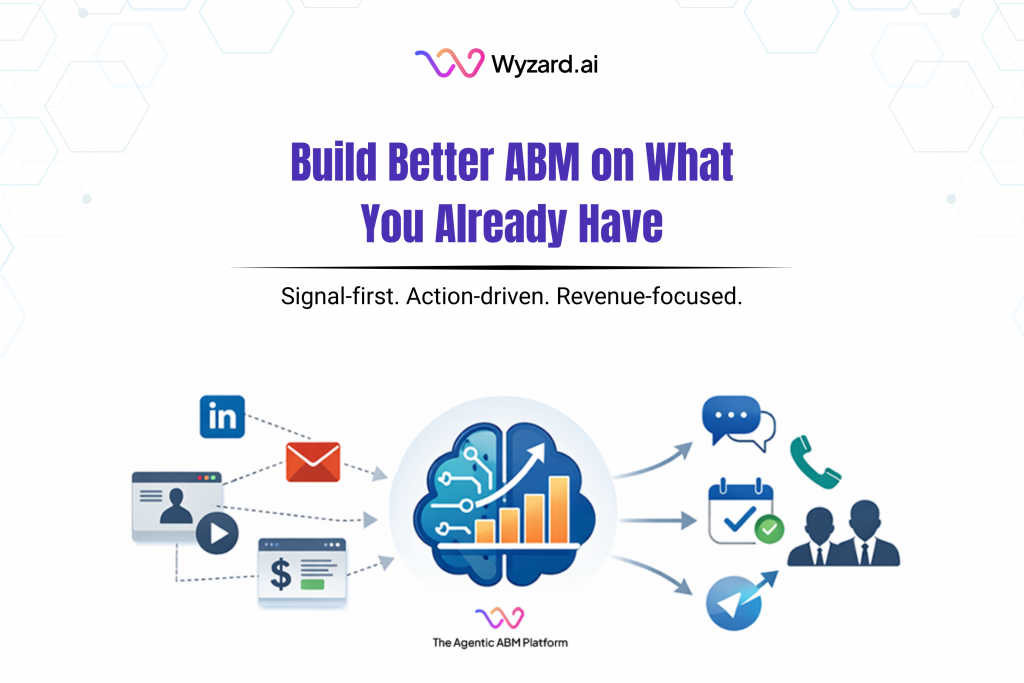
If you are a CMO, this situation feels familiar. Your team has a CRM, marketing automation, paid campaigns, webinars, ...
Subscribe Now
Every sales leader knows this pain: your team generates interest, prospects show intent, and then… nothing. The signal vanishes into a maze of disconnected tools while your reps scramble to respond. By the time they do, the moment’s gone.
Generative AI sales tools promise to fix this, but most teams don’t know where to start. The difference between hype and results comes down to focusing on practical applications that solve real problems, not chasing every shiny feature. This guide walks through specific ways generative AI improves sales performance, with special attention to how signal-based revenue orchestration keeps buyers engaged at the right moment.
What Makes Generative AI Sales Different?
Traditional sales tools automate repetitive tasks. Generative AI goes further by understanding context, creating original content, and adapting in real-time to buyer behavior. The real power shows up when AI doesn’t just react to signals; it orchestrates immediate action across your entire go-to-market stack.
Wyzard.ai positions itself as Signal-to-Revenue AI because it captures every buying moment and converts it into revenue opportunities. When a prospect visits your pricing page, downloads content, or replies to an email, Wyzard’s buyer signal intelligence triggers the right response instantly. No delays. No missed opportunities. Just coordinated action when it matters most.
AI Personalized Emails That Actually Convert
Generic outreach gets ignored. AI personalized emails work because they reference specific behaviors, company details, and timing that matter to each recipient. Generative AI analyzes prospect activity—what they viewed, when they engaged, and which content resonated—and crafts messages that feel relevant.
Wyzard.ai’s Agentic Emails take this further by ensuring every message matches where prospects are in their journey. A first-time visitor gets an education. A returning prospect considering alternatives gets comparison insights. Someone evaluating pricing gets case studies from similar companies. The AI handles personalization at scale while maintaining the human touch that builds trust.
Response rates tell the story. Personalized AI-generated outreach consistently performs 3-5x better than templated emails because prospects recognize when you actually understand their situation.
AI Lead Scoring: Focus on What Matters
Most sales teams waste time on leads that will never close. Traditional lead scoring assigns points based on basic demographics and a few tracked actions. AI lead scoring analyzes hundreds of behavioral signals simultaneously to predict which prospects will actually convert.
The difference becomes obvious when your reps stop chasing every form fill and start focusing on buyers showing genuine intent. AI-powered qualification identifies patterns in how your best customers behaved before they bought, then surfaces similar signals in current prospects.
Wyzard.ai combines firmographic data, engagement patterns, and real-time intent signals to score leads dynamically. When someone matching your ideal customer profile spends time on your product pages, engages with technical documentation, and returns multiple times, that’s a signal worth acting on immediately, not next week when someone manually reviews the lead.
| Use Case | Traditional Approach | AI-Powered Approach | Business Impact |
| Email Personalization | Template + first name | Context-aware, behavior-triggered content | 3-5x higher response rates |
| Lead Scoring | Static point system | Dynamic multi-signal analysis | 50% better conversion |
| Content Creation | Manual customization per prospect | Automated, personalized at scale | 40% time savings |
| Follow-Up Timing | Scheduled sequences | Signal-triggered engagement | 60% faster response |
| Sales Forecasting | Historical averages | Predictive pattern recognition | 25% improved accuracy |
AI Copywriting Tools for Sales Content
Sales reps spend hours creating proposals, customizing presentations, and drafting follow-ups. AI copywriting tools generate these materials in minutes while maintaining consistency and personalization. The technology works best for repeatable content that needs customization, not replacing strategic thinking, but eliminating the mechanical work.
Common applications include generating cold outreach sequences, creating product comparison documents, drafting proposal sections, and building case study summaries. The AI pulls from your existing content library and customer data to create materials that feel specific to each prospect’s industry and challenges.
The time savings compound quickly. Instead of spending 30 minutes customizing a proposal, reps spend 5 minutes reviewing and refining AI-generated content. That extra 25 minutes goes toward actual selling activities: calls, demos, and relationship building.
Automated Follow-Ups Without Losing the Human Touch
Following up consistently separates top performers from everyone else, but manual follow-up doesn’t scale. Generative AI handles the timing, messaging, and channel selection for follow-ups while keeping humans involved for strategic decisions.
The key is human-in-the-loop architecture, where AI suggests next steps and drafts messages, but reps review and approve before anything goes out. This maintains authenticity while ensuring no prospect falls through the cracks.
Wyzard.ai’s multi-channel engagement means when a prospect shows interest, they get timely responses across web, email, and LinkedIn, whatever makes sense for that specific buying signal. The AI determines optimal timing based on engagement patterns, not arbitrary schedules.
Capturing Buyer Signals Before They Go Cold
The biggest revenue leak in B2B sales isn’t a bad sales technique; it’s a slow response to buyer interest. Someone visits your site at 11 PM, explores your pricing, and leaves. By the time your team sees the alert the next morning, they’ve moved on to competitor research.
Signal-to-revenue AI solves this by acting on intent immediately. Real-time capture means the system recognizes high-intent behavior as it happens and triggers appropriate responses automatically. A prospect researching integration options gets documentation and an offer to discuss their tech stack. Someone comparing pricing tiers sees relevant case studies and ROI calculators.
Quality signal detection matters because false positives waste time. The AI needs to distinguish between casual browsing and genuine buying interest, then route serious signals to the right team members with context about what triggered the alert.
Building Your Generative AI Sales Strategy
Start with clear objectives:
- Define which sales activities consume the most time
- Identify where leads currently fall through the cracks
- Determine which personalization gaps hurt conversion rates
Choose tools that integrate with your existing stack. Generative AI works best when it connects to your CRM, marketing automation, and communication platforms. Disconnected tools create new silos instead of solving problems.
Implement in phases. Start with one high-impact use case like AI-personalized emails or lead scoring. Prove ROI, learn what works for your team, and then expand to additional applications. Building a conversion-focused funnel requires understanding how each AI capability fits into your broader revenue process.
Measure what matters. Track response rates, time-to-contact, lead-to-opportunity conversion, and sales cycle length. Generative AI sales tools should show measurable improvement in these metrics within 60-90 days.
Turn Signals Into Revenue
Generative AI transforms sales when it solves the core problem: buyers show interest, but teams can’t respond fast enough or personally enough to capture that moment. The technology handles personalization at scale, automates repetitive work, and ensures no signal goes unnoticed.
The companies winning with AI aren’t using it to replace sales teams; they’re using it to make those teams more effective. Reps spend time on strategy, relationship building, and closing while AI handles research, content creation, and initial engagement.
Wyzard.ai brings this together by positioning AI as the orchestration layer between buyer signals and revenue action. When prospects engage, the platform captures that interest, personalizes the response, and coordinates follow-up across channels. It’s not about more automation; it’s about better timing, more relevant engagement, and zero missed opportunities.
Ready to see how signal-to-revenue AI improves your sales performance? Explore how Wyzard.ai captures buyer intent and converts it into closed deals without letting prospects slip away.
FAQs
How does generative AI improve sales productivity?
Generative AI automates time-consuming tasks like email personalization, content creation, and lead research. Sales teams using AI tools report 30-40% time savings on administrative work, allowing reps to focus on high-value activities like demos, negotiations, and relationship building that directly drive revenue.
What’s the difference between AI lead scoring and traditional lead scoring?
Traditional lead scoring uses static point systems based on demographics and basic actions. AI lead scoring analyzes hundreds of behavioral signals in real-time, identifies patterns from your best customers, and predicts conversion probability with significantly higher accuracy, typically improving lead-to-opportunity conversion by 40-50%.
Can AI-personalized emails maintain authenticity?
Yes, when implemented correctly. The best AI email tools analyze prospect behavior and context to create relevant, timely messages rather than generic templates. Human oversight ensures brand voice consistency and strategic messaging while AI handles the mechanical work of customization at scale.
How quickly can teams see ROI from generative AI sales tools?
Most organizations see measurable improvements within 60-90 days of implementation. Early wins typically include higher email response rates, faster lead response times, and improved qualification accuracy. Full ROI, including increased revenue and reduced sales cycle length, becomes clear within 6 months.
What’s the role of human oversight in AI-powered sales?
Human oversight remains critical for strategy, relationship building, and complex decision-making. AI handles data analysis, content generation, and routine tasks, but humans approve messaging, guide deal strategy, and make judgment calls. The most effective approach combines AI efficiency with human expertise and emotional intelligence.
“`Other blogs
The latest industry news, interviews, technologies, and resources.
March 30, 2026
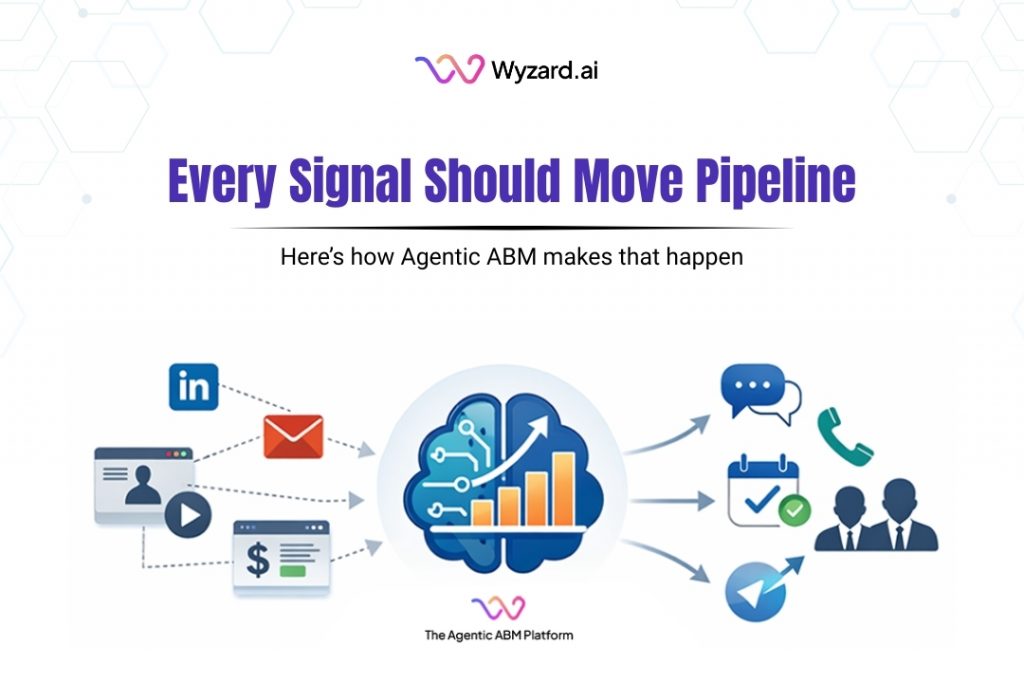
The Signal-to-Revenue Blueprint for Agentic ABM
A CMO reviews the weekly dashboard and sees strong activity. A target account clicked a LinkedIn ad. Another stakeholder ...

March 27, 2026
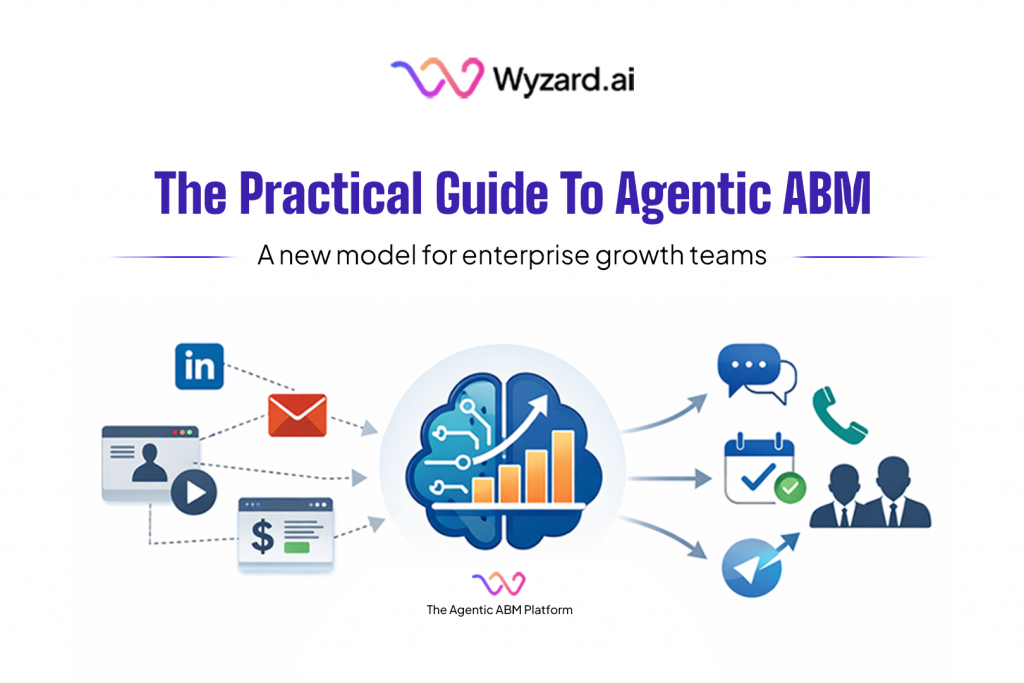
What Is Agentic ABM? A Practical Guide for Enterprise GTM Teams
Enterprise GTM has an action gap. If you are a CMO, this scene is familiar. A target account clicks ...
