What Is A Return-Path Record And How To Set It Up
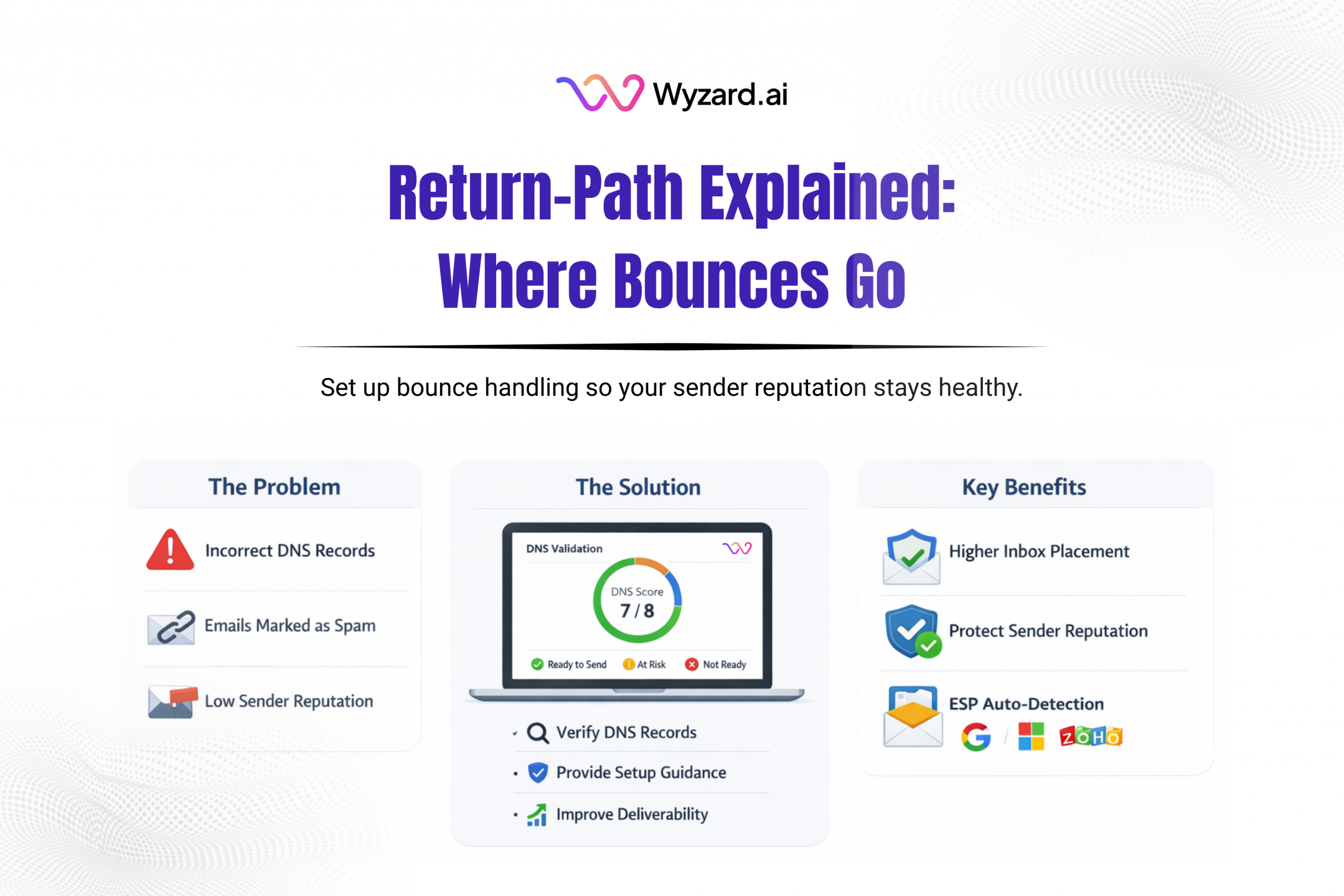
Return-Path is an email header (and domain) that tells mail servers where bounce messages should go when an email can’t be delivered. Think of it as the behind-the-scenes return address used for delivery errors and bounce processing.
You might see Return-Path referenced as the envelope-from address or MAIL FROM address. This is different from the friendly “From” address a recipient sees in their inbox. Return-Path is used mainly for server-to-server handling, reporting, and reputation signals.
How Return-Path Works
- Your sending platform includes a Return-Path value when it sends an email.
- If delivery fails (invalid address, mailbox full, blocked domain, policy errors), the receiving server sends a non-delivery report to that Return-Path address.
- Your sender processes those bounces to spot bad addresses, suppress future sends to dead inboxes, and keep your list clean.
There’s a deliverability angle here too. If you use a custom Return-Path domain, receiving systems may evaluate SPF alignment against that Return-Path domain, which can affect DMARC alignment outcomes.
Why Return-Path Setup Matters
A clean Return-Path setup supports:
- Accurate bounce handling so hard bounces and soft bounces get treated differently
- Healthier deliverability signals since mailbox providers look for consistent bounce management
- Better reputation protection through faster suppression of invalid recipients
- Cleaner reporting on delivery failures, making issues easier to diagnose
Is Return-Path A DNS Record Like SPF Or DKIM?
Return-Path itself isn’t a standalone DNS record type. It’s a header value set by your mail system. The DNS work usually happens when you configure a custom bounce domain, which often requires records (commonly MX) provided by your email service provider.
How To Set Up Return-Path
Option 1: Use the provider default
Most email providers assign a default bounce domain (example: bounce.provider.com). This works out of the box, with no DNS edits, and is the fastest path to getting started.
Option 2: Use a custom Return-Path (custom bounce domain)
If your provider supports it, set a branded subdomain such as bounce.yourdomain.com. The usual pattern:
- Create the bounce subdomain
- Add the DNS records your provider supplies (often MX)
- Verify inside the provider, then run a deliverability test
What It Looks Like In Headers
A header example:
Return-Path: <bounce@bounce.yourdomain.com>
Where Wyzard Fits In
Return-Path issues can lead to wasted sends, noisy bounce rates, and reputation drag. Wyzard.ai helps teams validate sender readiness by checking DNS and deliverability signals early, so follow-ups land and bounce handling stays clean. Learn more about Wyzard.ai.