 We’ve secured funding to power Signal-to-Revenue AI to GTM teams globally. →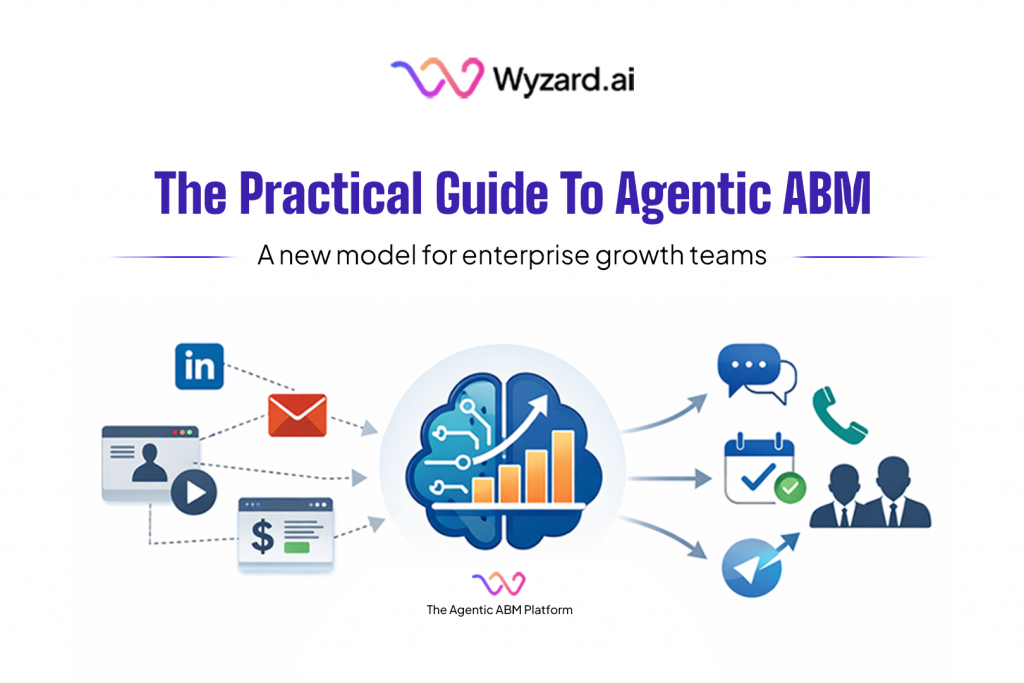
Enterprise GTM has an action gap. If you are a CMO, this scene is familiar. A target account clicks ...
Subscribe Now
Sales teams lose deals every day because buyer signals get buried in disconnected tools. Someone downloads your pricing guide at 2 PM, but your rep doesn’t follow up until 9 AM the next day. By then, they’ve already talked to a competitor.
AI sales agents fix this problem. They catch buyer intent signals the moment they happen, qualify leads based on fit, and trigger immediate outreach across email, chat, and LinkedIn. The best ones work like an extra team member who never sleeps, never forgets to follow up, and always knows which leads deserve attention first.
This guide covers the best AI sales agents for B2B teams who need to turn scattered buyer signals into closed revenue without adding headcount.
What Is an AI Sales Agent and Why Sales Teams Need One
An AI sales agent handles repeatable sales tasks without constant supervision. It qualifies website visitors, sends follow-up sequences, scores leads based on behavior, books meetings, and updates your CRM based on how prospects respond.
Unlike basic automation that follows fixed sequences, agentic AI for sales makes decisions. When a lead replies to an email, the agent reads the response, understands intent, and decides whether to send more information, book a demo, or route the conversation to a human rep.
Sales teams use AI agents for sales to handle high-volume tasks that eat up rep time. Prospecting warm leads, writing personalized outreach, scheduling demos, and keeping deal records current all happen automatically. Reps focus on actual conversations instead of admin work.
The challenge most teams face isn’t a lack of leads. It’s a delayed action. Buyer interest peaks at specific moments, then fades. When your team takes hours or days to respond, deals slip away. AI sales agent software closes that gap by acting on signals in real time.
Best AI Sales Agents: Tools That Handle Prospecting, Qualification, and Outreach
Sales teams need AI agents that fit their workflow, integrate with existing tools, and handle specific parts of the funnel. Here’s how the top options compare.
Wyzard.ai: Signal-to-Revenue AI for B2B Sales Teams
Wyzard.ai captures buyer intent across paid ads, website visits, email engagement, and events, then triggers immediate outreach across chat, email, and LinkedIn. It works as an orchestration layer connecting your existing tools instead of replacing them.
WyzSignals monitors behavior across all channels and scores accounts based on fit and intent. When a high-value prospect shows interest, WyzChannels engages them through Agentic Chat, Agentic Email, or Agentic LinkedIn with contextual messaging. WyzQualify applies your ICP criteria and routes qualified leads to reps with full context. WyzGoal builds multi-step sequences in plain English, and WyzEnrich pulls complete lead data without forms.
Key features:
- Real-time signal capture across web, email, LinkedIn, and CRM
- Multi-channel engagement with human-in-the-loop oversight
- Dynamic lead scoring and ICP-based qualification
- Natural language workflow builder for campaigns
- Waterfall enrichment across multiple data sources
Benefits: Sales teams see which accounts are showing heat right now, not which ones filled out a form last week. Context travels with every lead, so reps know what triggered interest before they send the first message. Outreach stays coordinated across channels, and AI pauses after replies so humans can step in when it matters.
Learn how Wyzard.ai helps sales teams turn scattered signals into a pipeline.
Cognism
Cognism delivers verified contact information for B2B prospecting with built-in compliance for GDPR and CCPA. It’s built for teams that rely heavily on phone outreach or need accurate data to fuel their CRM.
How it works: Cognism’s AI scans company websites, LinkedIn, and public sources to build verified contact records. It surfaces phone-verified direct dials, intent signals, and firmographic data, then enriches your CRM in real time.
Key features:
- Phone-verified contact data with Diamond Data
- Intent signals and technographic filters
- Real-time CRM enrichment
- GDPR and CCPA compliance built in
Benefits: Reps spend less time hunting for contact info and more time having conversations. High accuracy on direct dials means fewer wasted calls. Compliance filters reduce legal risk.
Gem-E by UserGems
Gem-E tracks job changes and buying signals, then automates personalized outreach to contacts who’ve moved to new companies. It’s designed for teams that sell based on existing relationships.
How it works: Gem-E monitors your CRM for contacts who change jobs, then enriches their new account details and triggers outreach sequences across email and LinkedIn. It layers multiple signals into each message to increase relevance.
Key features:
- Job change tracking and account enrichment
- Multi-signal scoring and prioritization
- Auto-drafted email and LinkedIn sequences
- Native CRM integration
Benefits: Reps reconnect with warm contacts at the exact moment they’re evaluating new vendors. Outreach feels timely instead of random.
Claygent by Clay
Clay helps sales teams enrich and score leads automatically. Claygent, their AI research agent, visits domains, gathers information, and reports back without needing constant prompts.
How it works: You give Claygent a list of domains, and it scrapes relevant data like tech stack, recent news, or hiring activity. Clay then uses that data to generate personalized email sequences.
Key features:
- Access to dozens of data providers
- AI research agent for web scraping
- Generative AI for email personalization
- Integration with lead forms and CRMs
Benefits: Research that used to take hours happens in minutes. Personalization scales without losing quality.
11x.ai
11x.ai offers two AI agents: Alice for outbound prospecting and Julian for phone-based engagement. Both handle end-to-end workflows from research to meeting booking.
How it works: Alice identifies prospects, sends personalized outreach, and qualifies interest across email and LinkedIn. Julian handles phone conversations, qualifies leads, and nurtures relationships through voice interactions.
Key features:
- Two specialized agents for different sales motions
- Multi-channel engagement across email, LinkedIn, and phone
- Lead qualification and routing to human reps
- Automated nurture for inactive leads
Benefits: Teams scale outbound without adding headcount. AI handles first-touch qualification, and humans focus on high-intent conversations.
Artisan Ava
Ava by Artisan acts as a complete SDR, handling lead sourcing, research, personalization, deliverability, and meeting booking inside one platform.
How it works: Ava pulls contacts from a built-in database of 300M+ leads, researches them, writes personalized emails, manages email warmup, and books meetings. Everything runs inside Artisan without needing external tools.
Key features:
- Built-in lead sourcing and research engine
- Email deliverability management and warm-up
- LinkedIn outreach integration
- Meeting booking with calendar sync
Benefits: Fast setup with no integrations required. Good for early-stage teams that need to ramp outbound quickly.
Warmly
Warmly identifies high-intent website visitors and engages them through chat or automated sequences. It’s designed for teams with steady traffic who want to convert more of it.
How it works: Warmly de-anonymizes website visitors, scores them based on behavior, and triggers chat conversations or email sequences. When intent is high, it books meetings directly.
Key features:
- Real-time visitor identification
- Behavioral scoring and routing
- Chat-based qualification
- Meeting scheduling automation
Benefits: Turns anonymous traffic into known leads. Reps get alerted when high-value accounts visit the site.
Regie.ai
Regie.ai helps reps write personalized email sequences, call scripts, and LinkedIn messages based on persona and use case. It’s built for teams running high-volume outbound.
How it works: Regie uses persona-based inputs to generate email sequences, call scripts, and LinkedIn messages. Reps can version sequences, track performance, and refine messaging over time.
Key features:
- AI content generation for email, calls, and LinkedIn
- Persona-based personalization engine
- Sequence builder with versioning
- CRM integration with HubSpot and Salesforce
Benefits: Speeds up content creation for teams juggling multiple personas. Helps reps avoid writer’s block.
SalesCloser.ai
SalesCloser creates AI agents that join sales calls, deliver demos, and qualify leads through voice interactions. It’s designed for teams with high demo volume.
How it works: AI agents handle phone calls and Zoom meetings using scripted logic. They qualify leads, walk through product demos, and route qualified prospects to human reps.
Key features:
- AI phone agents and Zoom bots
- Voice-activated scripting with branching logic
- CRM syncing for call outcomes
- Multilingual support
Benefits: Handles dozens of calls per day without human involvement. Reduces no-shows and off-hours lead loss.
Apollo
Apollo combines a contact database with sales engagement tools like sequences, dialers, and analytics. It’s built for growing teams that want one platform for prospecting and outreach.
How it works: Apollo provides a searchable database of B2B contacts with filters for industry, role, and tech stack. Users build sequences, track engagement, and sync everything to their CRM.
Key features:
- Contact database with advanced filters
- Email, call, and LinkedIn sequencing
- AI email writing assistant
- Activity tracking and reporting
Benefits: Consolidates prospecting and engagement in one place. Scales with team size.
Gong
Gong analyzes sales conversations across calls, emails, and meetings, then surfaces insights for coaching and deal strategy.
How it works: Gong records and transcribes calls, extracts key topics, tracks competitor mentions, and scores deal health. It provides reps with feedback on talk time, question quality, and objection handling.
Key features:
- AI-powered call analysis and transcription
- Deal health scoring and forecasting
- Conversation insights and coaching recommendations
- Cross-team performance comparison
Benefits: Helps managers identify what’s working and what’s not. Reps get actionable feedback without waiting for manual reviews.
Benefits of AI Sales Agents for Pipeline Growth
The right sales agent AI changes how fast your team moves from signal to conversation.
- Speed matters more than perfect data. Most teams wait to gather complete information before reaching out. By the time they have every detail, the buyer has moved on. AI agents prioritize immediate engagement while interest is hot, then enrich context as the conversation develops.
- Multi-channel engagement becomes seamless. Buyers don’t live in one channel. They visit your site, open emails, engage on LinkedIn, and attend events. AI agents for sales track all of this, then coordinate outreach across channels so every touchpoint feels connected instead of random.
- Lead quality improves without manual sorting. Not every website visitor deserves a sales call. AI sales agents apply your ICP criteria in real time, score leads based on fit and behavior, and only route qualified prospects to reps. Your team stops wasting time on leads that were never going to close.
- Context travels with every lead. When a rep picks up a conversation, they know exactly what triggered interest, which pages the prospect visited, what content they downloaded, and how they responded to previous outreach. No more asking buyers to repeat themselves.
Why Sales Teams Need AI Help Right Now
The gap between buyer interest and sales response keeps growing. Buyers research faster, compare options in real time, and expect instant answers. Sales teams still operate on manual processes that take hours or days to kick in.
AI sales agents close that gap. They act on signals the moment they happen, qualify leads based on fit, and keep conversations moving across channels without waiting for reps to catch up.
The teams winning right now aren’t the ones with the most reps. They’re the ones moving fastest from signal to conversation. That’s what AI agents for sales make possible.
See why your sales team needs AI to keep up with buyer expectations.
Start by identifying one part of your funnel where speed matters most, then pick the AI sales agent that fixes that specific problem. Get the foundation right, then scale from there.
Visit Wyzard.ai to see how Signal-to-Revenue AI turns buyer intent into pipeline.
Frequently Asked Questions
What does an AI sales agent actually do?
An AI sales agent automates sales tasks like lead qualification, outreach, meeting booking, and CRM updates. It acts on buyer signals in real time, engages prospects across email, chat, and LinkedIn, and routes qualified leads to reps with full context.
Can AI sales agents replace human reps?
AI agents handle high-volume, repeatable tasks like prospecting and follow-ups. They can’t replace human judgment in complex deals or strategic conversations. They work best as an extension of your team, freeing reps to focus on high-value interactions.
How do I know which AI sales agent is right for my team?
Start with your biggest bottleneck. If buyer signals get lost across tools, choose an orchestration platform. If you need better contact data, pick a tool focused on enrichment. If demo volume is overwhelming, look at voice automation.
Do these tools integrate with HubSpot and Salesforce?
Most AI sales agent software integrates with major CRMs like HubSpot, Salesforce, and Dynamics 365. Check each tool’s integration list to confirm compatibility with your specific stack.
What’s the difference between agentic AI and basic automation?
Basic automation follows fixed rules. Agentic AI for sales makes decisions based on context, like reading email replies to determine next steps or scoring leads based on behavior patterns. It adapts instead of just executing sequences.
Other blogs
The latest industry news, interviews, technologies, and resources.
March 26, 2026
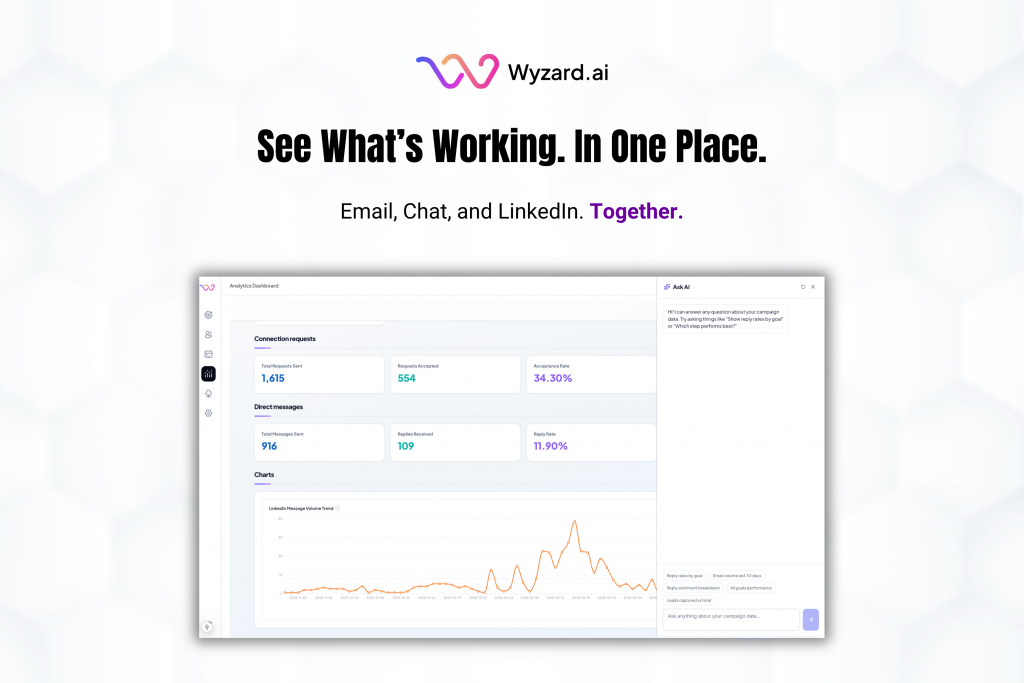
AI Analytics: One Dashboard for Email, Chat, and LinkedIn Performance
Analytics should help you decide what to do next. Too often, it turns into busywork. Teams hop across tools, ...

March 25, 2026
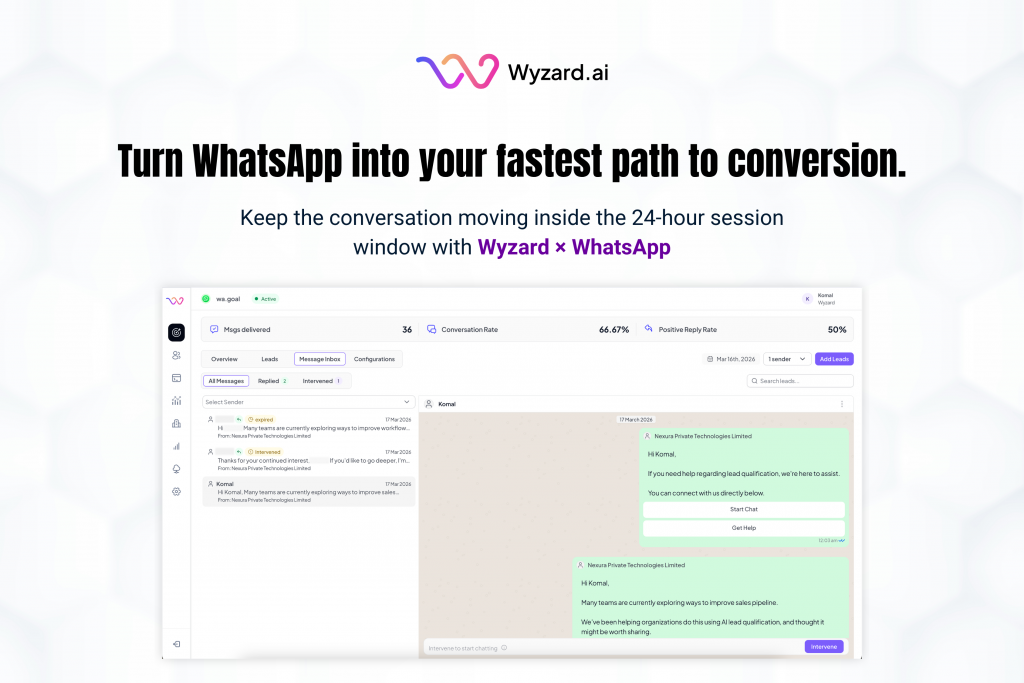
Wyzard × WhatsApp: Convert Warm Leads in the Channel They Answer
Lead leakage rarely comes from a lack of demand. It shows up after intent, when a prospect is ready ...
