 We’ve secured funding to power Signal-to-Revenue AI to GTM teams globally. →

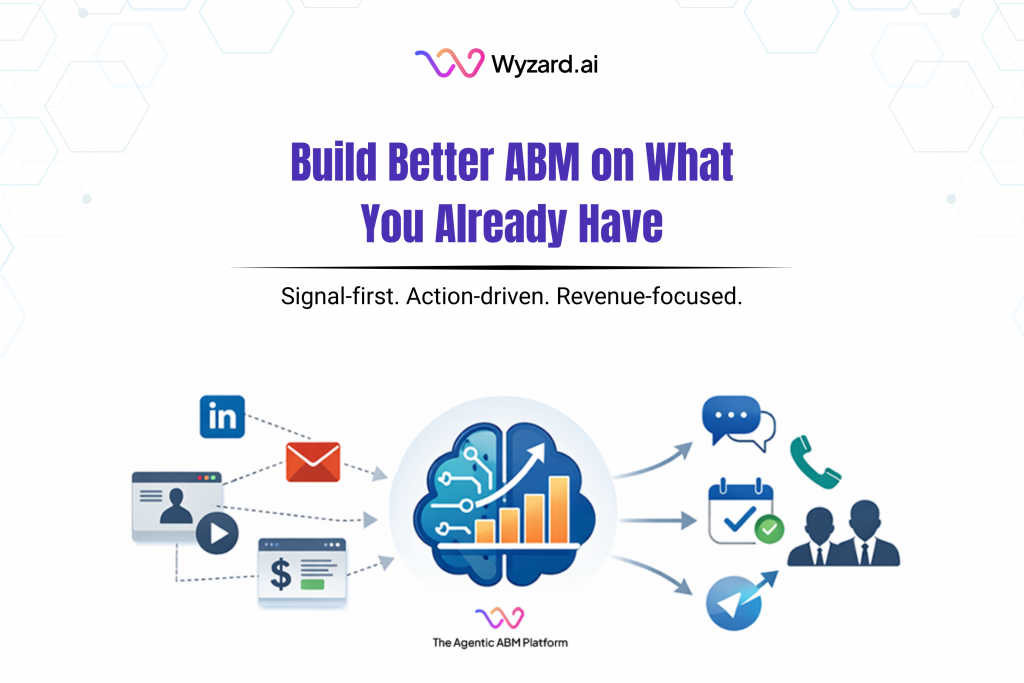
If you are a CMO, this situation feels familiar. Your team has a CRM, marketing automation, paid campaigns, webinars, ...
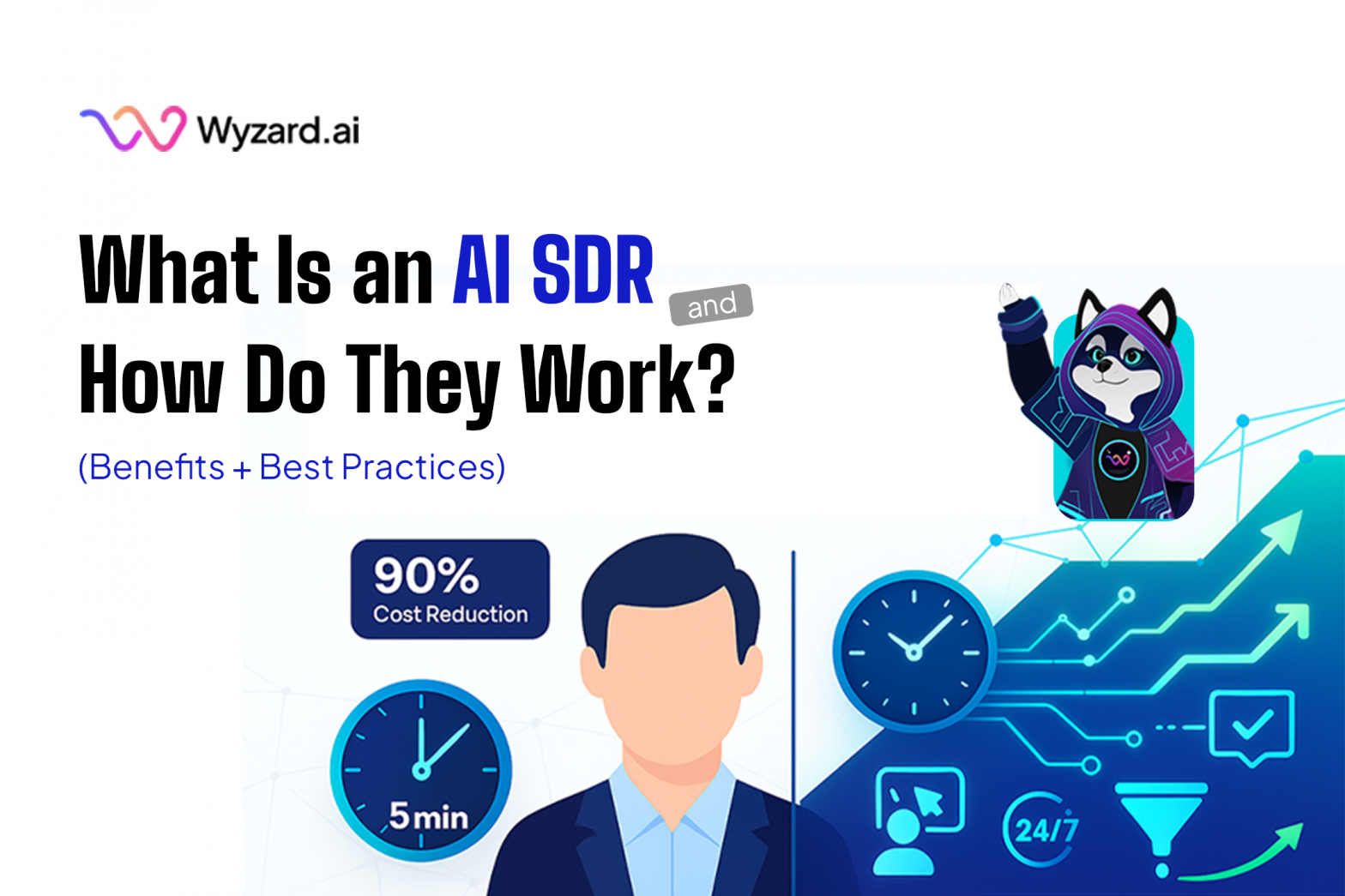
What Is an AI SDR and How Do They Work? (Benefits + Best Practices)
Published
Categorized as Uncategorized
Subscribe Now
Your marketing team generates quality traffic. Your content attracts the right audience. Your paid campaigns drive visitors to your site. But here’s the problem: only 1 in 10 SDRs reach 90% of their quota, and the average human SDR responds to leads in 42+ hours.
By the time your team reaches out, that high-intent visitor has already moved on to your competitor. In today’s hyper-competitive market, a delay of even a few minutes can make the difference between a converted lead and a lost opportunity.
Enter the AI SDR (Sales Development Representative). In this article, we’ll explore what an AI SDR is, how it operates, and why it’s becoming an essential tool for SaaS businesses.
What Is an AI SDR?
An AI SDR (AI Sales Development Representative) is software that handles lead engagement, qualification, and nurturing—automatically and immediately. Think of it as your first line of response for every website visitor who shows buying intent.
Here’s a simple example: A prospect visits your pricing page at 11 PM. A traditional SDR would follow up the next business day. An AI SDR starts a conversation within seconds, asks qualifying questions, and books a meeting before the prospect even considers alternatives.
Unlike basic chatbots that follow rigid scripts, AI SDRs use behavioral signals and conversation context to adapt responses in real-time. They don’t just capture contact information—they identify which visitors are ready to buy and route them to your sales team immediately.
Core capabilities:
- Instant engagement when visitors hit high-intent pages
- Lead scoring based on behavior and firmographic data
- Personalized follow-up sequences triggered by specific actions
- Direct CRM updates after every interaction
The technology combines natural language processing with intent detection, meaning it understands not just what prospects say, but what they’re actually looking for.
Key functions of an AI SDR include:
- Real-Time Engagement: Interact with visitors immediately upon landing on your website.
- Lead Qualification: Use behavioral cues and pre-defined criteria to assess lead quality.
- Automated Follow-Ups: Send personalized follow-up emails based on prospect interactions.
- CRM Integration: Seamlessly update and enrich your CRM database with every interaction.
In short, when asked, “What is AI SDR?”. The answer is that it is an intelligent, automated solution that ensures no inbound lead is left unattended.
AI SDR Use Cases – Inbound Sales & Outbound Sales
AI SDRs serve two distinct functions in modern sales operations: inbound and outbound. Understanding the difference helps you deploy the right strategy for your business goals.
| Aspect | Inbound AI SDR | Outbound AI SDR |
| Primary Function | Responds to visitors already showing interest | Initiates contact with cold prospects |
| Lead Source | Website visits, form fills, demo requests, content downloads | Purchased lists, LinkedIn searches, database enrichment |
| Engagement Style | Conversational, helpful, immediate response to signals | Prospecting-focused, creating awareness, multi-touch campaigns |
| Best For | SaaS with strong inbound traffic, product-led growth, content marketing strategies | Enterprise sales, ABM campaigns, breaking into new markets |
| Conversion Timeline | Minutes to days (high buyer intent) | Weeks to months (awareness building) |
| Key Metrics | Response time, qualification rate, meeting booking rate | Reply rate, meetings booked, pipeline created |
Note: This guide focuses primarily on inbound AI SDRs, which capture and convert traffic you’re already generating through marketing efforts.
AI SDRs indirectly reduce churn rate by improving qualification accuracy, ensuring sales teams close customers who match the ICP and stick around longer.
Why Inbound AI SDRs Drive Higher ROI
For SaaS companies with established marketing engines, inbound AI SDRs deliver immediate impact:
- Faster Response Times: Engage prospects within seconds instead of hours
- 24/7 Coverage: Capture late-night and weekend traffic that traditional teams miss
- Instant Qualification: Route only sales-ready leads to your team
- Lower CAC: Maximize conversions from existing traffic without increasing ad spend
- Consistent Experience: Every visitor receives the same high-quality engagement
How Does an AI SDR Work?
Understanding the process behind an AI SDR can help clarify its value. Think of it as a conversion engine—engage, qualify, route—on autopilot. Real-Time Visitor Engagement
When a prospect visits your website, the AI SDR immediately identifies and interacts with them. Using technologies like IP lookup, tracking cookies, and behavioral analytics, the system determines whether the visitor is a new explorer or a returning customer. Instead of generic messages, it initiates a contextual conversation:
- Scenario Example: A prospect visits your pricing page. The AI SDR could prompt, “I see you’re checking out our pricing. Would you like more information about our plans or a live demo?”
- Result: This immediate engagement increases the likelihood of capturing the visitor’s interest before they explore other options or leave the site.
Intelligent Lead Qualification
After the initial contact, the AI SDR automates the lead qualification process. It does this by:
- Collecting Data: Asking targeted questions about the visitor’s needs, timeline, and budget.
- Scoring the Lead: Using algorithms to assign scores based on the visitor’s engagement and fit with your ideal customer profile.
- Routing Qualified Leads: Automatically passing on only the highest quality leads to your human SDRs for follow-up.
This streamlined approach ensures that your sales team spends time on prospects that are most likely to convert.
AI SDRs gain powerful qualification context when product usage becomes live signal data, enabling them to prioritize trial users who hit value milestones over those still exploring basic features.
Automated Follow-Up and CRM Integration
The work of an AI SDR doesn’t stop once the lead is qualified:
- Follow-Up Sequences: It sends personalized follow-up emails based on the interaction history. Whether a lead has shown interest in specific features or requested additional resources, the follow-up is tailored to keep the conversation going.
- CRM Integration: The AI SDR automatically updates your CRM with the latest information, ensuring that all interactions are logged. This constant flow of data helps refine the lead qualification process over time and provides valuable insights for optimizing campaigns.
This integration is crucial for maintaining a cohesive strategy across your marketing and sales efforts, as it eliminates manual data entry and reduces the likelihood of human error.
AI SDRs automate qualification, but they need a CRM that reflects live intent data, which is why Salesforce becomes smarter when it receives real-time engagement logs and behavioral scoring.
The Benefits of Adopting an AI SDR
Implementing an AI SDR offers significant advantages, particularly if you’re operating in the innovation-driven SaaS space. Here are some of the key benefits:
Immediate Response Times
Research and available data indicate that companies responding to inquiries within 5 minutes are up to 21 times more likely to convert a lead. An AI SDR ensures instantaneous responses whenever a visitor lands on your site, capturing critical interest at just the right moment.
Enhanced Scalability
Traditional SDR teams are limited by human bandwidth. An automated SDR can handle thousands of interactions concurrently, meaning that even during periods of high inbound traffic, your team won’t miss out on any opportunities.
Cost Efficiency
Operating an experienced human SDR team often comes with considerable expenses—salaries, benefits, training, and turnover costs add up quickly. In contrast, implementing a robust AI SDR platform can cost between $500-$800 per month, making it a cost-effective alternative without compromising quality.
Improved Lead Qualification
With sophisticated algorithms, an AI sales representative can accurately score and prioritize leads, ensuring that your human SDRs focus their time on prospects that are most likely to convert. This results in higher conversion rates and a more efficient pipeline.
Consistent, Data-Driven Interactions
Unlike their human counterparts, AI SDRs don’t suffer from inconsistencies due to fatigue or subjective biases. Each engagement is standardized, ensuring that every potential customer receives the same high level of personalized, data-backed communication.
Always-On Availability
In today’s global market, business doesn’t stop when your office closes. An AI SDR works around the clock, reinforcing that no lead is left unattended—even during weekends or after business hours.
| Metric | Traditional Human SDR | AI SDR Platform |
| Response Time | 42+ hours average | Under 5 minutes |
| Leads Handled Daily | 50–100 | 1,000+ |
| Cost Per Month | $6,500–$9,800 | $500–$800 |
| Availability | 40 hours/week | 24/7/365 |
| Lead Qualification Accuracy | 60–70% | 85–95% |
| Time to ROI | 3–6 months | 2–4 weeks |
| Turnover Rate | 52% in first year | 0% |
AI SDR Platform Capabilities: What to Look For
Not all AI SDR platforms are built the same. The most effective solutions combine multiple capabilities that work together to capture, qualify, and convert inbound traffic.
Workflow Automation
Modern AI SDR platforms automate complex, multi-step workflows without requiring code:
- Trigger-Based Actions: Automatically start conversations based on page visits, form behavior, email clicks, or time on site
- Conditional Logic: Route leads differently based on company size, industry, or engagement level
- Multi-Channel Orchestration: Coordinate engagement across website chat, email, and LinkedIn without duplicate outreach
- Schedule-Based Follow-Ups: Automatically nurture leads over days or weeks with personalized touchpoints
Deep Integrations
Your AI SDR should connect seamlessly with your existing tech stack:
- CRM Integration (Salesforce, HubSpot): Sync lead data, conversation history, and qualification scores in real-time
- Marketing Automation (Marketo, Pardot): Trigger campaigns based on AI SDR interactions
- Calendar Systems (Calendly, Google Calendar): Direct booking without leaving the conversation
- Analytics Platforms: Track conversion metrics alongside other marketing performance data
- Slack/Teams: Real-time notifications when high-value leads engage
Trigger Signals: What Activates an AI SDR
AI SDRs monitor dozens of behavioral signals to determine when and how to engage:
High-Intent Page Visits
- Pricing page (30+ seconds)
- Demo request page
- Integration or API documentation
- Customer case studies (multiple reads)
Form Interactions
- Form started but not submitted
- Newsletter signup
- Content download (ebook, report, template)
- Free trial registration
Engagement Patterns
- 3+ page visits in a single session
- Return visitor (2+ sessions in 7 days)
- Email link clicks (especially feature-specific links)
- LinkedIn profile views from target accounts
Time-Based Triggers
- Trial day 3 (no product activity)
- 7 days after content download with no follow-up action
- Meeting no-show (immediate reschedule prompt)
How AI SDRs Work in Real Campaigns
Let’s walk through exactly how an AI SDR operates from the moment a prospect lands on your site to the point they’re sales-qualified.
Step 1: Real-Time Visitor Detection
The moment someone hits your website, the AI SDR identifies them using IP lookup, tracking cookies, and behavioral analytics. It knows if they’re a first-time visitor, returning user, or existing customer. Instead of waiting for a form fill, it initiates contact based on the page they’re viewing.
Campaign Example: A SaaS company selling project management software notices visitors spending 3+ minutes on their integrations page. The AI SDR detects this pattern and triggers: “I see you’re checking out our Slack integration. Want to see how it works with your existing workflow?”
Step 2: Contextual Conversation Flow
The AI doesn’t follow a single script it adapts based on responses. If a prospect mentions “team collaboration,” the conversation shifts toward multi-user features. If they ask about “security compliance,” it surfaces relevant certifications and case studies.
Here’s how this plays out across channels:
| Visitor Behavior | AI SDR Action | Human Handoff Trigger |
| Views pricing 3+ times | Offers a personalized demo | Asks about the implementation timeline |
| Downloads case study | Sends industry-specific content | Requests the ROI calculator |
| Abandons the signup form | Asks about specific concerns | Mentions the budget approval process |
| Reads integration docs | Surfaces API documentation | Questions current tech stack |
Step 3: Intelligent Lead Qualification
While conversing, the AI SDR collects qualification data through natural questions—not interrogation. It identifies company size, decision-making authority, budget range, and timeline without making the prospect feel like they’re filling out a form.
Automation Strategy in Action: A B2B marketing platform uses AI SDRs to qualify leads for their enterprise tier. The AI asks: “What size is your marketing team?” If the answer is under 10 people, it routes to their self-serve signup. If it’s 50+, it immediately books time with an enterprise AE and sends a custom deck before the meeting.
Step 4: Multi-Touch Nurture Sequences
Not every lead is ready to buy today. AI SDRs handle nurturing through sequenced touchpoints across email and on-site messaging. These aren’t generic drip campaigns—they’re triggered by specific behaviors.
Drip Logic Example:
- Day 1: Prospect visits pricing but doesn’t book a demo → Email highlighting customer ROI data
- Day 3: No response, but returns to the features page → In-app message offering free trial extension
- Day 7: Still engaged but not converting → Case study email from similar company + calendar link
Step 5: A/B Testing Across Conversation Paths
Advanced AI SDRs test different message variations, question sequences, and call-to-action placements to optimize conversion rates. One path might ask about pain points first; another leads with product benefits. The AI identifies which approach works for different visitor segments and adjusts automatically.
| Metric | Traditional Human SDR | AI SDR Platform |
| Response Time | 42+ hours average | Under 5 minutes |
| Leads Handled Daily | 50–100 | 1,000+ |
| Cost Per Month | $6,500–$9,800 | $500–$800 |
| Availability | 40 hours/week | 24/7/365 |
| Lead Qualification Accuracy | 60–70% | 85–95% |
| Time to ROI | 3–6 months | 2–4 weeks |
| Turnover Rate | 52% in first year | 0% |
Inbound Pipeline Workflows: Real-World Examples
Here’s how AI SDRs operate in common inbound scenarios:
Workflow 1: Pricing Page Visitor
Trigger: Visitor spends 30+ seconds on pricing page
AI SDR Action:
- Initiates chat: “I see you’re checking out our pricing. Which plan are you considering?”
- Collects team size, use case, and timeline
- Offers personalized demo if qualified
- Books meeting directly in rep’s calendar
Result: Meeting scheduled in under 3 minutes
Workflow 2: Form Abandonment Recovery
Trigger: Visitor starts demo request form but doesn’t submit
AI SDR Action:
- Immediate pop-up: “Need help with anything? I can answer questions or book a demo”
- Addresses specific concerns (pricing, features, implementation)
- Completes booking without requiring full form submission
Result: Recovers 30-40% of abandoned forms
Workflow 3: Content-to-Conversation
Trigger: Visitor downloads industry report or case study
AI SDR Action:
- Immediate email: “Just sent over the report. Any specific challenges you’re looking to solve?”
- If no response, follow-up with related resources after 2 days
- If engaged, routes to appropriate sales rep based on company profile
Result: Converts 15-20% of content downloads to qualified conversations
Core Inbound SDR Tasks Handled by AI
An effective inbound AI SDR replaces manual processes across the entire lead lifecycle:
1. Immediate Lead Response
Traditional SDRs check leads periodically throughout the day. AI SDRs detect and respond to visitor behavior instantly:
- Pricing page visits trigger personalized pricing conversations
- Form submissions receive immediate confirmation and next-step guidance
- Feature page browsing prompts targeted product questions
- Case study downloads trigger industry-specific follow-up
2. Intelligent Lead Qualification
Instead of asking prospects to fill out lengthy forms, AI SDRs gather qualification data through natural conversation:
- Company size and team structure
- Budget and decision-making authority
- Current tools and technology stack
- Timeline and urgency
- Specific pain points and use cases
3. Smart Lead Routing
Based on qualification data, AI SDRs route leads intelligently:
- Enterprise prospects → Senior AEs with enterprise experience
- Mid-market leads → Regional sales reps
- Small business inquiries → Self-service signup flow
- Not-yet-ready prospects → Automated nurture sequences
How AI SDRs Help Different GTM Roles
AI SDRs don’t just benefit one team; they transform workflows across your entire revenue organization.
For SDR Teams:
Your reps stop chasing cold leads and focus on warm conversations. The AI handles initial qualification, so when a prospect reaches your SDR, they’ve already expressed specific needs and a timeline. Instead of 100 cold calls per day, your team has 20 qualified conversations with people actively evaluating your solution.
Workflow Example: An SDR logs in and sees 15 AI-qualified leads with conversation transcripts, noted pain points, and assigned priority scores. They skip discovery and jump straight to solution mapping and demo scheduling.
For Account Executives:
You receive meeting-ready prospects, not raw leads. The AI has already confirmed budget, authority, need, and timeline (BANT). Your first conversation focuses on solution design, not information gathering.
Workflow Example: An AE receives a calendar invite for a demo with full context: company size, tech stack, specific features of interest, and buying committee structure, all collected by the AI during initial engagement.
For RevOps Teams:
You get clean, standardized data flowing into your CRM without manual entry errors. Lead scoring becomes consistent across all channels, and you can accurately forecast the pipeline based on AI-driven qualification metrics rather than subjective SDR notes.
Workflow Example: RevOps builds dashboards showing which traffic sources produce the highest-quality AI-qualified leads, enabling smarter budget allocation across paid channels and content programs.
For Marketing Teams:
You see immediate feedback on which campaigns drive conversion-ready traffic versus curious browsers. The AI reveals which content assets prospects reference during qualification, helping you optimize both top-of-funnel and mid-funnel programs.Workflow Example: Marketing discovers that prospects who read a specific case study before engaging with the AI SDR convert 3x faster. They promote that content more aggressively and create similar assets for other segments.
Best Practices for Implementing an AI SDR
Successfully integrating an AI SDR into your marketing and sales workflow requires a thoughtful approach. Here are some best practices:
Define Clear Goals and Key Performance Indicators (KPIs)
Before you deploy any AI SDR tools, it’s crucial to know exactly what you want to achieve. Consider setting benchmarks such as:
- Lead Response Time: Aim for sub-5-minute engagement.
- Qualified Lead Volume: Define what counts as a qualified lead and establish monthly targets.
- Conversion Rate Improvements: Monitor changes in conversion rates pre- and post-deployment.
Choose the Right Solution
Not all AI SDR platforms are created equal. The ideal solution should seamlessly integrate with your CRM (such as HubSpot or Salesforce) and be customizable to fit your unique sales process. Wyzard.ai, for example, is built specifically for SaaS marketers with an inbound-only focus, ensuring that you get a tailored solution without the distractions of outbound functionalities.
Train Your AI with Quality Data
An effective virtual SDR is only as good as the data it receives. Use historical data, proven conversation scripts, and buyer personas derived from your existing lead interactions to train your AI. This way, it can learn to identify high-quality leads more effectively and engage them appropriately.
Deploy Strategically
Focus your AI SDR efforts on high-intent touchpoints on your website. Key pages include:
- Pricing and Demo Request Pages: Where visitors are actively considering a purchase.
- Feature and Case Study Pages: Where deeper engagement can nurture more informed interest.
Deploy your SDR agent on these pages to capture and qualify leads when their interest is at its peak.
Monitor and Optimize Continuously
Even after implementation, it’s important to regularly review performance metrics such as lead engagement rates, conversion rates, and meeting booking statistics. Use these insights to refine conversation flows, update qualification criteria, and adjust follow-up strategies.
Implementation Checklist for SaaS Marketers
Before launching your AI SDR platform, ensure you’ve:
- Mapped your current lead response process
- Identified bottlenecks in your funnel
- Set realistic goals for the first 90 days
- Prepared your sales team for AI-qualified leads
- Integrated with your CRM and marketing automation
- Created conversation scripts for key scenarios
- Established lead routing rules
- Set up performance tracking dashboards
Why Wyzard.ai Works for Signal-to-Revenue Conversion
Wyzard.ai is built specifically for SaaS teams focused on converting traffic they already have, not generating cold outbound volume. It’s Signal-to-Revenue AI that captures buying moments across your site, email responses, and content engagement, then orchestrates immediate action.
What makes it different:
Inbound-Only Focus: Wyzard.ai doesn’t do cold outreach. It engages visitors already showing interest, qualifying them through natural conversation rather than intrusive prospecting.
Multi-Channel Orchestration: With Agentic Email and Agentic InMail features, Wyzard.ai ensures prospects receive timely, relevant responses across channels, matching messaging to their position in the buying journey.
Built for GTM Teams: Designed for marketing and sales alignment, Wyzard.ai connects to your existing tools (HubSpot, Salesforce) and follows your qualification frameworks without requiring custom development.
This isn’t another chatbot or generic automation tool; it’s purpose-built for B2B SaaS teams who need to convert high-intent traffic faster without scaling headcount.
Conclusion
An AI SDR not only accelerates response times but also enhances the overall quality of leads handed off to your sales team. By automating repetitive tasks and leveraging data-driven insights, you can reduce costs and focus your human resources where they matter most, closing deals and nurturing relationships.
Wyzard.ai Marketing Copilot is built with this exact purpose in mind: to ensure that every inbound visitor is engaged promptly and intelligently. With an exclusive focus on inbound lead conversion and seamless integration into your existing workflows, this AI-powered solution is a strategic asset that can elevate your marketing and sales performance to new heights.
FAQ
Q. What exactly is an AI SDR?
An AI SDR is an automated sales development representative powered by artificial intelligence. It engages inbound leads, qualifies them based on behavior and pre-set criteria, follows up with personalized messages, and integrates with your CRM to ensure no lead falls through the cracks.
Q. How does AI SDR software integrate with existing systems?
Most AI SDR platforms, including Wyzard.ai, offer seamless integration with popular CRMs and marketing automation tools such as HubSpot and Salesforce. This integration ensures that every interaction is logged, enriching your data and streamlining the lead management process.
Q. Can an AI SDR replace my human SDR team?
An AI SDR is designed to augment, not replace, your human team. It filters and qualifies leads, ensuring human SDRs can focus on building relationships and closing deals with highly qualified prospects.
Q. What are the cost differences between an AI SDR and a human SDR?
Industry data suggests that while a human SDR can cost between $6,500-$9,800 per month (including salary and benefits), an AI SDR solution typically costs around $500-$800 per month, providing significant operational savings.
Q. How quickly can I expect to see results from implementing an AI SDR?
Many companies report a noticeable improvement in lead engagement and qualification within 2-4 weeks of deploying an AI SDR platform, mainly due to faster response times and consistent lead nurturing.
Other blogs
The latest industry news, interviews, technologies, and resources.
March 30, 2026
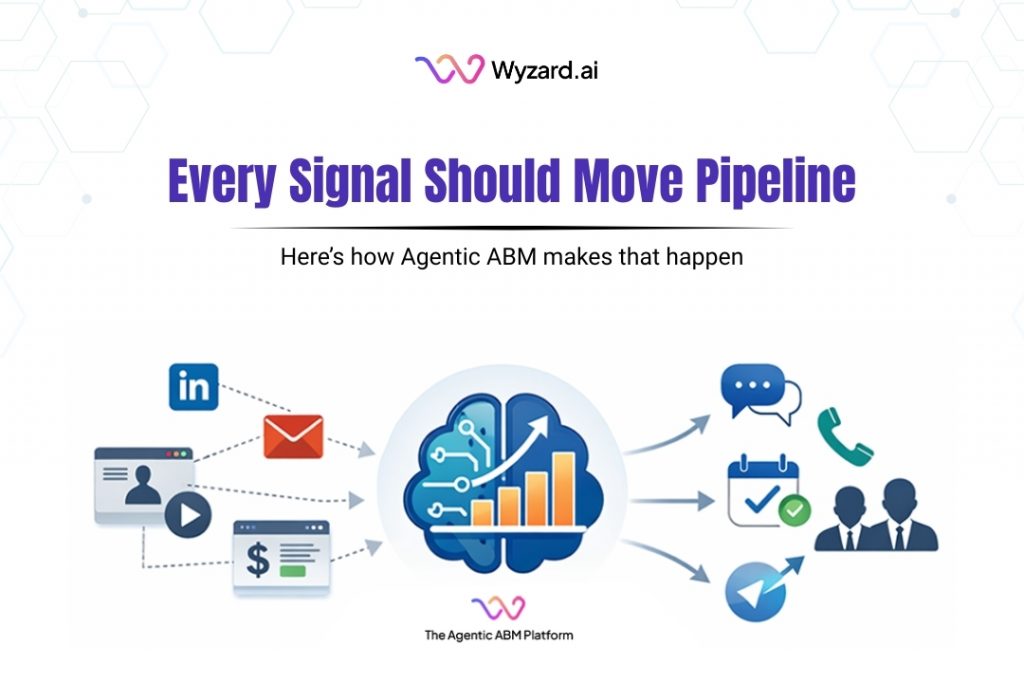
The Signal-to-Revenue Blueprint for Agentic ABM
A CMO reviews the weekly dashboard and sees strong activity. A target account clicked a LinkedIn ad. Another stakeholder ...

March 27, 2026
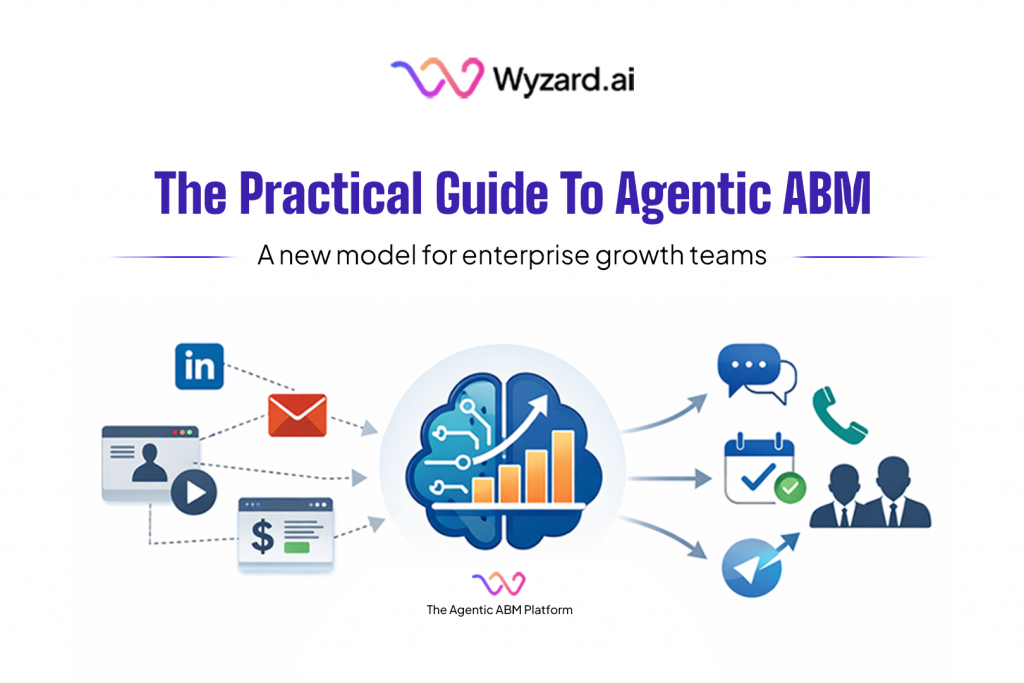
What Is Agentic ABM? A Practical Guide for Enterprise GTM Teams
Enterprise GTM has an action gap. If you are a CMO, this scene is familiar. A target account clicks ...
