 We’ve secured funding to power Signal-to-Revenue AI to GTM teams globally. →
If you are a CMO, this situation feels familiar. Your team has a CRM, marketing automation, paid campaigns, webinars, ...
Subscribe Now
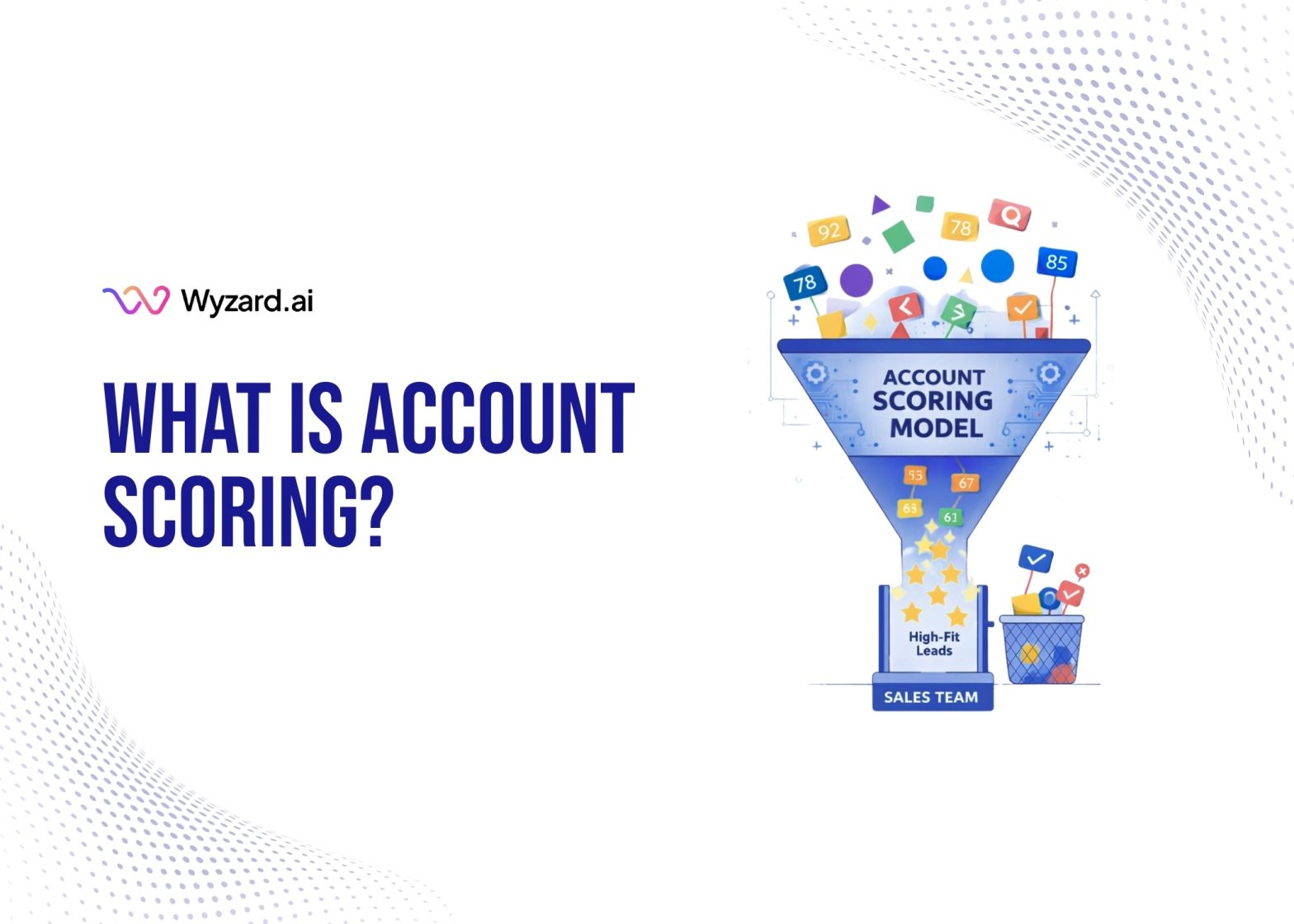
What Is Account Scoring?
Account scoring assigns numerical values to companies in your pipeline based on how well they match your ideal customer profile and their level of engagement with your brand. Rather than treating every prospect equally, scoring helps GTM teams focus resources on accounts most likely to convert.
This approach solves a critical problem: your marketing team generates hundreds of accounts showing some level of interest, but your sales team can only pursue a fraction effectively. Account scoring creates a systematic way to identify which accounts deserve immediate attention and which should stay in nurture programs until they show stronger signals.
Why Account Scoring Matters
Pipeline efficiency dies when sales teams chase every account with equal intensity. Your best reps waste time on companies that don’t have the budget, need, or authority to buy while genuinely interested accounts receive delayed responses. Account scoring fixes this resource allocation problem by creating clear prioritization.
The business impact shows up quickly. Teams using account scoring report shorter sales cycles because they engage hot accounts immediately instead of weeks later. Win rates improve because effort concentrates on accounts matching both fit criteria and intent signals. Marketing spend becomes more efficient when campaigns target high-scoring accounts rather than broad audiences.
Beyond efficiency gains, account scoring aligns marketing and sales around shared definitions of quality. Both teams work from the same account priorities using consistent criteria, ending the endless debate about lead quality and MQL definitions.
Types of Account Scoring Models
- Firmographic Scoring evaluates company attributes like size, industry, revenue range, location, and technology stack. These criteria indicate whether an account fits your ICP regardless of current engagement. A company matching all your firmographic requirements might score high even before showing active interest.
- Behavioral Scoring measures engagement signals across channels. Website visits, content downloads, email opens, webinar attendance, and pricing page views all indicate interest level. Behavioral scores rise and fall based on real-time activity, helping you catch accounts during active research phases.
- Predictive Scoring applies machine learning to historical data, identifying patterns that correlate with closed deals. These models analyze which combination of attributes and behaviors predicts conversion, then score new accounts based on similarity to past winners. Predictive approaches require substantial historical data but surface non-obvious patterns that humans might miss.
Most sophisticated teams use hybrid models combining multiple scoring types. An account might need both strong firmographic fit and recent behavioral signals to reach top-tier status, ensuring you pursue accounts that match your ICP and show genuine buying intent.
How Account Scoring Works
Account scoring starts with signal collection across every touchpoint where prospects interact with your brand. Your website tracking captures visits and page views. Email platforms record opens and clicks. CRM systems store firmographic data and past interactions. Intent platforms detect research activity across the web.
These signals flow into your scoring model, which assigns point values based on predetermined rules. Visiting your pricing page might add 10 points. Having 500+ employees adds 15 points. Being in your target industry adds 20 points. Email engagement adds 5 points. The system calculates total scores continuously as new signals arrive.
When scores cross certain thresholds, automated actions trigger. Accounts reaching 70+ points might route to sales immediately. Scores between 40 and 69 enter nurture campaigns. Below 40, accounts receive broad awareness content until they show stronger signals or a better fit.
Account Scoring Criteria
| Criteria Category | Examples | Why It Matters |
| Firmographic | Company size, industry, revenue, and location | Indicates ICP fit |
| Technographic | Current tech stack, tools used | Shows product compatibility |
| Behavioral | Website visits, content engagement | Demonstrates active interest |
| Intent Signals | Pricing page visits, competitor research | Indicates buying readiness |
| Engagement Level | Multi-contact activity, interaction frequency | Shows account-wide interest |
Effective scoring criteria reflect your specific business realities. A company selling to enterprises weighs employee count heavily. A regional provider prioritizes geography. A vertical SaaS platform makes the industry the dominant factor. Your criteria should mirror the characteristics of customers who actually buy from you and stay long-term.
Account Scoring vs Lead Scoring
Account scoring and lead scoring serve different purposes in your GTM motion. Account scoring evaluates entire organizations. Is this company worth pursuing? Lead scoring evaluates individual contacts. Which person should we engage first within a target account?
Account scoring looks at company-wide signals like multiple people visiting your site, firmographic fit, and organizational-level intent. Lead scoring examines individual behavior, job title, seniority, and role fit. For complex B2B sales with buying committees, you need both: account scoring identifies which companies to target, then lead scoring prioritizes which contacts to engage within those accounts.
Teams running account-based programs rely heavily on account scoring because buying decisions involve multiple stakeholders. A single lead might score low individually, but if five people from their company are researching your solution, the account score should be high.
Benefits of Account Scoring
Better Resource Allocation
Your team stops chasing dead-end opportunities and focuses its effort where it matters most. Marketing spend targets high-potential accounts instead of scattering across unqualified prospects. Sales reps work opportunities with genuine conversion probability rather than wasting time on poor-fit companies showing minimal interest.
Shorter Sales Cycles
Engage accounts showing strong intent signals immediately while interest peaks. When multiple contacts from an account visit your pricing page, read case studies, and download product sheets within days, your team needs to know instantly. Account scoring surfaces these hot moments, so you respond when buyers are actively evaluating solutions.
Improved Win Rates
Pursuing accounts that match your ICP and show genuine engagement dramatically improve close rates. Better qualification upfront means fewer wasted demos, more productive sales conversations, and higher conversion from opportunity to closed-won. Your win rate becomes predictable when you consistently pursue similar high-scoring accounts.
Common Account Scoring Challenges
Data quality undermines even sophisticated scoring models. Incomplete firmographic records, outdated company information, and missing engagement data create scoring gaps. When signals scatter across disconnected tools: website analytics here, email platform there, CRM somewhere else, you lack the unified view needed for accurate account scores.
Over-reliance on single signal types creates blind spots. Pure firmographic scoring misses hot accounts that don’t perfectly match your ICP. Pure behavioral scoring surfaces engaged companies that will never buy because they lack the budget or need. Effective account scoring requires balancing multiple signal types.
Static models decay over time as markets shift and your ICP evolves. The criteria that identified great accounts last year might not work this year if you’ve moved upmarket, changed positioning, or expanded into new industries.
Wyzard.ai addresses these challenges through unified signal capture across web, email, and social channels. WyzSignals creates complete account activity views by tracking engagement everywhere prospects interact with your brand. WyzEnrich automatically fills data gaps through real-time firmographic enrichment. WyzQualify combines fit and intent into dynamic scores that adapt as patterns emerge, ensuring your team acts on complete account intelligence rather than isolated data points.
FAQs
What’s a good account score range?
Most models use 0-100 scales where 70+ indicates high priority, 40-69 represents medium potential, and below 40 suggests poor fit or low intent. Your specific ranges should align with your sales capacity and ICP strictness.
How often should scores update?
Real-time updates capture engagement as it happens. A website visit today, an email open tomorrow, and a pricing page view next week should all trigger immediate score recalculations so your team responds while interest remains hot.
Can small businesses use account scoring?
Account scoring works for any B2B company selling to other organizations. Smaller teams often benefit most because limited resources make prioritization critical. Start with basic criteria like company size and website engagement, then add complexity as your data improves.
What’s the difference between account scoring and account grading?
Account scoring measures engagement and intent. Account grading measures ICP fit based on firmographic criteria. Strong models consider both, a perfect-fit company showing zero engagement needs different treatment than a poor-fit company engaging heavily.
How does account scoring integrate with CRM?
Scores typically appear as custom fields on account records in your CRM. Score changes trigger automated workflows like creating sales tasks, routing accounts to territories, or adding accounts to targeted campaigns. Native integration ensures sales sees current scores without switching tools.
Other blogs
The latest industry news, interviews, technologies, and resources.
March 30, 2026
The Signal-to-Revenue Blueprint for Agentic ABM
A CMO reviews the weekly dashboard and sees strong activity. A target account clicked a LinkedIn ad. Another stakeholder ...

March 27, 2026
What Is Agentic ABM? A Practical Guide for Enterprise GTM Teams
Enterprise GTM has an action gap. If you are a CMO, this scene is familiar. A target account clicks ...
