 We’ve secured funding to power Signal-to-Revenue AI to GTM teams globally. →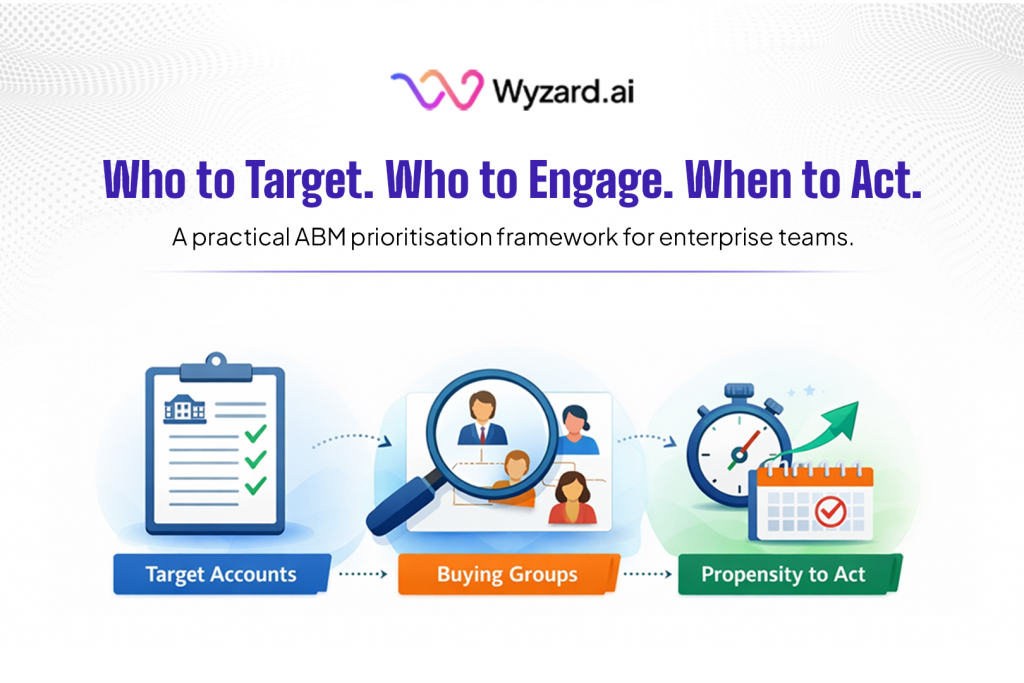
If you are a CMO, one of the hardest moments in ABM comes when the dashboard is full of ...
Subscribe Now
Your marketing team captures signals across web, email, and LinkedIn, but by the time anyone responds, the lead’s already cold. Sound familiar? You’re not alone. B2B SaaS teams lose qualified buyers every day because intent signals scatter across disconnected tools, and manual follow-ups arrive too late.
The right AI tools can change this. Not by adding more complexity, but by connecting what you already have and acting on buying signals the moment they appear. This guide breaks down the top AI tools for business that help growth-stage teams turn scattered signals into closed deals without scaling headcount.
What Makes the Best AI Tools for Business Stand Out?
Choosing AI tools isn’t about chasing trends. It’s about solving real problems that cost you revenue. The best AI tools for business share three qualities: they replace multiple manual processes, they drive measurable outcomes like faster response times or higher conversion rates, and teams actually use them consistently.
Look for tools that work across departments. When your marketing, sales, and revenue operations teams share the same intelligence layer, everyone moves faster. A good AI platform captures signals from web visitors, enriches contact data automatically, qualifies leads based on your ICP, and triggers personalized outreach across channels, all without adding steps to your workflow.
The goal isn’t more tools. It’s a better orchestration of the tools you already have.
Top 10 AI Tools for Business Growth
Here’s a practical breakdown of AI tools that help B2B SaaS teams capture signals, engage buyers faster, and drive pipeline growth.
| Tool Category | Primary Use Case | Key Benefit |
| Revenue Orchestration | Connect scattered signals across GTM tools | Faster speed-to-lead |
| CRM & Marketing Automation | Centralize customer data and campaigns | Better team alignment |
| Content Generation | Scale personalized messaging | Consistent brand voice |
| Sales Intelligence | Analyze customer conversations | Improved win rates |
| Email Assistance | Write better outreach faster | Higher reply rates |
| Multi-Channel Engagement | Reach buyers where they are | Increased touchpoints |
| Workflow Automation | Connect apps without code | Reduced manual work |
| Conversational AI | Handle repetitive questions | More focus time |
| SEO & Content Strategy | Automate content optimization | Better organic visibility |
| Revenue Analytics | Forecast and track pipeline | Data-driven decisions |
1. Wyzard.ai: Signal-to-Revenue Orchestration
Wyzard.ai solves the signal scatter problem that plagues most B2B SaaS teams. When a prospect visits your pricing page, downloads content, or clicks your LinkedIn post, Wyzard.ai captures that signal and triggers immediate action across chat, email, and LinkedIn channels.
Unlike standalone tools that sit in silos, Wyzard.ai acts as an orchestration layer connecting your existing tech stack. It pulls data from your CRM, enrichment tools, and intent platforms, then routes qualified prospects to the right team member while engagement is still hot.
The platform includes WyzSignals for real-time intent capture, WyzEnrich for automatic data appending, WyzQualify for AI-powered lead scoring, and WyzChannels for multi-channel engagement. Every action follows a human-in-the-loop model, AI handles speed and scale while your team maintains strategic control.
For growth teams struggling with delayed responses and missed opportunities, Wyzard.ai turns buying moments into booked meetings. The platform integrates with HubSpot, Salesforce, ZoomInfo, Apollo, and major ad platforms to create a unified signal-to-revenue engine.
2. HubSpot: All-in-One CRM and Marketing Platform
HubSpot brings together marketing, sales, and service tools under one roof. The platform handles everything from landing page creation to email campaigns, lead scoring, and customer support tickets.
What sets HubSpot apart is how its tools connect by default. Marketing sees which content sales prospects engage with. Sales knows exactly which campaigns generated each lead. Everyone works from the same customer data in the Smart CRM.
The Breeze AI features help teams generate content, prioritize tasks, and customize workflows without technical expertise. For mid-market B2B SaaS companies building their GTM motion, HubSpot provides the infrastructure to scale without constant tool switching.
3. ChatGPT: Versatile Conversational AI
ChatGPT handles tasks ranging from customer support to content drafting, code writing, and data analysis. The latest versions process both text and images, making them useful for visual content review and multimodal workflows.
Teams use ChatGPT to accelerate research, brainstorm campaign ideas, write first drafts, and analyze data patterns. The tool remembers context across conversations, so you can refine outputs iteratively without starting from scratch.
For marketing teams creating content at scale, ChatGPT speeds up the ideation and drafting phases while humans add strategic thinking and brand voice refinement.
4. Jasper: SEO-Optimized Content Creation
Jasper specializes in generating marketing content that aligns with SEO best practices and brand guidelines. The platform creates blog posts, social media copy, email campaigns, and landing page text based on your inputs.
The Brand Voice feature ensures all AI-generated content matches your tone and style. Teams managing multiple content channels use Jasper to maintain consistency while producing volume.
For demand generation teams running content-heavy campaigns, Jasper reduces the time from concept to published asset without sacrificing quality.
5. Copy.ai: GTM Platform with AI Workflows
Copy.ai started as a content generator but evolved into a comprehensive GTM platform. It now automates processes like account-based marketing strategy creation, prospecting, and deal management through AI-powered workflows.
The platform combines content generation with sales automation features. You can build multi-step sequences that adapt based on prospect behavior, pulling data from your CRM to personalize each touchpoint.
Growth teams use Copy.ai when they need both content creation and campaign orchestration in a single platform.
6. Gong: Revenue Intelligence and Conversation Analysis
Gong records and analyzes sales calls, meetings, and emails to surface patterns that drive wins. The platform captures conversation dynamics like talk ratios, sentiment shifts, objections, and buying signals.
Sales leaders use these insights to coach reps on what works, identify common objections, and refine messaging. The forecasting dashboards turn conversation data into pipeline predictions with higher accuracy than gut-feel estimates.
For revenue operations teams optimizing the sales process, Gong provides the data needed to make evidence-based improvements.
7. Zapier: No-Code Workflow Automation
Zapier connects over 8,000 apps to automate repetitive tasks without writing code. When a new lead enters your CRM, Zapier can trigger enrichment, send a Slack notification, add the contact to an email sequence, and create a task for your sales team, all automatically.
The platform handles the glue work between systems that don’t integrate natively. For operations teams managing complex tech stacks, Zapier reduces manual data entry and ensures information flows smoothly between tools.
8. Reply.io: Multi-Channel Sales Engagement
Reply.io automates outreach across email, LinkedIn, calls, and SMS. The platform builds sequences that adapt based on prospect responses and engagement patterns.
Sales teams use Reply.io to maintain consistent follow-up without manually tracking every touchpoint. The AI suggests optimal send times and message variations based on what’s working for similar prospects.
For B2B teams running multi-touch campaigns, Reply.io keeps prospects engaged across channels while your reps focus on conversations with qualified buyers.
9. Grammarly: Real-Time Writing Assistant
Grammarly checks grammar, spelling, tone, and style as you write. It works inside email clients, document editors, and messaging platforms to improve clarity and professionalism across all written communication.
The tool adapts to your voice and suggests improvements that fit your audience. Teams use Grammarly to maintain consistent quality in customer-facing messages without bottlenecking every email through an editor.
For marketing and sales teams writing hundreds of messages weekly, Grammarly ensures quality at scale.
10. Lavender: Email Optimization for Sales
Lavender analyzes your sales emails in real time and scores them based on structure, length, tone, and spam triggers. It suggests improvements before you hit send.
The platform integrates with Gmail and Outlook, providing coaching directly in your inbox. Sales teams use Lavender to write emails that get responses, combining AI guidance with their personal touch.
For SDRs and account executives focused on email prospecting, Lavender turns good messages into great ones without adding steps to the workflow.
How to Choose the Right AI Tools for Your Business
Start with your biggest pain points. Are leads slipping through because responses take too long? Focus on tools that capture signals and trigger immediate engagement, like Wyzard.ai’s marketing solutions. Struggling with inconsistent messaging across channels? Look for platforms that maintain brand voice and personalize at scale like Agentic Email.
Check how tools connect with your existing stack. The best AI tools for business don’t force you to replace everything, they integrate with what you already use through native connections. Review which CRMs, enrichment providers, and ad platforms each tool supports before committing.
Measure what matters. Define success metrics upfront, whether that’s speed-to-lead under five minutes, conversion rate improvements, or cost-per-qualified-lead reductions. Track these numbers before and after implementation so you know if the tool delivers real value.
Test adoption internally. Even powerful AI won’t help if your team doesn’t use it. Choose tools with intuitive interfaces and clear onboarding processes. The platforms that stick are the ones people reach for daily, not the ones that require extensive training to understand.
Making AI Tools Work Together
The real power of top AI tools for business comes from orchestration, not accumulation. When your tools share data and trigger actions across systems, you create a signal-to-revenue engine that moves faster than manual handoffs ever could.
Think about how signals flow through your current process. A prospect visits your website, fills a form, and downloads content. That signal hits your CRM, triggering enrichment to fill in company details. Your lead scoring model evaluates fit. If qualified, the system books a meeting or starts a personalized email sequence, all before your team manually touches the lead.
This kind of orchestration requires tools that talk to each other. Platforms like Wyzard.ai sit between your scattered systems and coordinate actions based on unified intelligence. Instead of checking five dashboards to understand one prospect, your team sees complete context in one place and acts while interest remains hot.
The goal isn’t to use more AI. It’s using AI to make your existing tools work better together.
FAQs
What are the best AI tools for business growth in 2026?
The top AI tools for business include Wyzard.ai for signal orchestration, HubSpot for CRM and marketing automation, ChatGPT for versatile content tasks, Jasper for SEO content, and Zapier for workflow automation. Choose based on your biggest pain points, whether that’s response speed, content volume, or system integration.
How do AI tools help B2B SaaS companies grow faster?
AI tools capture buyer intent signals in real time, automate personalized follow-ups across channels, qualify leads based on fit and behavior, and orchestrate actions between disconnected systems. This reduces response delays from hours to minutes and helps teams focus on high-value conversations instead of manual tasks.
Should I replace my current tools with AI platforms?
The best AI tools for business work with your existing tech stack rather than replacing it. Look for platforms that integrate with your CRM, enrichment providers, and ad platforms. Tools like Wyzard.ai act as an orchestration layer connecting what you already have instead of adding another silo.
How can AI tools improve lead response time?
AI tools monitor signals across web, email, and social channels, instantly alerting your team or triggering automated engagement when prospects show interest. Platforms with multi-channel capabilities can reach buyers through chat, email, and LinkedIn within minutes of signal capture, while buyers are still actively researching.
What should I look for when evaluating AI tools for my team?
Focus on four criteria: Does it solve a specific problem causing revenue leakage? Does it integrate with your current tech stack? Will your team actually adopt and use it daily? Can you measure its impact on KPIs like conversion rates, speed-to-lead, or cost-per-qualified-lead? Skip tools that don’t clearly address these questions.
Other blogs
The latest industry news, interviews, technologies, and resources.
March 16, 2026
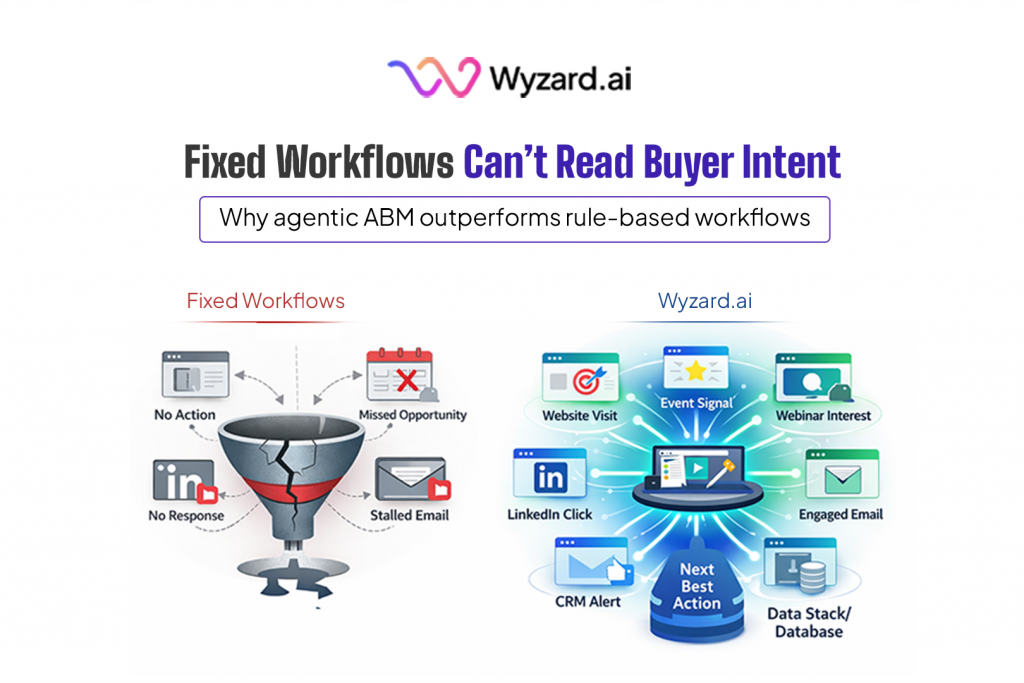
Automation Isn’t Intelligence: Why Agentic ABM Outperforms Rule-Based Workflows
A CMO reviews the weekly pipeline report and sees all the expected activity. A target account visited the website. ...

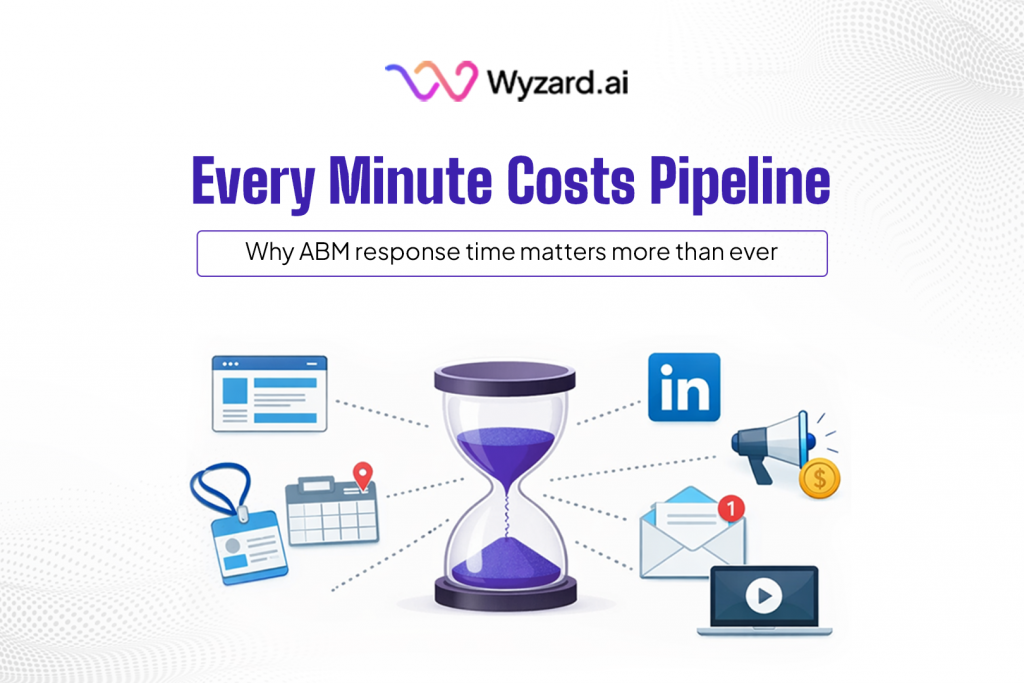
The 5-Minute Rule for ABM: How Fast Response Turns Buyer Intent Into Pipeline
If you are a CMO running enterprise growth, you have probably seen this in a pipeline review. A target ...
