 We’ve secured funding to power Signal-to-Revenue AI to GTM teams globally. →
If you are a CMO, this situation feels familiar. Your team has a CRM, marketing automation, paid campaigns, webinars, ...
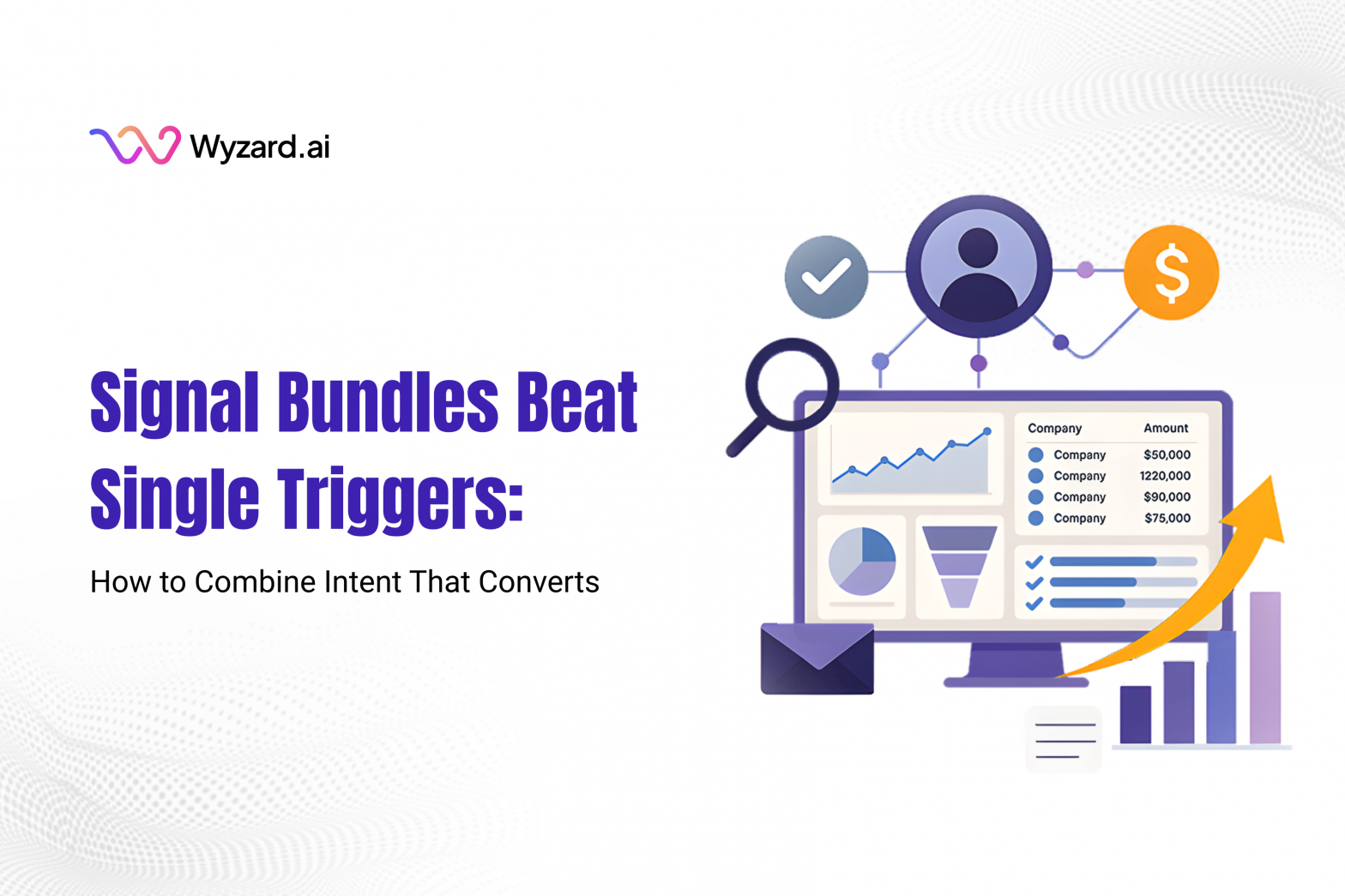
Signal Bundles Beat Single Triggers: How to Combine Intent That Converts
Published
Categorized as Uncategorized
Subscribe Now
CMOs feel the heat every quarter. Marketing drives activity across channels, sales stays busy, dashboards look alive, yet pipeline quality still swings. One lead scans a badge at an event, another clicks a LinkedIn ad, a third attends a webinar. Each action can look promising on its own. The catch: one action rarely signals readiness to buy.
That is where Wyzard, the Signal-to-Revenue AI, changes how intent gets read and acted on. Instead of reacting to isolated triggers, Wyzard.ai captures behavior across every channel and combines it into signals that reflect real buyer momentum. Website visits, event scans, webinar participation, paid clicks, and email replies all matter. What matters more is how they stack together and what your team does next.
Why Single Triggers Mislead Modern GTM Teams
Trigger-based automation took off for one reason: it is easy to set up. A form fill routes to sales. A pricing page visit creates an alert. A webinar registration adds a contact to a sequence. Simple works until it does not.
Most CMOs see the same issues show up again and again:
- Reps chase leads that looked “hot” but never progress.
- Alerts get ignored after too many false positives.
- Marketing reports show engagement, yet pipeline creation feels disconnected from effort.
Single triggers fail for a basic reason. They treat curiosity as commitment. One behavior rarely equals real buying intent. Buyers explore quietly, across channels, and over time. When teams react to one moment in isolation, they misread where the buyer actually stands.
What Signal Bundling Means
Signal bundling combines multiple buyer behaviors into a single intent view. Instead of asking, “Did they click?” it asks, “What pattern of actions signals active evaluation?”
A few examples:
- Event badge scan, then a reply to the post-event email
- LinkedIn ad click, then a pricing page visit from the same account
- Webinar attendance, then a question asked, then a follow-up asset download
Each action alone is weak. Together, they show intent building. Signal bundles reflect progression, not random engagement.
For CMOs, this shift reduces noise, raises trust with sales, and aligns marketing work with pipeline outcomes.
Move From Activity Tracking to a System of Outcomes
Many GTM stacks track activity well. Outcomes are harder. A System of Outcomes starts with what leadership cares about, pipeline creation and revenue, then traces back to the signals and actions that drove it. In that system, intent signals only matter if they lead to meaningful next steps.
Wyzard, the Signal-to-Revenue AI, works inside that mindset. Signals are not logged and forgotten. They are evaluated, bundled, and routed into actions sales can trust.
Why a GTM Intelligence Graph Makes Bundling Work
Signal bundling needs connected data. In real deals, different people from the same account engage in different places. One person attends the webinar. Another clicks an ad. A third replies to an email.
A GTM Intelligence Graph connects those dots. It unifies people, accounts, channels, and timing into one view of intent. That unlocks buying group context rather than isolated contact activity.
With a GTM Intelligence Graph, CMOs gain clarity on which bundles reflect account-level readiness. Sales gains confidence that alerts map to real opportunity, not random engagement.
How Signal Bundles Improve Conversion
Better intent signals lead to better execution. When teams act on bundled signals, conversion improves for a few practical reasons:
- Sales prioritizes fewer, higher-confidence opportunities.
- Outreach gets more relevant since context is richer.
- Response timing improves once reps trust the signal.
- Marketing and sales alignment tightens around what “ready” looks like.
Signal bundling does more than sort leads. It changes behavior. That is where a Signal-to-Revenue AI adds value beyond reporting. It does not just show intent. It triggers the right response at the right moment across channels.
How Wyzard.ai Runs Signal Bundling in Practice
Wyzard is the Signal-to-Revenue AI and an AI GTM orchestration platform built for omni-channel engagement. It does not focus on a single touchpoint.
Through WyzSignals, the platform captures intent across:
- Website behavior
- Events and field marketing interactions
- Paid channels like LinkedIn ads
- Webinars and virtual events
- Nurture email engagement and replies
- CRM and sales activity
Those signals get combined in real time using the GTM Intelligence Graph. When a meaningful bundle forms, Wyzard.ai orchestrates next steps through WyzAgents across email, LinkedIn, chat, and voice, with human oversight.
This orchestration is built and refined by AI GTM Engineers, who align signal logic, routing rules, and messaging with your GTM motion. The result is consistent execution that scales without adding headcount.
Signal Bundling vs Trigger-Based Automation
Trigger-based automation reacts fast, yet it reacts with limited context. One action fires one response. Over time, teams stop trusting the system since too many alerts lack buyer reality.
Signal bundling trades volume for accuracy. Fewer alerts reach sales, and each one carries stronger intent. Marketing spends less time defending lead quality. Sales spends more time on opportunities that progress.
The difference is not just tech. It is the goal. Trigger-based systems optimize for activity. TheSignal-to-Revenue AI optimizes for outcomes.
A Practical Framework CMOs Can Use
Here is a straightforward way to roll out signal bundling without turning it into a long internal project:
- Define intent tiers, such as early interest, active evaluation, and sales-ready
- Assign signals to each tier across channels
- Decide which combinations qualify as a bundle worth acting on
- Map a GTM action to each bundle, not to each single signal
- Measure pipeline creation tied back to bundles, not individual touches
This brings discipline to intent management and creates shared language across marketing, sales, and RevOps.
Turn Intent Into Predictable Revenue
The goal is not to capture more signals. The goal is to act on the right ones. Single triggers inflate dashboards and drain confidence. Signal bundles reflect how buyers actually behave.
Wyzard, the Signal-to-Revenue AI, helps CMOs move from fragmented intent to orchestrated execution. By combining signals across channels, connecting them through a System of Outcomes powered by a GTM Intelligence Graph, and tying actions to pipeline results, teams stop guessing and start proving what converts.
If you want to see how Wyzard, the Signal-to-Revenue AI, turns bundled intent into pipeline across events, paid, webinars, email, and sales touchpoints, book a demo today.
Other blogs
The latest industry news, interviews, technologies, and resources.
March 30, 2026
The Signal-to-Revenue Blueprint for Agentic ABM
A CMO reviews the weekly dashboard and sees strong activity. A target account clicked a LinkedIn ad. Another stakeholder ...

March 27, 2026
What Is Agentic ABM? A Practical Guide for Enterprise GTM Teams
Enterprise GTM has an action gap. If you are a CMO, this scene is familiar. A target account clicks ...
