 We’ve secured funding to power Signal-to-Revenue AI to GTM teams globally. →
If you are a CMO, this situation feels familiar. Your team has a CRM, marketing automation, paid campaigns, webinars, ...
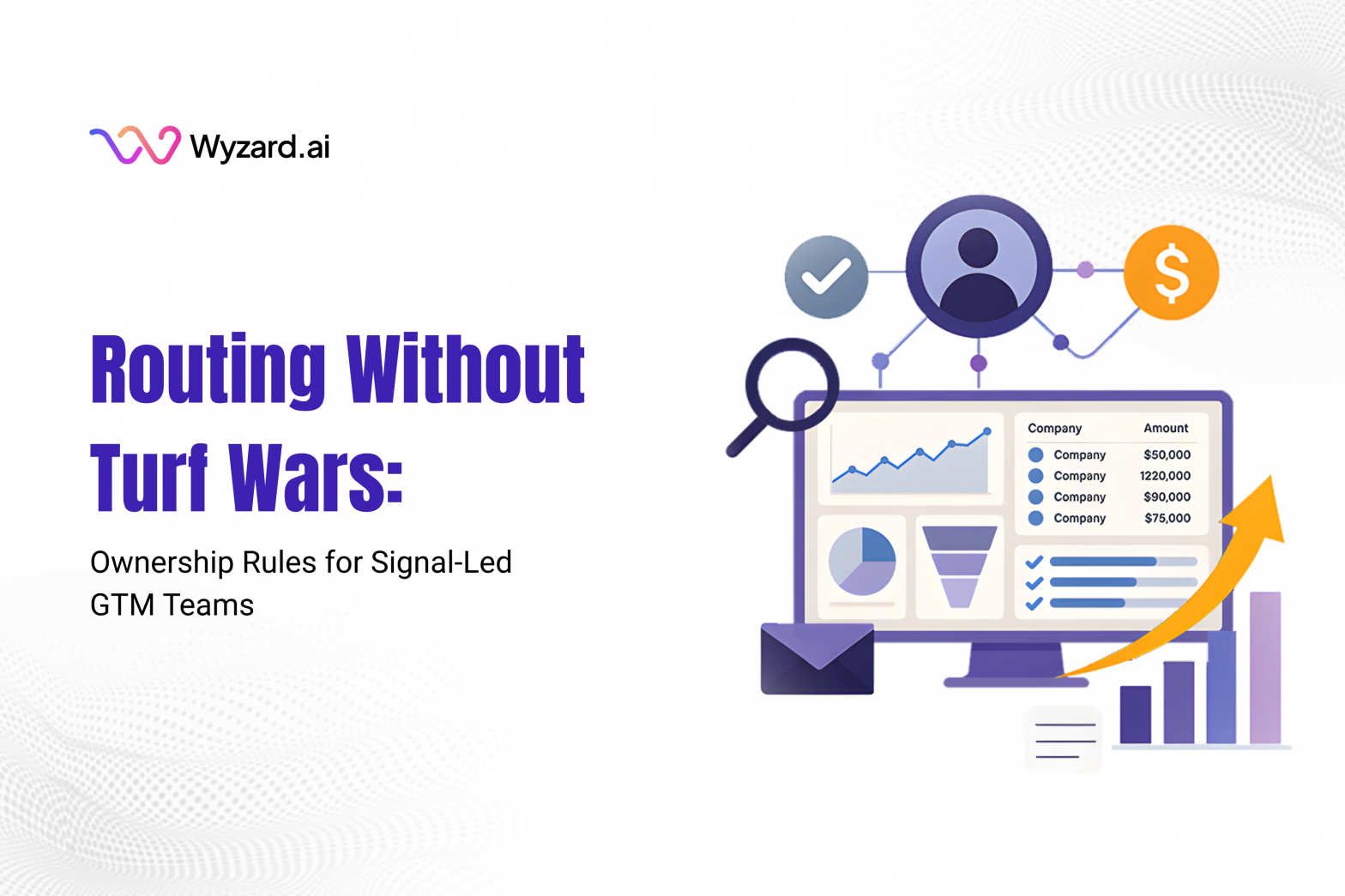
Routing Without Turf Wars: Ownership Rules for Signal-Led GTM Teams
Published
Categorized as Uncategorized
Subscribe Now
Every CMO has lived this moment. Pipeline looks strong on paper, intent signals are flowing in from every direction, and deals still stall. Sales says leads are routed late or incorrectly. Marketing says signals are ignored. RevOps sits in the middle, rewriting rules and calming tensions.
The root issue is rarely effort. It is ownership.
Signals arrive from everywhere. Someone is visiting your website after clicking a LinkedIn ad. Another account is scanned at an event. A webinar attendee asks a question. A prospect replies to a nurture email. Each signal matters, yet teams argue over who should act. Speed drops. Friction rises.
This is the exact problem Wyzard, the Signal-to-Revenue AI, is built to solve. It captures buyer signals the moment they happen, connects them across channels, and routes ownership based on intent and outcomes rather than politics or static rules.
Why Routing Breaks Teams Before it Breaks Revenue
Routing triggers conflict fast. Sales wants the hottest signals now. Marketing wants attribution and fairness. RevOps wants consistency without constant exceptions.
When ownership is unclear, teams pause. Signals sit. Buyers move on. This is where Signal-to-Revenue AI matters, because speed without clarity breaks trust.
For CMOs, this shows up as stalled momentum. You invest in demand gen, events, content, and paid. The buying moment arrives, then gets stuck in internal back-and-forth instead of flowing through a Signal-to-Revenue AI system built for action.
The Hidden Cost of Turf Wars and Why Traditional Rules Fail
Turf wars do more than slow follow-up. They break trust. Sales doubts marketing signals. Marketing questions sales response. RevOps turns into a referee instead of a builder. Buyers feel the delay, and intent cools off. A Signal-to-Revenue AI removes this friction by aligning ownership to intent, not hierarchy.
Old routing rules make it worse. CRM assignment logic is built for static fields like geo, form fills, and record owners. Modern signals do not fit that model.
Signals now come from everywhere: website engagement, event scans, webinar questions, LinkedIn ad clicks, retargeting engagement, and nurture email replies. Each signal has timing and context. Static rules only answer who owns a record. They do not answer who should act now. That gap is exactly what Signal-to-Revenue AI closes through real-time signal-led routing.
What Signal-Led Routing Means
Signal routing is not about assigning ownership forever. It is about deciding who should act now.
Ownership becomes dynamic. It shifts based on intent, timing, and the desired outcome. Early-stage signals may belong with marketing. Late-stage signals may belong with sales. Some signals call for coordinated action across teams.
This approach reduces turf wars by making ownership situational rather than political.
Ownership Logic Inside a System of Outcomes
Clear ownership starts with outcomes.
In a System of Outcomes, routing decisions tie to what the business wants to achieve. Book a meeting. Move an opportunity forward. Re-engage a stalled account.
Ownership logic defines which team or role is best positioned to drive that outcome in that moment. It replaces rigid rules with intent-driven decisions.
For CMOs, routing starts serving revenue instead of internal structure.
How the GTM Intelligence Graph Brings Context to Routing
Routing decisions need context. That context lives in the GTM Intelligence Graph.
A GTM Intelligence Graph connects identity, account data, behavior patterns, and timing into a single view. It shows how signals relate across channels and over time.
This context answers practical questions:
- Is this account already in a sales motion
- Is this signal part of a broader buying pattern
- Is this sustained interest or a one-off action
With this foundation, routing becomes fair, fast, and repeatable.
Why RevOps Gets Stuck in the Middle
When routing logic is unclear, RevOps absorbs the pain. Teams ask for exceptions. Rules multiply. Edge cases pile up.
Instead of enabling growth, RevOps spends time managing conflict.
Signal-led routing changes that. When ownership rules are outcome-driven and context-aware, exceptions drop. Routing becomes predictable. Teams align around the same logic. All this happens with Signal-to-Revenue AI.
How Wyzard.ai Routes Signals Without Conflict
Wyzard, the Signal-to-Revenue AI, removes ambiguity from routing.
It captures real-time intent through WyzSignals across every channel. Website visits. Event scans. Webinar engagement. Ad interactions. Email replies.
Then WyzGoal defines what should happen next. Outcomes are written in clear business language, not technical rules.
Together, they decide who should act based on intent and the outcome, not hierarchy or habit.
Routing becomes automatic, transparent, and aligned with revenue goals.
WyzGoal and WyzSignals Working Together
WyzSignals listens across channels and identifies buying signals in real time. It filters noise and highlights intent that deserves action.
WyzGoal translates business objectives into routing decisions. For example:
- Route late-stage intent to sales right away
- Route early research signals to marketing nurture
- Trigger coordinated outreach across channels for high-value accounts
This combination from Wyzard, the Signal-to-Revenue AI, turns routing into orchestration rather than assignment.
Orchestration with Human Oversight
Routing does not stop at assignment. Action matters.
Once ownership is clear, Wyzard, the Signal-to-Revenue AI, orchestrates follow-up across email, LinkedIn, chat, voice, and sales workflows. Outreach stays coordinated and timely.
Execution is handled by AI GTM Engineers, goal-driven agents operating with human oversight. Teams keep control over messaging and strategy while gaining speed and consistency.
Who this Framework is Built for
Signal-led routing benefits every GTM role.
CMOs reduce internal friction and protect speed to lead.
RevOps teams gain cleaner logic and fewer exceptions.
Sales leaders get clear ownership and faster response to real buyers.
Everyone aligns around outcomes instead of territory.
Routing that Serves Revenue, Not Politics
Routing should never slow down a buyer who is ready to engage. Ownership should never be a debate when intent is clear.
Wyzard, the Signal-to-Revenue AI, connects your GTM stack, captures buyer signals live, and routes ownership based on intent and outcomes. The result is faster engagement, less friction, and more predictable revenue.
Book a demo and see Wyzard.ai in action.
Other blogs
The latest industry news, interviews, technologies, and resources.
March 30, 2026
The Signal-to-Revenue Blueprint for Agentic ABM
A CMO reviews the weekly dashboard and sees strong activity. A target account clicked a LinkedIn ad. Another stakeholder ...

March 27, 2026
What Is Agentic ABM? A Practical Guide for Enterprise GTM Teams
Enterprise GTM has an action gap. If you are a CMO, this scene is familiar. A target account clicks ...
