 We’ve secured funding to power Signal-to-Revenue AI to GTM teams globally. →
If you are a CMO, this situation feels familiar. Your team has a CRM, marketing automation, paid campaigns, webinars, ...
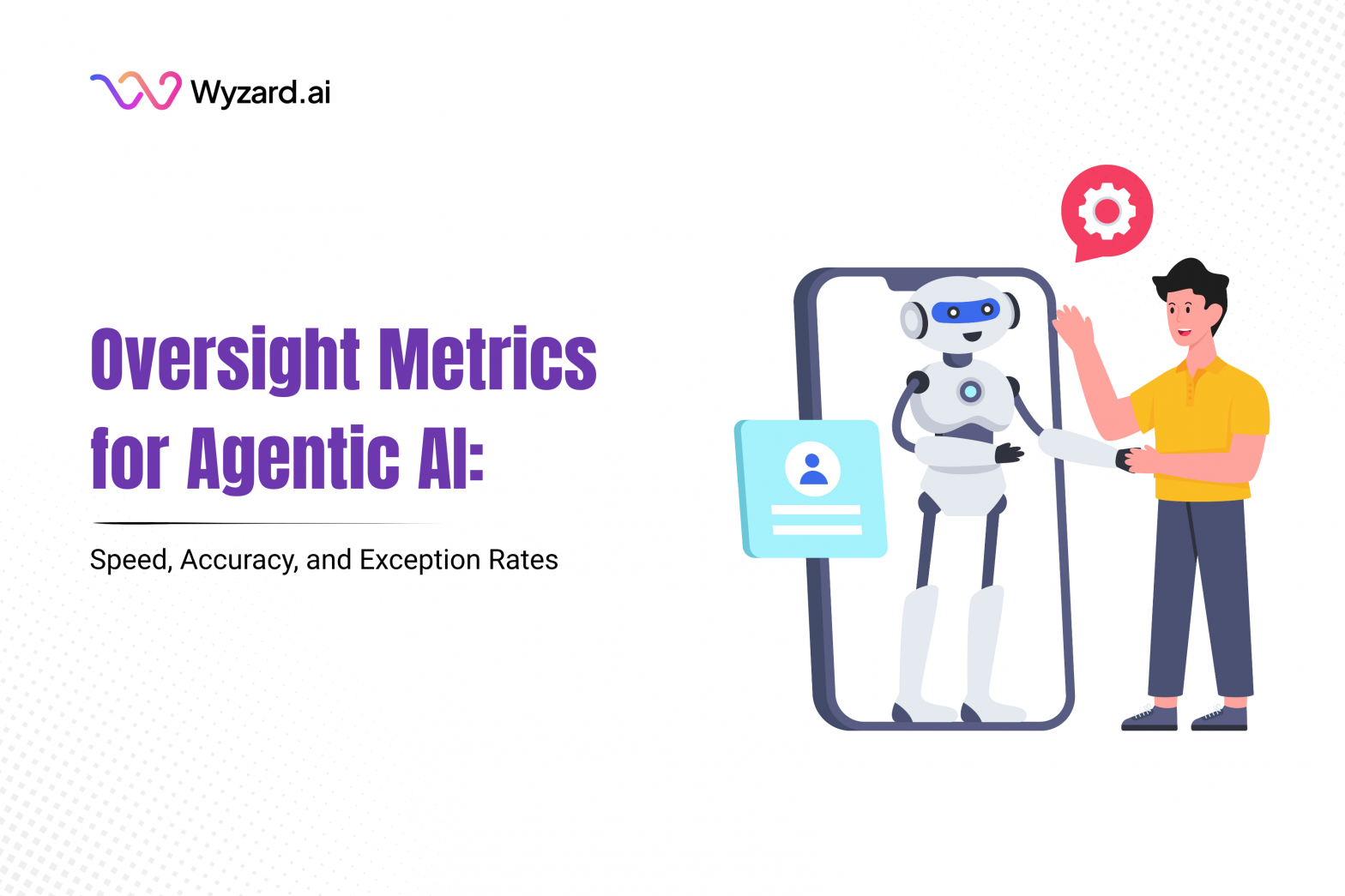
Oversight Metrics for Agentic AI: Speed, Accuracy, and Exception Rates
Published
Categorized as Uncategorized
Subscribe Now
A CMO described an AI dashboard that looked impressive and still felt useless. Charts showed message volume, response counts, and engagement totals rising each week. Then she asked one question: “Can I trust what this system is doing without watching it every day?” No one gave a clean answer.
That gap is why oversight matters. As Wyzard, the Signal-to-Revenue AI, works across inbound, outbound, events, webinars, LinkedIn, and email, leaders need metrics that reveal judgment, reliability, and risk. With Agentic AI and HITL, oversight is not about vanity numbers. It is about knowing when to lean in and when to step back.
Why Most AI Dashboards Misled Leaders
Many AI tools were built to impress, not to guide decisions. They surface activity counts that look productive yet say little about quality. High response volume can hide weak targeting. Fast replies can cover up a bad read on intent. Low visibility into edge cases can create false confidence.
CMOs feel this early. Brand trust is fragile. One poorly handled interaction can undo months of careful positioning. Vanity metrics fail to answer the real question leaders ask: “Is this system helping revenue without creating hidden risk?”
This is where Agentic AI with HITL changes the measurement conversation. Oversight shifts from activity to behavior.
What Oversight Means in an Agentic AI and HITL System
Oversight is not micromanagement. It is visibility into how decisions get made.
In an agentic system, AI is allowed to act. HITL adds checkpoints where humans guide, review, and correct. That collaboration creates measurable signals leaders can trust.
With Agentic AI and HITL, oversight metrics focus on how the system behaves under pressure, not how busy it looks.
Speed as an Oversight Metric, Not a Vanity Signal
Speed is often misunderstood. Faster is not always better.
True speed measurement looks at response timing in context. Speed-to-first-touch matters for high-intent inbound signals. Speed-to-resolution matters more for complex conversations. Blind speed can create mistakes when context is thin or risk is high.
Wyzard.ai measures speed across channels. Website interactions, event follow-ups, LinkedIn replies, webinar questions, and nurture emails all behave differently. The Signal-to-Revenue AI adjusts expectations by channel and intent instead of forcing one global target.
Accuracy as the Foundation of Trust
Speed without accuracy creates noise. Accuracy tells leaders whether the system is reading intent correctly.
Accuracy shows up in several ways:
- correct intent classification
- correct routing to sales, marketing, or escalation
- correct message tone for the buyer’s stage
- correct handoff timing to humans
With Agentic AI and HITL, accuracy improves through human correction and learning. Over time, fewer fixes are needed. That trend matters more than any single snapshot.
Exception Rates Reveal System Health
Most teams overlook exception rates. They should not.
Exceptions surface edge cases, ambiguity, and risk. A healthy system shows exceptions clearly instead of hiding them. Rising exception rates often signal new buying patterns, channel shifts, or messaging gaps.
Wyzard.ai treats exceptions as insight. With Agentic AI and HITL, exceptions trigger pause logic and human review. Leaders can see where judgment was required and how often that happens.
Low exceptions with high confidence is good. High exceptions with learning is manageable. Zero exceptions can point to blind automation.
Why Context Changes How Metrics Should be Read
Metrics without context mislead. A slower response may be correct for an enterprise account in procurement review. A faster response may be necessary for a high-intent inbound demo request.
The GTM Intelligence Graph anchors metrics in reality. It connects account data, engagement history, intent signals, and channel behavior into one view. Speed, accuracy, and exceptions make sense only when read through this lens.
This context turns numbers into decisions.
Measuring Oversight Inside a System of Outcomes
Oversight metrics must connect to business results. This is where a System of Outcomes matters.
Within a System of Outcomes, leaders can track:
- how speed affects conversion by channel
- how accuracy impacts pipeline progression
- how exception handling reduces risk and churn
- how oversight trends correlate with revenue consistency
Metrics stop being reports and start guiding action.
How WyzAnalytics Supports Agentic Oversight
WyzAnalytics gives leaders a unified view of agent behavior. Instead of scattered dashboards, it shows how Agentic AI and HITL performs across the full GTM surface.
CMOs see trust signals. RevOps sees system health. Sales leaders see where human involvement improves outcomes. AI GTM Engineers see where thresholds need tuning.
This shared visibility creates alignment instead of debate.
Oversight Across Every GTM Channel
Agentic systems do not live in one channel. Oversight cannot either.
Wyzard.ai measures behavior across:
- website engagement
- event and field lead follow-up
- LinkedIn outreach
- webinar participation
- nurture and re-engagement emails
The Signal-to-Revenue AI treats every interaction as part of one system. Oversight follows the buyer, not the channel.
The Role of AI GTM Engineers in Metric Design
Metrics do not define themselves. AI GTM Engineers shape how oversight works.
They:
- define acceptable speed ranges by intent
- tune accuracy thresholds
- set escalation triggers
- review exception trends
Their work keeps Agentic AI and HITL aligned with revenue goals and brand standards as the system evolves.
Why CMOs Care About These Metrics
For CMOs, oversight metrics protect trust. They reduce fear of reputational risk while preserving scale.
When leaders see clear signals around speed, accuracy, and exceptions, confidence grows. Automation becomes a strategic asset instead of a liability.
With Agentic AI and HITL, CMOs gain visibility without slowing teams down.
Vanity Metrics vs. Real Oversight
Vanity metrics answer easy questions. Oversight metrics answer the ones that matter.
Activity counts look impressive. Oversight metrics show whether the system deserves trust. This difference defines maturity in agentic GTM.
Teams that measure the wrong things feel busy and uncertain. Teams that measure the right things move faster with confidence.
Measure What Protects Revenue and Trust
Oversight is not optional for agentic systems. It is the difference between experimentation and scale.
Agentic AI with HITL, guided by accuracy, informed by speed, revealed through exception rates, and anchored in a System of Outcomes with a GTM Intelligence Graph, gives leaders a clear view of what matters.
Wyzard, the Signal-to-Revenue AI, orchestrates every signal into revenue while making system behavior visible and accountable.
If you want to see real oversight at work, book a demo and see Wyzard.ai in action.
Other blogs
The latest industry news, interviews, technologies, and resources.
March 30, 2026
The Signal-to-Revenue Blueprint for Agentic ABM
A CMO reviews the weekly dashboard and sees strong activity. A target account clicked a LinkedIn ad. Another stakeholder ...

March 27, 2026
What Is Agentic ABM? A Practical Guide for Enterprise GTM Teams
Enterprise GTM has an action gap. If you are a CMO, this scene is familiar. A target account clicks ...
