 We’ve secured funding to power Signal-to-Revenue AI to GTM teams globally. →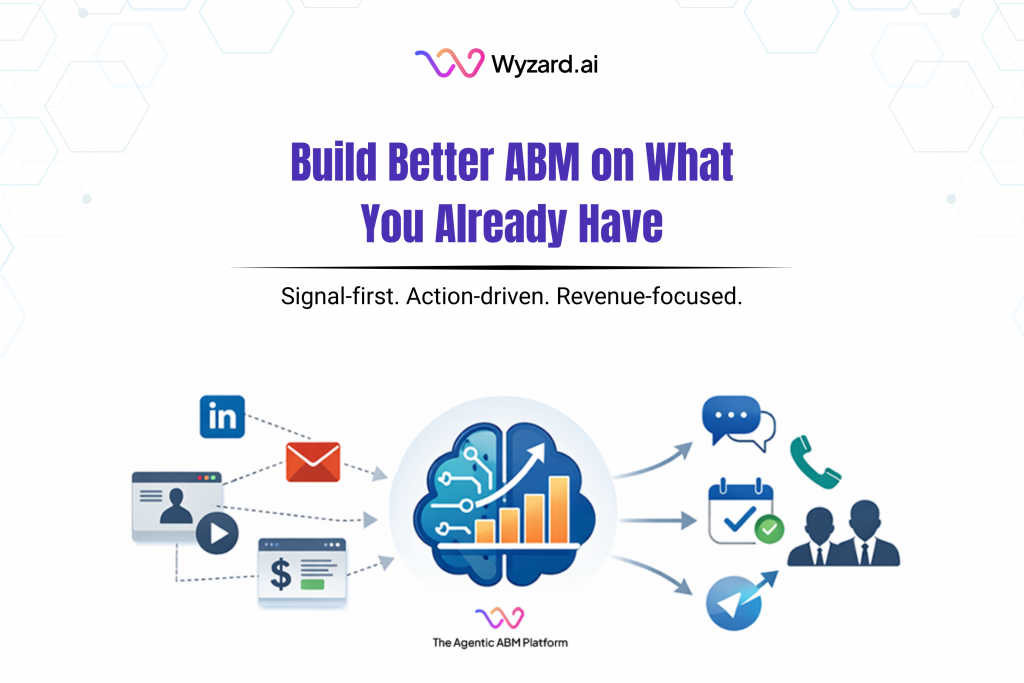
If you are a CMO, this situation feels familiar. Your team has a CRM, marketing automation, paid campaigns, webinars, ...
The Hidden Cost of GTM Execution: Why GTM execution gaps Stall Revenue
Published
Categorized as Uncategorized
Subscribe Now
A CMO approves a GTM initiative that looks solid on paper. The tools are live. The workflows exist. Support retainers are in place. Everyone feels covered. Then, three months later, pipeline growth feels softer than expected. Deals that showed early interest went quiet. Follow-ups happened, yet not fast enough. Context got lost across teams.
This is not a tooling failure. It is not a strategy failure. It is the cost of GTM execution gaps.
Most revenue teams do not lose pipeline because they chose the wrong GTM plan. They lose pipeline because execution lacks ownership after launch. This is exactly where Wyzard, the Signal-to-Revenue AI, focuses. Wyzard.ai captures buyer signals the moment they happen and orchestrates action across channels so intent does not fade into silence.
Why GTM Execution Breaks After Go-Live
Support services feel safe. They promise availability. They promise responsiveness. For busy CMOs and RevOps leaders, that feels like insurance.
The problem is that support does not own outcomes.
In many organizations, GTM execution relies on support-only models. Tickets get resolved. Tools stay connected. Dashboards remain live. Yet no one owns what happens next when a buyer shows intent. No one is accountable for turning signals into conversations.
This is where GTM execution gaps quietly appear.
The Illusion of Progress Support Creates
Support gives teams the feeling that GTM is being handled. Someone is there when things break. Someone responds when asked.
What support does not do is push execution forward. It reacts. It waits. It closes tickets instead of closing gaps.
Meanwhile, buyer intent does not wait. A prospect who clicks a LinkedIn ad today expects relevance today. A lead scanned at an event expects follow-up while the conversation is fresh. A webinar attendee expects engagement that reflects what they just learned.
When response slows or context disappears, pipeline weakens. That weakness rarely shows up as an error. It shows up as silence.
Where GTM Execution Gaps Create Real Cost
The cost of weak execution rarely appears as a line item. It shows up in three places that matter to CMOs and revenue leaders.
Opportunity Cost compounds quietly
Every missed signal represents potential revenue that never enters the pipeline. Website visits spike without follow-up. Event leads sit untouched for days. Email replies wait in inboxes.
This is opportunity cost in its purest form. Revenue does not disappear. It never gets created.
Pipeline Loss hides in plain sight
When execution ownership is unclear, follow-up becomes inconsistent. One team assumes another team will act. Handoffs get missed. No alert fires.
Over time, pipeline loss becomes systemic. By the time it shows up in reports, the buyer has already moved on.
Execution lacks accountability
Support reacts to requests. It does not improve plays. It does not inspect performance. It does not fix root causes.
Without accountability, execution plateaus. The system runs, yet it does not learn.
These are classic GTM execution gaps that no support retainer can fix.
Why Support-Only GTM Fails Outcome-Led Teams
Outcome-led GTM depends on action, not availability. Outcomes require someone to own what happens between signal and response.
Support keeps systems running. It does not drive outcomes. This is why outcome-led teams struggle when execution lives inside support-only models.
What is missing is a System of Outcomes. Signals should lead to action. Action should lead to measurable results. Results should drive change. Without ownership at each step, the loop breaks.
The Role of the System of Outcomes
A System of Outcomes connects intent to execution and execution to revenue. It is not a dashboard. It is an operating model.
In this system:
- Signals are captured across channels
- Actions are triggered with clear standards
- Outcomes are reviewed continuously
- Adjustments happen before leakage compounds
Without this system, GTM becomes reactive. Teams stay busy, yet revenue stalls.
Why Signal Fragmentation Makes Execution Worse
Buyer intent does not live in one place. It shows up across website visits, event scans, webinar attendance, paid ads, and email replies.
When these signals live in silos, context disappears. Teams respond without knowing the full story. Follow-up feels generic. Relevance drops.
The GTM Intelligence Graph solves this by unifying signals into a single view. Context stays intact across channels and moments. Execution becomes proactive instead of reactive.
This is foundational to closing GTM execution gaps.
How Wyzard.ai Replaces Support with Execution Ownership
Wyzard.ai was built for this exact problem. Wyzard, the Signal-to-Revenue AI, connects GTM systems, captures live buyer signals, and orchestrates the right action across channels with human oversight.
Wyzard.ai’s managed GTM does not wait for tickets. It owns execution.
Signals from website activity, events, webinars, paid campaigns, and email replies flow into the GTM Intelligence Graph. From there, follow-up is triggered across chat, email, LinkedIn, and voice.
Behind the scenes, AI GTM Engineers monitor execution health. They inspect response speed, follow-up quality, and play performance. When breakdowns appear, they fix them before pipeline suffers.
This replaces passive support with active ownership.
A Simple Comparison: Support vs. Managed Execution
Support-only GTM answers questions. Managed GTM answers outcomes.
Support reacts when asked. Managed execution acts when intent appears.
Support closes tickets. Managed execution closes GTM execution gaps.
For CMOs, this distinction matters. Revenue does not grow because tools are supported. Revenue grows because intent turns into conversations.
Who Pays the Highest Price for Execution Gaps
Lean GTM teams feel this first. CMOs under pressure to show ROI feel it next. RevOps leaders inherit the cleanup when pipeline underperforms.
When GTM execution gaps persist, confidence erodes. Teams lose trust in the GTM motion, even when strategy is sound.
Ownership is the Difference
Support keeps systems alive. Ownership keeps revenue moving.
The hidden cost of weak execution is not visible on invoices. It shows up in missed opportunities, stalled pipeline, and lost momentum.
Wyzard.ai exists to close that gap. As the Signal-to-Revenue AI, we orchestrate every signal into revenue through managed execution led by AI GTM Engineers. We replace support-only GTM with ownership-driven outcomes.
If your GTM motion feels supported but underperforming, the issue is likely execution, not intent. Book a demo to see how Wyzard.ai’s managed GTM closes GTM execution gaps and turns signals into predictable revenue.
Other blogs
The latest industry news, interviews, technologies, and resources.
March 30, 2026
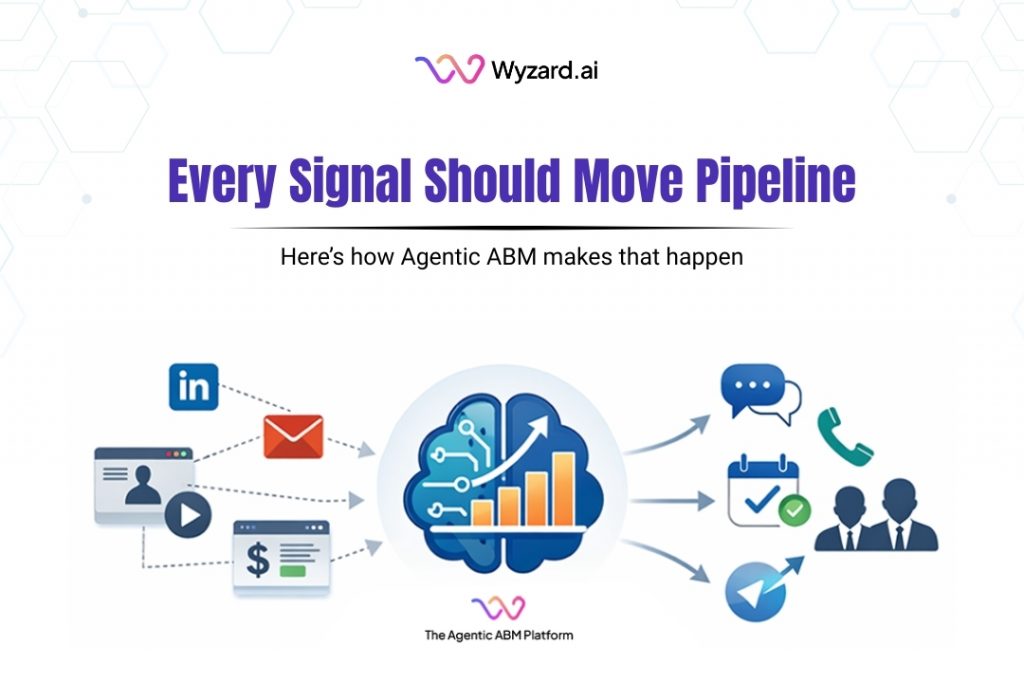
The Signal-to-Revenue Blueprint for Agentic ABM
A CMO reviews the weekly dashboard and sees strong activity. A target account clicked a LinkedIn ad. Another stakeholder ...

March 27, 2026
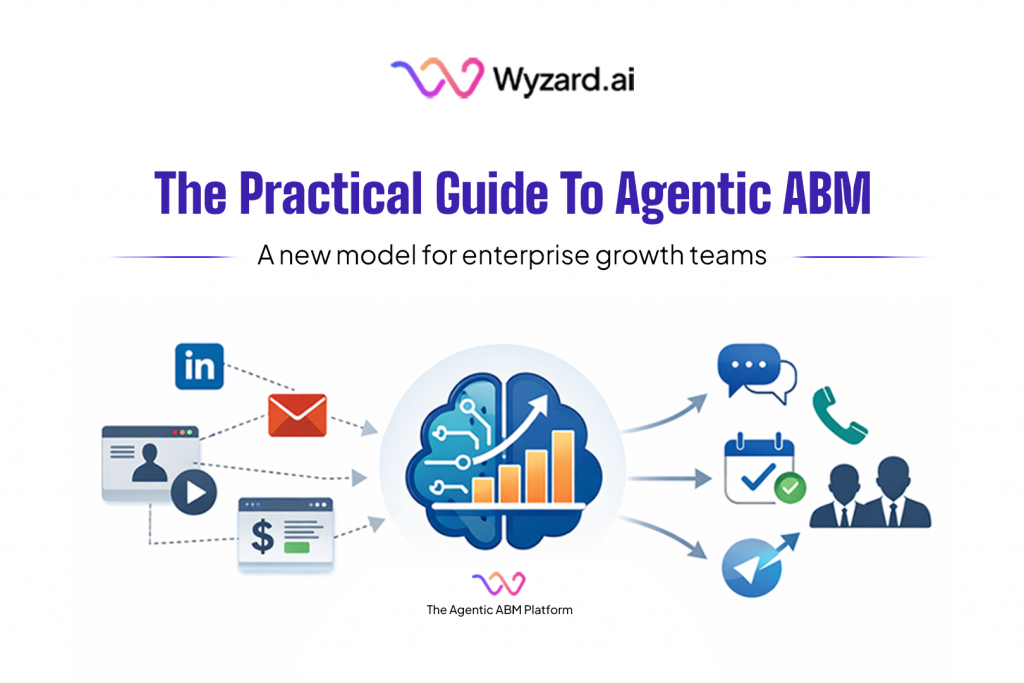
What Is Agentic ABM? A Practical Guide for Enterprise GTM Teams
Enterprise GTM has an action gap. If you are a CMO, this scene is familiar. A target account clicks ...
