 We’ve secured funding to power Signal-to-Revenue AI to GTM teams globally. →
If you are a CMO, one of the hardest moments in ABM comes when the dashboard is full of ...
Subscribe Now
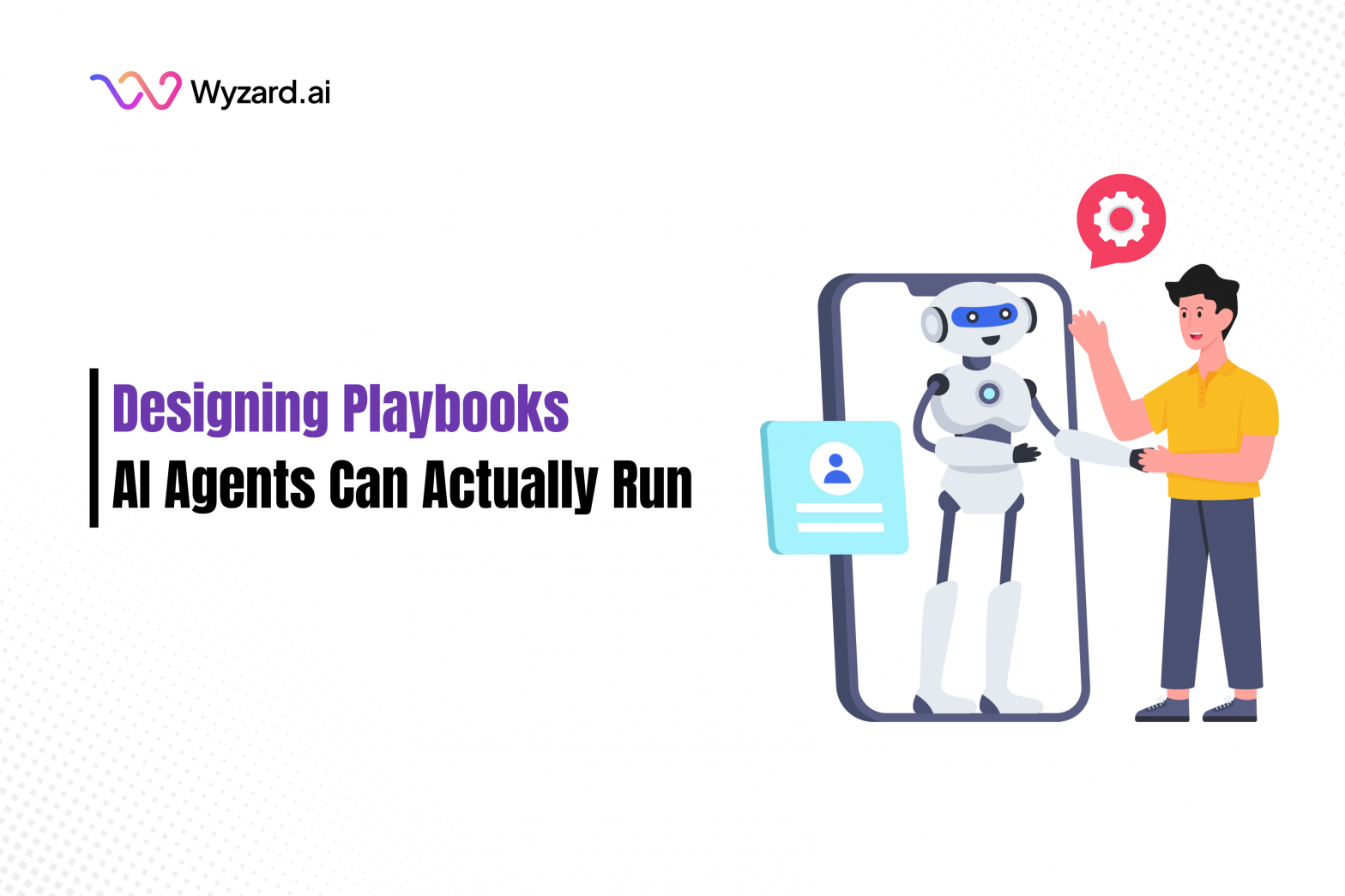
The promise of Agentic AI in GTM is obvious. Leaders want execution that moves with speed, precision, and context. Yet most teams quickly find that their carefully built sequences and workflows are unusable by autonomous systems. The playbooks were written for humans, not for AI. The result is predictable. Activity increases, outcomes stall, and the organization blames the technology instead of the architecture behind it.
Early AI initiatives underperform because instructions are not structured in a way machines can interpret. Many companies enter automation projects without the clarity or design standards needed for execution. This is why the next wave of GTM innovation requires playbooks built for agentic AI, not adapted for it. This is where Wyzard, the Signal-to-Revenue AI, comes in.
What follows is a practical guide to designing instruction, structure, and strategy that autonomous systems can run with accuracy, accountability, and speed.
Why Most Playbooks Break When AI Tries to Run Them
Playbooks built for human sellers rely heavily on interpretation. Humans add nuance, context, and judgment. A sequence that says “Send a value-based email to the VP” is clear enough for a rep. For an autonomous system, it is impossible. Without structure, the AI guesses. Without oversight, it drifts. Without a goal, it produces motion instead of progress.
This is the playbook failure pattern. And it is the quiet reason many agentic AI deployments fail before they scale.
The issue is not the AI. The issue is Playbook Structure.
To succeed, the system needs clarity across four layers:
- Clear intent
- Structured steps
- Clean signals
- Human alignment points
This is where Wyzard.ai’s architecture makes the difference.
Why the System of Outcomes Solves the Problem
The System of Outcomes brings order to the playbook problem. Instead of building sequences that automate tasks, leaders define outcomes and let the AI design the motion that fits them. This removes ambiguity and creates a model that converts human strategy into repeatable, intelligent execution.
This structure supports goal-based execution, where strategy is expressed clearly and translated into actions the system can run consistently. It is not about writing more steps. It is about clarifying what success looks like so the AI can adjust paths in real time.
Wyzard.ai uses a straightforward idea to make this possible. Outcome equals action plus strategy. The human defines the strategy. The AI executes the action. HITL ensures the two stay aligned.
The Two Foundations Every Agentic System Needs
Any autonomous system that attempts to run GTM playbooks must operate with context and oversight. Without these two pillars, even the smartest models fail.
1. Context through the GTM Intelligence Graph
The GTM Intelligence Graph gives the system a unified understanding of accounts, intent, and prior activity. WyzSignals collects signals from chat, email, product usage, and website activity. WyzEnrich adds missing attributes so the picture is complete. WyzQualify interprets intent through scoring patterns tied to readiness.
This foundation creates true AI readability, which allows Agentic AI to understand the buyer’s state before acting.
2. Oversight through HITL
Even the best algorithms need strategic direction. This is where HITL plays a crucial role. Humans define the outcome, review the pattern, and approve the motions. This prevents drift and keeps each sequence tied to real revenue goals.
WyzGPT supports this loop by interpreting goals, refining messages, and ensuring consistency with brand and strategic intent.
How to Design Playbooks AI Can Execute
A playbook that works for autonomous execution is clear, structured, and aligned with outcomes. Wyzard.ai’s design process follows a predictable pattern to ensure reliability.
1. Capture the Moment
WyzSignals gathers the full intent landscape, ensuring nothing slips through unseen.
2. Add Context
WyzEnrich fills in the missing details that help the system make informed decisions.
3. Determine Readiness
WyzQualify uses the GTM Intelligence Graph to score intent and identify the best next step.
4. Define the Goal
The strategist creates a statement inside WyzGoal that describes what success should look like for the AI. This is where Goal-Based Execution begins.
5. Execute Through Channels
WyzChannels activates next steps across Agentic Chat, Agentic Email, Agentic LinkedIn, and the upcoming Agentic Calling. Messages and actions are crafted with support from WyzGPT.
This is what allows AI Agents of Wyzard, the Signal-to-Revenue AI, to take a human strategy and operationalize it instantly.
Why This Approach Improves GTM Efficiency
Organizations that use structured playbooks experience better alignment, cleaner operations, and stronger revenue performance. Accenture reports that companies who apply systematic design to AI workflows achieve higher consistency and faster cycle times.
This is because structured playbooks remove interpretation. Autonomous systems thrive on clarity. Human teams thrive on focus. Wyzard.ai unifies both.
The Real Question for GTM Leaders
Are your playbooks designed for human improvisation, or for precise execution by agentic AI? If they are written for people, the AI will struggle. If they are written for autonomy, the system will scale.
Wyzard, the Signal-to-Revenue AI, brings together strategy, unified signals, HITL oversight, and intelligent execution so AI agents can operate with accuracy and accountability.
Playbook design becomes practical once teams understand why Human-in-the-Loop is essential for translating strategic intent into reliable, auditable execution.
See Wyzard.ai in action. Book a demo today.
Other blogs
The latest industry news, interviews, technologies, and resources.
March 16, 2026
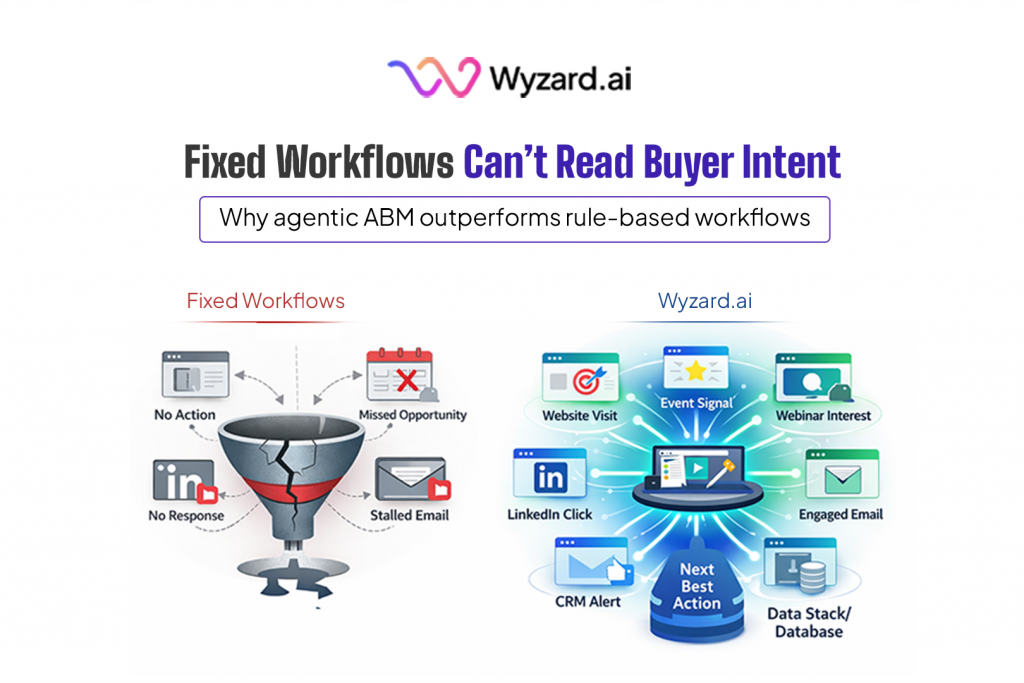
Automation Isn’t Intelligence: Why Agentic ABM Outperforms Rule-Based Workflows
A CMO reviews the weekly pipeline report and sees all the expected activity. A target account visited the website. ...

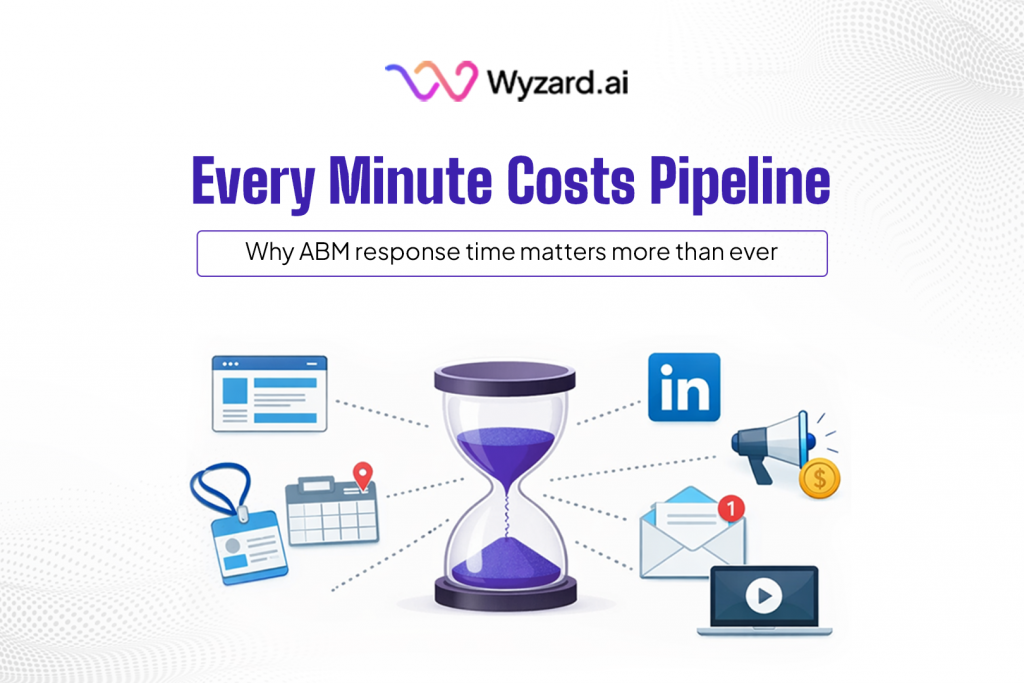
The 5-Minute Rule for ABM: How Fast Response Turns Buyer Intent Into Pipeline
If you are a CMO running enterprise growth, you have probably seen this in a pipeline review. A target ...
