 We’ve secured funding to power Signal-to-Revenue AI to GTM teams globally. →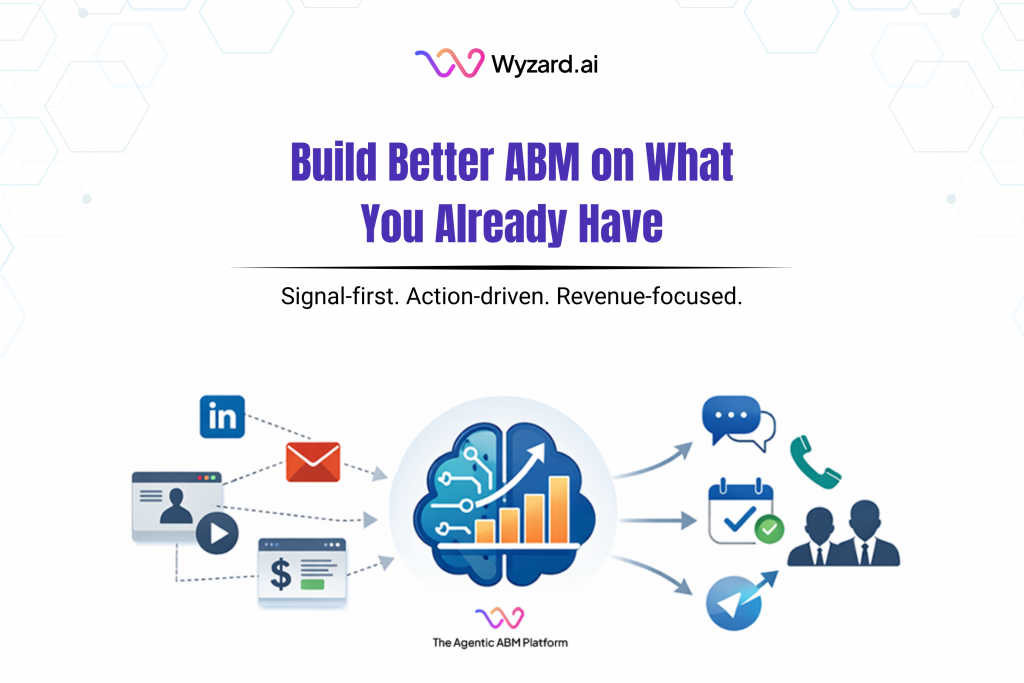
If you are a CMO, this situation feels familiar. Your team has a CRM, marketing automation, paid campaigns, webinars, ...
AI Tools for Marketing: Turn Buyer Signals Into Revenue in 2026
Published
Categorized as Uncategorized
Subscribe Now
Marketing teams face a brutal reality: buyer intent signals scatter across dozens of touchpoints, and by the time you respond, the moment’s gone. A prospect visits your pricing page at 11 PM, downloads a case study the next morning, and opens your nurture email three days later, but you don’t act until they’re already talking to a competitor.
The best AI marketing tools solve this exact problem. They don’t just automate tasks; they connect the dots between fragmented signals and trigger immediate, intelligent responses. For mid-market B2B SaaS teams, this means qualifying leads faster, personalizing engagement without manual work, and converting traffic you already have into an actual pipeline.
What Makes AI Marketing Tools Actually Useful?
Not every AI tool deserves a spot in your stack. The ones worth using do three things well: they capture signals in real-time, they connect to the tools you already use, and they act on buyer intent without waiting for human intervention.
Most marketing teams lose revenue because their tools don’t talk to each other. Your website visitor tracking doesn’t trigger your email platform. Your chatbot doesn’t update your CRM. Your paid campaign data sits isolated from your lead scoring system. AI marketing tools fix this by orchestrating actions across your entire GTM motion.
The goal isn’t replacing your team, it’s giving them leverage. When AI handles lead enrichment, qualification, and initial engagement, your marketers focus on strategy, and your sales team talks to people already primed to buy.
Best AI Marketing Tools for Content Creation
ChatGPT and Claude
These conversational AI platforms handle everything from campaign ideation to first-draft copy. ChatGPT excels at generating blog outlines, email sequences, and social posts when you feed it specific prompts. Claude tends to produce more nuanced, context-aware responses that sound less robotic.
Both tools work best when you treat them as collaborators, not replacements. Use them to break through writer’s block, test different messaging angles, or generate variations of ad copy quickly. The key is editing their output to match your brand voice; raw AI content rarely converts without human polish.
Jasper AI
Built specifically for marketing teams, Jasper offers pre-built templates for landing pages, product descriptions, and email campaigns. It integrates with Surfer SEO to optimize content while you write, showing keyword density and readability scores in real-time.
Jasper’s Brand Voice feature learns your tone by analyzing existing content, then applies it consistently across everything it generates. This makes it particularly useful for agencies managing multiple clients or brands scaling content production without losing consistency.
Copy.ai
This tool shines for rapid social media content and ad variations. Its workflow automation lets you batch-create multiple versions of headlines, CTAs, and descriptions, then A/B test them across platforms. Copy.ai also includes a blog wizard that structures long-form content based on your topic and target keywords.
Best AI Tools for Marketing SEO and Strategy
Surfer SEO
Surfer analyzes top-ranking pages for your target keywords and tells you exactly what to include: how many times to use specific terms, optimal content length, recommended headers, and even image count. Its Content Editor gives you a real-time score as you write, making optimization faster than traditional post-draft SEO audits.
The tool also suggests semantic keywords, related terms that help Google understand your content’s context without keyword stuffing. For B2B SaaS marketers competing in crowded niches, this contextual depth often makes the difference between page one and page three.
Ahrefs
While primarily known for backlink analysis, Ahrefs’ AI-powered keyword research identifies content gaps your competitors missed. Its Content Gap tool shows keywords your rivals rank for that you don’t, helping you prioritize topics with existing search demand.
The Site Audit feature uses machine learning to spot technical SEO issues that hurt rankings: slow page speed, broken links, duplicate content, and prioritizes fixes based on potential impact.
MarketMuse
This platform builds content strategies around topical authority. Instead of targeting isolated keywords, MarketMuse analyzes your entire site to identify which topic clusters you should build out to establish expertise. It then generates detailed content briefs showing exactly what subtopics, questions, and related concepts to cover.
AI Marketing Tools for Visual Content
Canva Magic Studio
Canva’s AI suite includes text-to-image generation, background removal, and automated design suggestions. Magic Write generates social captions and presentation copy directly in your designs. The Brand Kit ensures all visual content stays on-brand by automatically applying your colors, fonts, and logos.
For teams without dedicated designers, Canva’s templates and AI assistance make professional-looking graphics achievable without technical skills or expensive software.
Synthesia
This video platform creates presentations using AI avatars that speak in multiple languages. Instead of filming, recording voiceovers, or hiring actors, you type a script and choose an avatar. Synthesia generates the video with lip-synced speech and natural gestures.
It’s particularly effective for product demos, training videos, and localized marketing content where you need the same message in different languages without re-filming.
Best AI Marketing Tools for Automation and Orchestration
| Tool | Primary Function | Best For |
| Zapier | Connects apps and automates workflows | Teams using 5+ marketing tools that need simple integrations |
| HubSpot AI | CRM-integrated automation and content generation | Companies already using HubSpot for marketing and sales |
| Wyzard.ai | Signal-to-revenue orchestration across channels | B2B SaaS teams losing leads due to delayed responses |
Zapier
Zapier builds bridges between your marketing tools without coding. When someone fills out a form, Zapier can add them to your email list, create a CRM contact, notify your sales team, and log the interaction, all automatically.
The platform supports over 5,000 apps, and its AI-powered automation suggestions identify workflow opportunities based on how you use your tools. For small teams wearing multiple hats, Zapier eliminates hours of manual data entry and duplicate work.
HubSpot AI
HubSpot’s AI features span content creation, lead scoring, and email optimization. The Breeze AI suite generates blog posts, personalizes email subject lines based on recipient behavior, and predicts which leads are most likely to convert.
The platform’s real advantage is integration; AI insights from your website, emails, and social channels flow into one unified CRM, giving your team complete context on every prospect.
Wyzard.ai
Most AI marketing tools focus on single channels or tasks. Wyzard.ai takes a different approach by connecting signals across your entire GTM motion. When a prospect shows intent: visiting your pricing page, engaging with an email, attending a webinar, Wyzard.ai’s Signal Intelligence captures it immediately.
The platform then orchestrates responses through Agentic Chat, Agentic Email, and Agentic InMail without waiting for your team to notice and respond manually. This turns scattered buyer signals into coordinated revenue actions. For example, when someone downloads a case study at midnight, Wyzard.ai can trigger a personalized email sequence, update their lead score, notify the right sales rep, and start a chat conversation, all before your team checks their inbox the next morning.
This matters because GTM teams lose deals not from bad strategy but from slow execution. By the time you spot a hot lead and craft a response, they’re already evaluating competitors. Wyzard.ai’s marketing features eliminate that lag by acting on intent the moment it happens.
The platform also integrates with your existing tools through native connections, making it the orchestration layer that ensures nothing falls through the cracks. For teams running paid campaigns, this means every dollar spent on traffic gets maximum return because leads get instant, relevant engagement instead of landing in a static funnel.
AI Tools for Marketing Analytics
Whatagraph
This reporting platform pulls data from all your marketing channels: Google Ads, Facebook, LinkedIn, and Google Analytics, and uses AI to generate client-ready reports automatically. Instead of manually compiling metrics from different dashboards, Whatagraph creates visualizations and summarizes performance in plain English.
The platform identifies trends and anomalies across campaigns, flagging unusual spikes or drops that warrant investigation. For agencies managing multiple clients or in-house teams reporting to executives, this saves hours every week.
Seventh Sense
Email timing matters more than most marketers realize. Seventh Sense analyzes when individual recipients engage with emails and automatically schedules sends for those optimal windows. Instead of blasting your entire list at 10 AM Tuesday, it delivers messages when each person is most likely to open and click.
How to Choose the Right AI Marketing Tools
Start by identifying your biggest bottleneck. If content production slows your campaigns, prioritize tools like Jasper or ChatGPT. If leads go cold because of slow follow-up, focus on automation and orchestration platforms like Wyzard.ai or HubSpot.
Three questions to ask before adopting any AI tool:
- Does it integrate with tools we already use, or will it create another data silo?
- Can it act on signals in real-time, or just generate reports we review later?
- Will it reduce manual work, or just shift effort to managing the AI?
The most effective AI marketing tools don’t operate in isolation. They connect your existing stack, capture signals across channels, and trigger coordinated responses without requiring constant human oversight. This orchestration approach, where AI coordinates actions across multiple tools, delivers better results than individual point solutions working independently.
Making AI Marketing Tools Work Together
Individual tools solve specific problems, but real efficiency comes from connecting them. When your SEO tool identifies high-intent keywords, your content generator creates optimized articles, your CRM captures resulting leads, and your automation platform triggers personalized follow-up, that’s when AI transforms your marketing motion.
The challenge most teams face isn’t finding good AI tools; it’s getting them to work as one system. Platforms like Wyzard.ai address this by acting as the connective layer that captures signals from all sources and orchestrates responses across all channels, ensuring buyer intent never gets lost in transition.
FAQ
What are the best AI marketing tools for small teams?
ChatGPT or Claude for content creation, Surfer SEO for optimization, and Zapier for connecting your existing tools without coding. These three cover most essential functions without overwhelming limited resources.
How do AI tools for marketing improve lead qualification?
They analyze behavioral signals: page visits, email engagement, content downloads, and score leads based on intent patterns. This helps sales teams prioritize conversations with prospects showing genuine buying interest instead of chasing cold contacts.
Can AI marketing tools replace human marketers?
No. They handle repetitive tasks like data entry, initial qualification, and scheduling, but strategy, creative direction, and relationship-building still require human judgment. Think of AI as leverage, not replacement.
What’s the difference between marketing automation and AI marketing tools?
Traditional automation follows rigid if-then rules you program manually. AI marketing tools learn from data, adapt to patterns, and make decisions based on context like adjusting email timing based on individual engagement history rather than sending to everyone at the same scheduled time.
How much do the best AI marketing tools cost?
Most offer tiered pricing. Basic plans start around $50-100 monthly for tools like Jasper or Surfer SEO. Enterprise platforms like HubSpot or comprehensive orchestration tools like Wyzard.ai typically require custom pricing based on team size and feature needs.
Other blogs
The latest industry news, interviews, technologies, and resources.
March 30, 2026
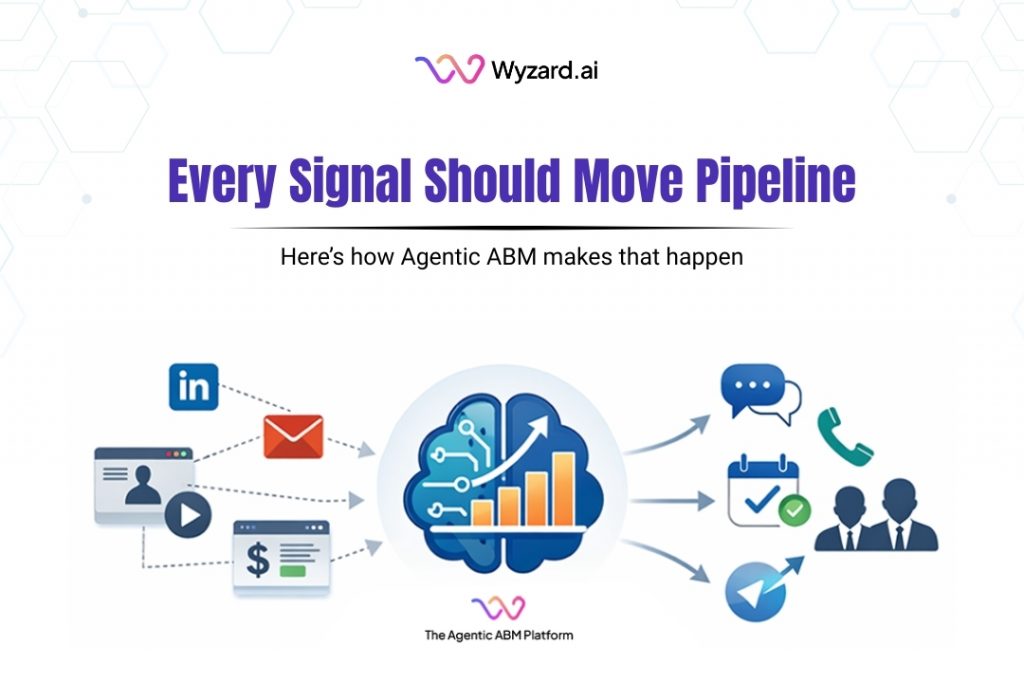
The Signal-to-Revenue Blueprint for Agentic ABM
A CMO reviews the weekly dashboard and sees strong activity. A target account clicked a LinkedIn ad. Another stakeholder ...

March 27, 2026
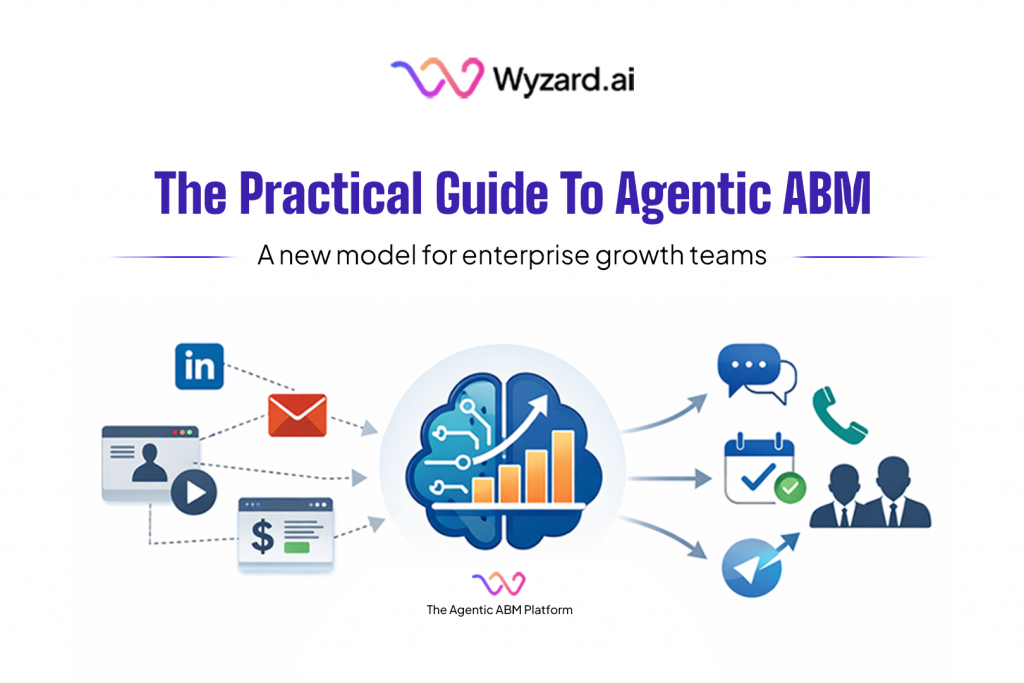
What Is Agentic ABM? A Practical Guide for Enterprise GTM Teams
Enterprise GTM has an action gap. If you are a CMO, this scene is familiar. A target account clicks ...
