 We’ve secured funding to power Signal-to-Revenue AI to GTM teams globally. →
If you are a CMO, this situation feels familiar. Your team has a CRM, marketing automation, paid campaigns, webinars, ...
Agentic AI in Marketing: What’s Real, What’s Hype, and Why It Matters
Published
Categorized as Uncategorized
Subscribe Now
The buzz around agentic AI in marketing is getting louder. Yet for many marketing and GTM teams, the line between buzzword and business value is still blurry. In a landscape overflowing with AI promises, it’s time to cut through the noise and ask a more grounded question: what can agentic AI actually do for modern marketing teams?
In this blog, we unpack what agentic AI in marketing really means, why it’s different from previous waves of automation, and how teams can move past the hype into high-impact, real-world applications
What Is Agentic AI in Marketing?
At its core, agentic AI in marketing refers to the use of autonomous AI agents that can not only generate responses but also take meaningful actions within a marketing workflow.
Unlike traditional automation tools or generative AI that produce static content, agentic AI agents are designed to sense, decide, and act within a defined objective. These agents can engage leads, trigger CRM workflows, follow up via email, and even escalate when certain criteria are met—without human intervention.
This shift is significant. Generative AI produces outputs. Agentic AI executes tasks.
By adopting agentic AI in marketing, teams move beyond content generation to intelligent execution. It’s not just about faster copywriting—it’s about faster, smarter pipeline creation.
Why Traditional Marketing AI Falls Short
Most marketing teams already use AI-powered tools for email subject lines, chatbot responses, or content recommendations. These solutions automate specific tasks but stop short of autonomous execution.
The debate around agentic chat vs automation comes down to execution capability—does it just suggest responses or actually qualify and route prospects end-to-end?
Traditional marketing automation requires humans to build workflows, set triggers, and manually intervene when exceptions occur. Lead scoring happens in batches. Follow-ups depend on preset sequences. High-intent signals often go unnoticed until the next scheduled review.
Agentic AI removes these bottlenecks by operating continuously across multiple channels. When buyer intent spikes, the system responds immediately rather than waiting for a workflow trigger or human review. This shift from reactive automation to proactive orchestration changes how quickly teams can convert traffic into a pipeline.
How Agentic AI Agents Work: The Technical Foundation
Understanding agentic AI requires looking beyond surface-level marketing claims to examine how these systems actually function.
Agentic AI operates through multi-agent architectures where specialized agents handle distinct functions while coordinating toward shared objectives. One agent might monitor website behavior for intent signals. Another manages conversation logic and qualification criteria. A third handles CRM integration and data synchronization.
These agents don’t work in isolation. They communicate through a central orchestration layer that maintains context across channels and interactions. When a prospect engages via chat, then receives a follow-up email, and later books a meeting, the same unified intelligence drives each touchpoint.
The system learns from outcomes, not just inputs. If certain qualification questions correlate with closed deals, the agents adjust their approach. If prospects from specific industries respond better to particular messaging, future conversations reflect those patterns.
This architecture enables true autonomy because agents can evaluate situations, choose appropriate actions, and adapt based on results, all without waiting for human approval at each step.
Debunking the Myths: What Agentic AI Is Not
Before diving deeper, let’s clarify a few common misconceptions:
Myth 1: Agentic AI is just a smarter chatbot.
Reality: AI agents are autonomous. They act based on signals, not scripts. While chat is one possible channel, these agents operate across email, CRM systems, and other tools.
Myth 2: Agentic AI is too complex for most marketing teams.
Reality: Purpose-built agentic systems are becoming increasingly accessible. When designed with marketers in mind, they require minimal setup and integrate with existing tech stacks.
Myth 3: You need massive data infrastructure to use it.
Reality: While advanced data can enhance performance, agentic AI marketing platforms can operate effectively with behavioral triggers and CRM data many teams already have.
Real-World Applications of Agentic AI in Marketing
So what does agentic AI in marketing look like in action? Here are a few high-impact use cases:
1. Real-Time Lead Engagement
Agentic AI can detect high-intent behaviors on a website—like repeated visits to pricing pages or demo requests—and immediately initiate personalized conversations.
The result? Prospects don’t wait. They get contextual, relevant engagement the moment their intent spikes.
Suggested read: Chatbot vs AI Marketing Copilot
2. Multi-Channel Nurture Sequences
Most marketing bots stop at the chat window. Agentic AI continues the conversation through email, SMS, or CRM triggers. For example, if a prospect doesn’t respond to a chat, the AI can send a follow-up email with relevant content or booking links.
3. Intelligent Routing and Escalation
If a lead hits a high-fit + high-intent threshold, the AI can autonomously notify the right sales rep, log the interaction in the CRM, and even schedule a meeting—all without waiting for human input. These aren’t hypothetical features. This is what agentic AI in marketing should do when applied with real business goals in mind.
4. Dynamic Content Personalization Based on Real-Time Signals
Static personalization uses known attributes like company size or industry. Agentic AI adapts content based on real-time behavior combined with contextual understanding.
If a prospect bounces between your integration page and pricing calculator multiple times, the agent recognizes evaluation-stage buying signals and adjusts messaging to address implementation concerns and ROI calculations. If someone from a direct competitor visits your site, the system modifies positioning to emphasize differentiation rather than general market education.
This dynamic adaptation happens automatically across website experiences, email content, and conversational messaging, maintaining relevance as buyer intent evolves.
Agentic AI vs. Generative AI vs. Traditional Automation:
Many teams confuse these distinct AI approaches because vendors blur the lines in their messaging. Understanding the differences helps you evaluate which solutions actually deliver autonomous marketing execution.
| Capability | Traditional Automation | Generative AI | Agentic AI |
| Core Function | Executes predefined workflows | Creates content based on prompts | Takes autonomous action toward goals |
| Decision Making | Rule-based (if-then logic) | Pattern-based generation | Goal-oriented with contextual awareness |
| Human Involvement | Required for workflow changes | Required for prompt refinement and approval | Required for strategy and governance only |
| Adaptation | Manual updates to rules | Generates variations on themes | Learns from outcomes and adjusts approach |
| Channel Coordination | Separate workflows per channel | Content creation across channels | Unified orchestration across all touchpoints |
| Best Use Cases | Email sequences, social scheduling | Blog posts, ad copy, email drafts | Lead qualification, follow-up orchestration, CRM management |
Generative AI creates the message. Traditional automation sends it. Agentic AI decides when to send it, what to send, which channel to use, and how to follow up based on response, all without waiting for human approval.
This distinction matters when evaluating marketing technology. If a vendor claims “AI-powered” but only generates content or automates static workflows, that’s not agentic capability. True agentic AI makes autonomous decisions that drive pipeline outcomes, not just operational efficiency.
How Wyzard Fits In: Introducing the AI Marketing Copilot
At Wyzard, we’re not just building a platform—we’re introducing a new kind of teammate: the AI Marketing Copilot.
The AI Marketing Copilot is powered by a multi-agent architecture designed to:
- Engage: Detect buyer intent across channels and initiate the right conversation at the right time.
- Qualify: Use a mix of behavioral signals and firmographics to score and segment leads.
- Follow Up: Drive asynchronous conversations via chat, email, and CRM actions.
- Route: Escalate qualified opportunities to sales with full context.
This isn’t just AI-assisted messaging. The AI Marketing Copilot acts autonomously to guide leads through your funnel, bridging the gap between MQL and SQL without manual effort.
Separating hype from reality means recognizing that autonomous GTM with HITL accountability delivers measurable outcomes while assisted copilots primarily increase activity without guaranteeing revenue impact.
Behind the scenes, multiple agents work in concert to deliver a cohesive, goal-oriented experience. One agent might handle initial qualification, another manages ongoing nurture, and another ensures clean CRM handoff.
That’s the agentic difference: it’s not a single AI doing everything—it’s a system of intelligent agents aligned toward pipeline outcomes.
Even in the production stage, Wyzard is designed to reflect the core principles of agentic AI in marketing: autonomy, coordination, and measurable action.
Generative vs Agentic AI: What Marketers Need to Know
The distinction matters.
- Generative AI creates content (emails, ads, landing pages).
- Agentic AI takes action (sends follow-ups, books demos, updates CRM).
While generative tools are great for top-of-funnel content, they often require human oversight to deliver business results.
Agentic AI marketing tools bridge the gap between generation and execution—turning insight into outcome.

Why Agentic AI in Marketing Matters Now
B2B buyers aren’t waiting around. They expect real-time, personalized interactions. But most marketing and sales teams can’t scale to meet that demand without burning out.
Agentic AI in marketing offers a new path forward. Instead of hiring more SDRs or manually building workflows, teams can deploy autonomous agents to:
- Prevent lead leakage
- Accelerate time-to-engagement
- Increase conversion from inbound traffic
The bottom line? Agentic AI doesn’t just improve efficiency—it enables a fundamentally new GTM motion.
If you’re wondering what GTM actually means, this guide covers the basics.
Questions to Ask Before Adopting Agentic AI
Not every team is ready for full-scale deployment—and that’s okay. But here are a few signals that agentic AI in marketing might be right for you:
- Do you have strong inbound traffic but low conversion?
- Are high-intent leads slipping through the cracks?
- Is your SDR team overwhelmed or underperforming?
- Do you rely on CRM and behavioral data to drive decisions?
If you answered yes to two or more, it’s worth exploring how agentic AI can close the gap.
What to Look for in Agentic AI Marketing Platforms
Vendor claims about autonomous AI vary widely in accuracy. Evaluating platforms requires looking beyond marketing messaging to understand actual capabilities.
Multi-agent architecture vs. single-purpose tools: True agentic systems coordinate multiple specialized agents rather than applying one AI model to all tasks. Ask vendors to explain how their agents work together and which specific functions each handles.
Integration depth with your existing stack: Agentic AI should work within your current tools, not force migration to new platforms. Verify that the system integrates natively with your CRM, marketing automation, and communication tools, and that those integrations maintain two-way data flow.
Governance and human oversight options: Complete autonomy sounds appealing, but requires guardrails in practice. Effective platforms let you define when agents should escalate to humans, which actions require approval, and how messaging adapts across different contexts.
Learning and optimization capabilities: Static AI that never improves won’t deliver compounding value. Ask how the system learns from outcomes, what metrics guide optimization, and how quickly improvements appear in performance.
Transparency in decision-making: Black box AI creates compliance risks and limits your ability to refine your approach. Look for platforms that show why agents made specific decisions, what data informed those choices, and how you can adjust logic when needed.
Here are some key benefits of using an AI SDR for modern GTM teams.
Final Thoughts: Skip the Hype, Focus on the How
Agentic AI in marketing is not a silver bullet—but it is a serious evolution in how modern GTM teams operate.
By replacing static scripts with intelligent agents that can take initiative, B2B marketers unlock a new level of agility and responsiveness. And when paired with the right architecture, like Wyzard’s multi-agent system, those gains become scalable and repeatable.
Separating hype from reality means recognizing that the new GTM equation keeps strategy human while execution becomes intelligent through deliberate human-in-the-loop design.
Ready to see how agentic AI can drive more pipeline from your existing traffic?
Book a demo with Wyzard and take the first step toward autonomous GTM execution.
Frequently Asked Questions
Q1. What makes agentic AI different from marketing automation tools I already use?
Agentic AI makes autonomous decisions based on goals and real-time signals, while traditional automation follows predefined rules. Your current tools might send an email when someone downloads a resource, but agentic AI evaluates that person’s entire behavior pattern, assesses qualification fit, determines the best next action across multiple channels, and executes without waiting for human approval. It’s the difference between automated task execution and intelligent orchestration.
Q2. Can agentic AI work with my existing CRM and marketing stack?
Yes, effective agentic AI platforms integrate with your current tools rather than replacing them. Wyzard.ai connects with HubSpot, Salesforce, and common marketing automation platforms through native integrations that maintain two-way data flow. The agents coordinate actions across your existing systems, updating records, triggering workflows, and ensuring consistent information without requiring migration to new platforms.
Q3. How much human oversight does agentic AI require?
Agentic AI operates autonomously within boundaries you define. You establish rules for qualification criteria, approval thresholds, escalation triggers, and messaging guidelines. Within these parameters, agents handle conversations, follow-ups, and data management independently. Humans focus on strategy, complex deals, and relationship building while agents manage repetitive qualification and nurture sequences.
Q4. What results can I expect from implementing agentic AI?
Teams typically see three measurable improvements: faster response times to buyer signals (often from hours to seconds), higher conversion rates from traffic to qualified pipeline (because fewer leads slip through gaps), and improved sales efficiency (because reps spend time with genuinely qualified prospects rather than cold leads). Specific results depend on your current processes and where bottlenecks exist.
Q5. Is agentic AI only for large enterprises with massive data sets?
No, agentic AI works effectively for mid-market B2B SaaS companies with standard data sources. You need website behavioral data, basic firmographic information, and CRM records data most marketing teams already collect. The agents start delivering value immediately and improve as they gather more interaction history. Large data sets enhance performance, but aren’t required to begin.
Q6. How does agentic AI handle conversations without sounding robotic?
Advanced agentic systems use contextual understanding rather than scripted responses. Wyzard.ai’s agents analyze browsing behavior, past interactions, and firmographic data to personalize each conversation naturally. They adapt tone based on prospect responses, ask relevant follow-up questions, and avoid the repetitive patterns that make chatbots feel robotic. The goal isn’t perfect human mimicry; it’s contextually appropriate engagement that moves prospects forward.
Q7. What’s the difference between agentic AI and generative AI like ChatGPT?
Generative AI creates content when you provide prompts. You ask for email copy, and it writes email copy. Agentic AI takes autonomous action toward defined goals. It detects a high-intent prospect, decides the best engagement approach, initiates conversation, adjusts based on responses, follows up across channels, and routes to sales when appropriate. Generative AI is a content creation tool. Agentic AI is an execution system that generates content as one part of broader autonomous workflows.
Q8. How long does it take to implement agentic AI?
Implementation timelines vary based on your tech stack complexity and customization needs. Basic integrations with common CRM and marketing automation platforms often take days, not months. The agents begin capturing signals and engaging prospects quickly, then improve as they learn from your specific buyer patterns. You don’t need a perfect setup before launch; the system delivers value during optimization phases as you refine qualification criteria and messaging.
Other blogs
The latest industry news, interviews, technologies, and resources.
March 30, 2026
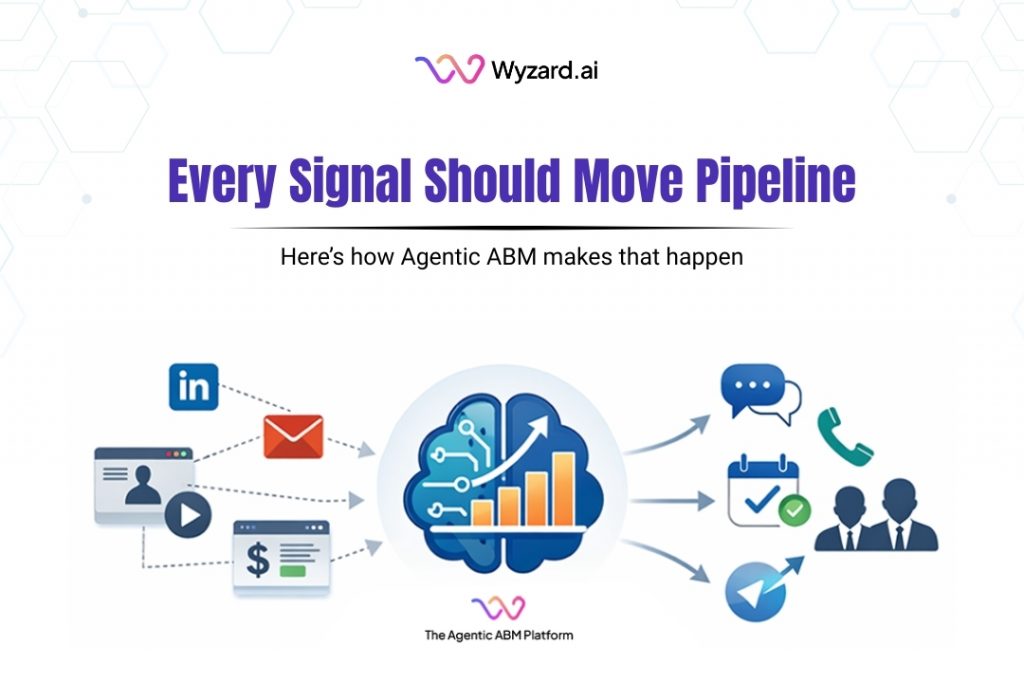
The Signal-to-Revenue Blueprint for Agentic ABM
A CMO reviews the weekly dashboard and sees strong activity. A target account clicked a LinkedIn ad. Another stakeholder ...

March 27, 2026
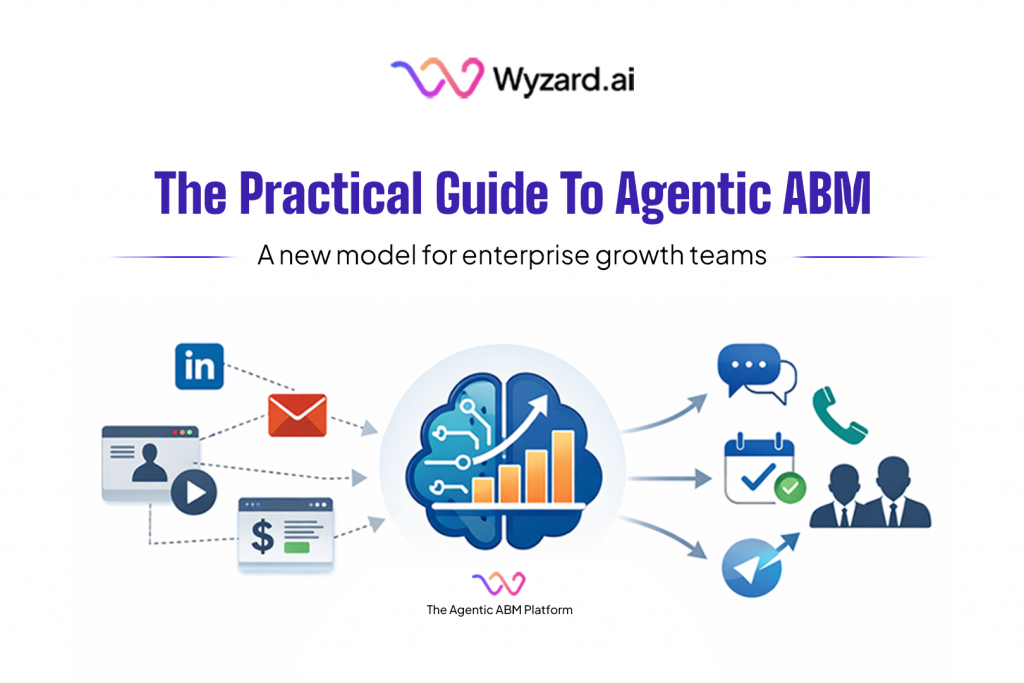
What Is Agentic ABM? A Practical Guide for Enterprise GTM Teams
Enterprise GTM has an action gap. If you are a CMO, this scene is familiar. A target account clicks ...

1 comment