 We’ve secured funding to power Signal-to-Revenue AI to GTM teams globally. →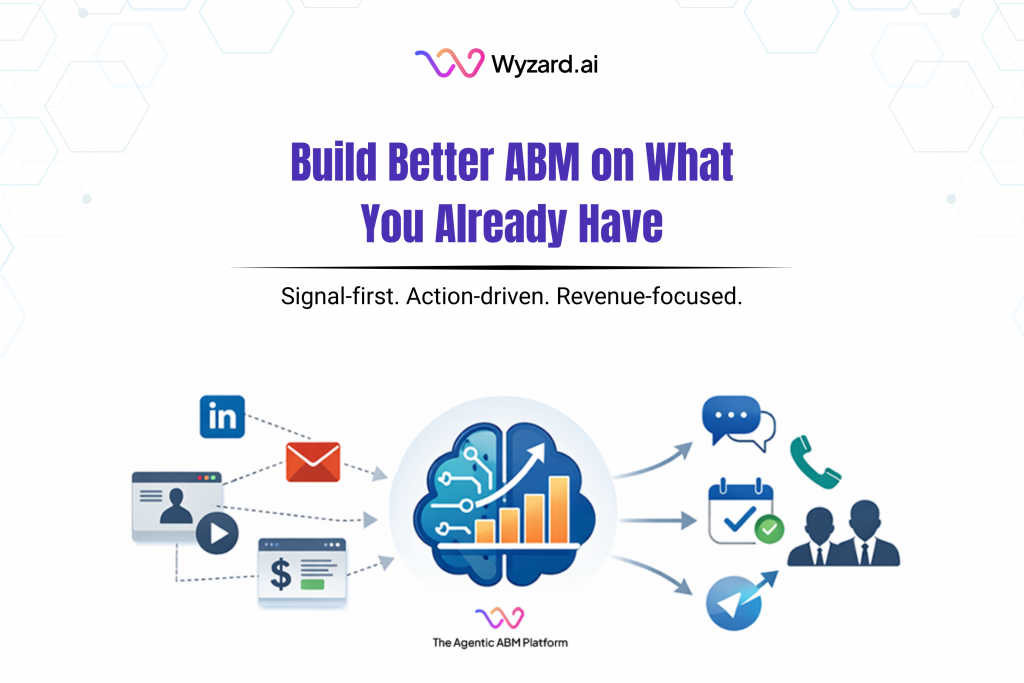
If you are a CMO, this situation feels familiar. Your team has a CRM, marketing automation, paid campaigns, webinars, ...
Subscribe Now
A CMO reviews the weekly dashboard and sees strong activity. A target account clicked a LinkedIn ad. Another stakeholder joined a webinar. A known contact visited the pricing page. A lead replied to a nurture email. An event contact was added to the CRM. The signals are there. The account looks active. Yet pipeline movement still feels slower than expected. That gap is where agentic ABM becomes relevant.
Wyzard.ai is built for this exact situation. As the Signal-to-Revenue AI and an agentic ABM platform, it captures live account activity, connects context across the GTM stack, and triggers follow-up across channels before interest drops. For CMOs focused on improving conversion from existing traffic, events, paid programs, and inbound demand, Wyzard.ai shifts the focus from running more campaigns to acting on the right signals at the right time.
What the Signal-to-Revenue AI model means in Agentic ABM
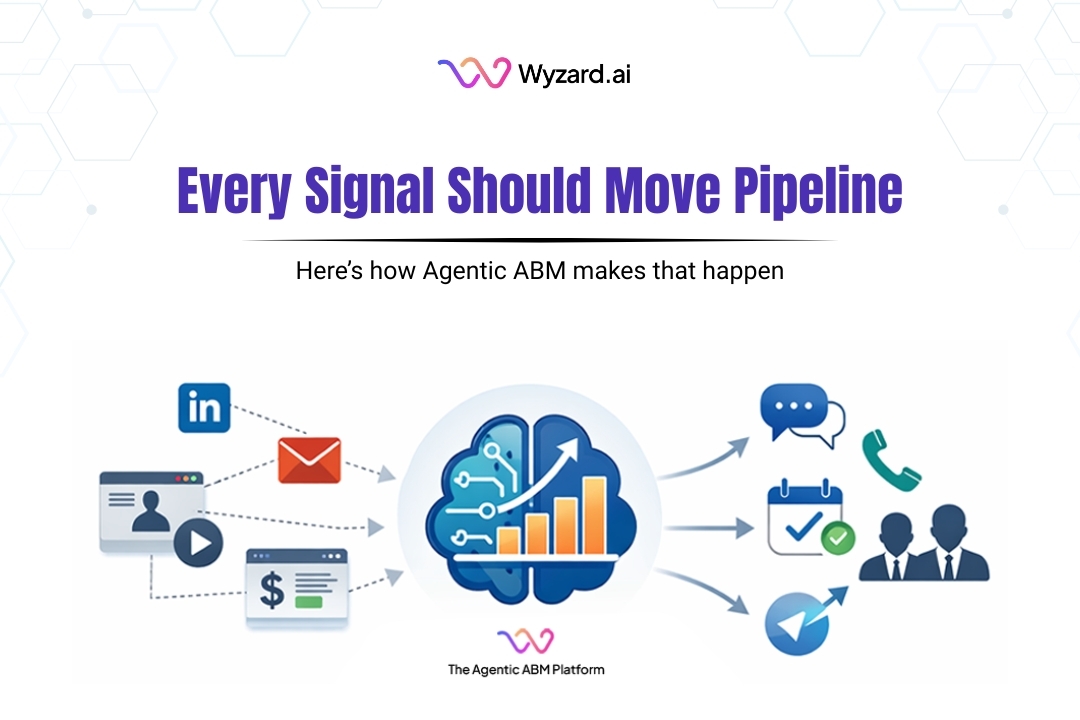
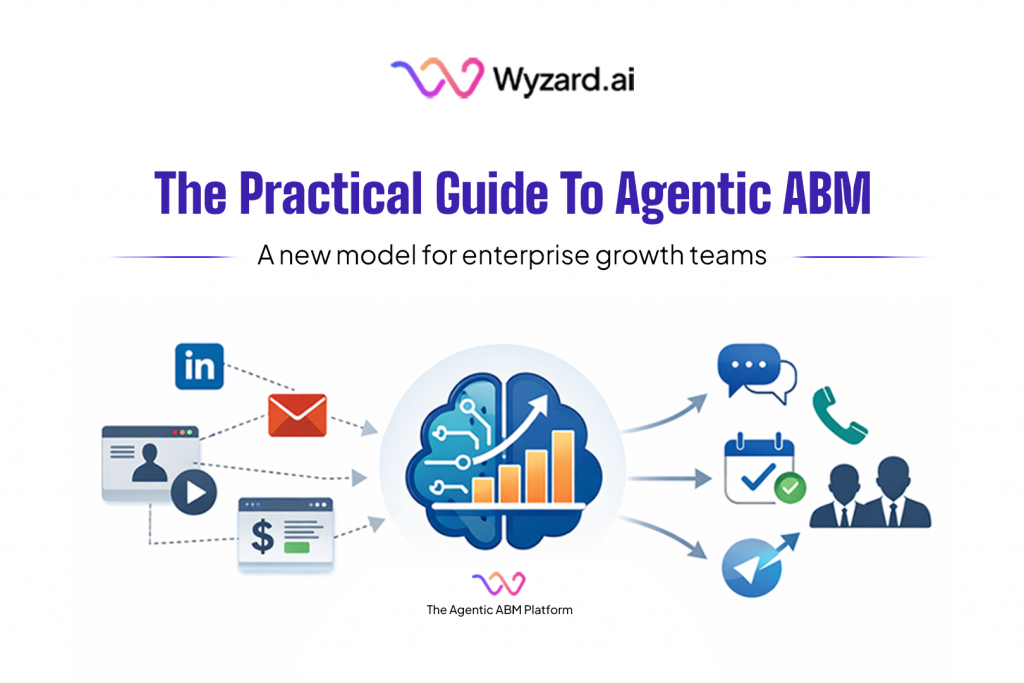
At a practical level, it works as a connected system. It starts with buyer signals. It adds account and contact context. It evaluates fit, timing, and priority. Then it triggers the next best action through the right channel and measures the result.
That is the key shift. In many teams, ABM stops at visibility. Marketing sees engagement. Sales sees partial information. RevOps manages disconnected workflows. In agentic ABM, the process continues beyond detection. It moves from signal to context to decision to execution. That is what real revenue orchestration looks like.
Wyzard.ai aligns with this model. WyzSignals captures live activity. WyzEnrich adds depth to accounts and contacts. WyzGoal defines the motion. WyzChannels executes across the channels where buying activity actually happens, including website visits, events, LinkedIn, webinars, and nurture email.
Why traditional ABM breaks before revenue happens
Many ABM programs struggle in the middle. They generate engagement but fail to convert that engagement into coordinated action. Marketing tracks clicks, visits, and form fills. Sales sees a limited set of contacts. RevOps builds workflows. The account story still remains incomplete.
That is where agentic ABM stands apart. It does not treat signals as isolated events. It treats them as part of a live buying motion. A single website visit means one thing. A website visit combined with webinar attendance, LinkedIn engagement, and an email reply tells a very different story. Context changes the interpretation.
This matters even more in enterprise buying. The average B2B buying decisions and purchases involve two or more departments. That level of complexity makes it difficult for campaign-led ABM and static automation to keep up.
The blueprint: how agentic ABM should work end to end
1. Capture the right signals
Modern agentic ABM starts with signal capture across the full buyer journey. This includes website visits, event scans, LinkedIn ad clicks, webinar attendance, nurture replies, paid engagement, CRM activity, and sales interactions. A signal-to-revenue model must reflect where buyers actually engage.
WyzSignals helps capture activity across these touchpoints so teams do not rely on a single channel view.
2. Add context before acting
Raw activity has limited meaning on its own. The system needs to identify the account, the role of the contact, the fit with the ICP, recent engagement patterns, and prior interactions. This is where account intelligence plays a central role.
WyzEnrich adds this layer, and the GTM Intelligence Graph connects buyers, accounts, and interactions into a shared context.
3. Decide what should happen now
Once signals and context are available, agentic ABM evaluates what action makes sense. Is this account showing real buying activity? Which stakeholder matters most? What is the right timing? What is the next best action?
WyzGoal translates these inputs into a defined motion so teams can move from analysis to execution without delay.
4. Execute across the right channels
Execution is where many teams lose momentum. They capture signals and identify intent, yet the response is slow or limited to one channel. Effective agentic ABM activates outreach across email, LinkedIn, chat, calling, event follow-up, and webinar follow-up.
WyzChannels supports this by turning decisions into coordinated execution across channels.
Why the GTM Intelligence Graph matters
Without shared context, teams operate with incomplete views. Marketing sees campaign data. Sales sees contact-level activity. RevOps sees workflows. Each function works with partial information.
The GTM Intelligence Graph connects buyers, accounts, touchpoints, and history into a unified view. In agentic ABM, this allows teams to interpret multiple signals as part of one buying motion instead of separate events. Wyzard.ai uses this layer to improve coordination across marketing, sales, growth, and RevOps.
Why this blueprint matters to CMOs
For CMOs, the goal is not more activity. The goal is stronger pipeline outcomes from existing demand. Agentic ABM supports this by enabling faster response to real intent, better coordination across teams, and improved pipeline acceleration without increasing headcount.
Wyzard.ai supports this model through its System of Outcomes, which ties execution to measurable results, and AI GTM Engineers, who help define goals, refine logic, and maintain alignment with revenue priorities. This makes agentic ABM a practical operating model for enterprise GTM teams.
What this looks like in practice
Consider one target account. A stakeholder clicks a LinkedIn ad. Another attends a webinar. A known contact revisits the website. A lead replies to a nurture email. WyzSignals captures the activity. WyzEnrich adds account and contact context. The GTM Intelligence Graph connects these interactions. WyzGoal defines the motion. WyzChannels activates the response across channels. Sales receives a clearer handoff, and the account progresses faster.
This is how revenue orchestration works when signals, context, decisions, and execution are connected.
The Takeaway
The core idea behind agentic ABM is simple. Signals alone do not create pipeline. Coordinated decisions and execution do. Wyzard, the Signal-to-Revenue AI and agentic ABM platform, brings this blueprint together.
If your team wants to turn every signal into revenue action, book a demo and see it in action.
Other blogs
The latest industry news, interviews, technologies, and resources.
March 27, 2026
What Is Agentic ABM? A Practical Guide for Enterprise GTM Teams
Enterprise GTM has an action gap. If you are a CMO, this scene is familiar. A target account clicks ...

March 26, 2026
AI Analytics: One Dashboard for Email, Chat, and LinkedIn Performance
Analytics should help you decide what to do next. Too often, it turns into busywork. Teams hop across tools, ...
