 We’ve secured funding to power Signal-to-Revenue AI to GTM teams globally. →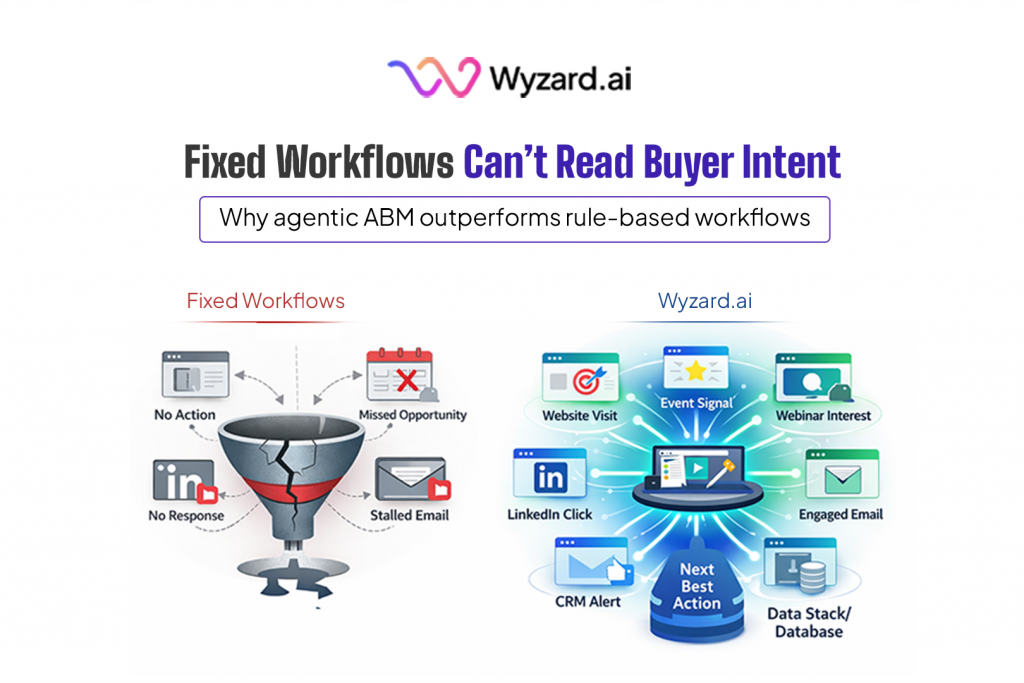
A CMO reviews the weekly pipeline report and sees all the expected activity. A target account visited the website. ...
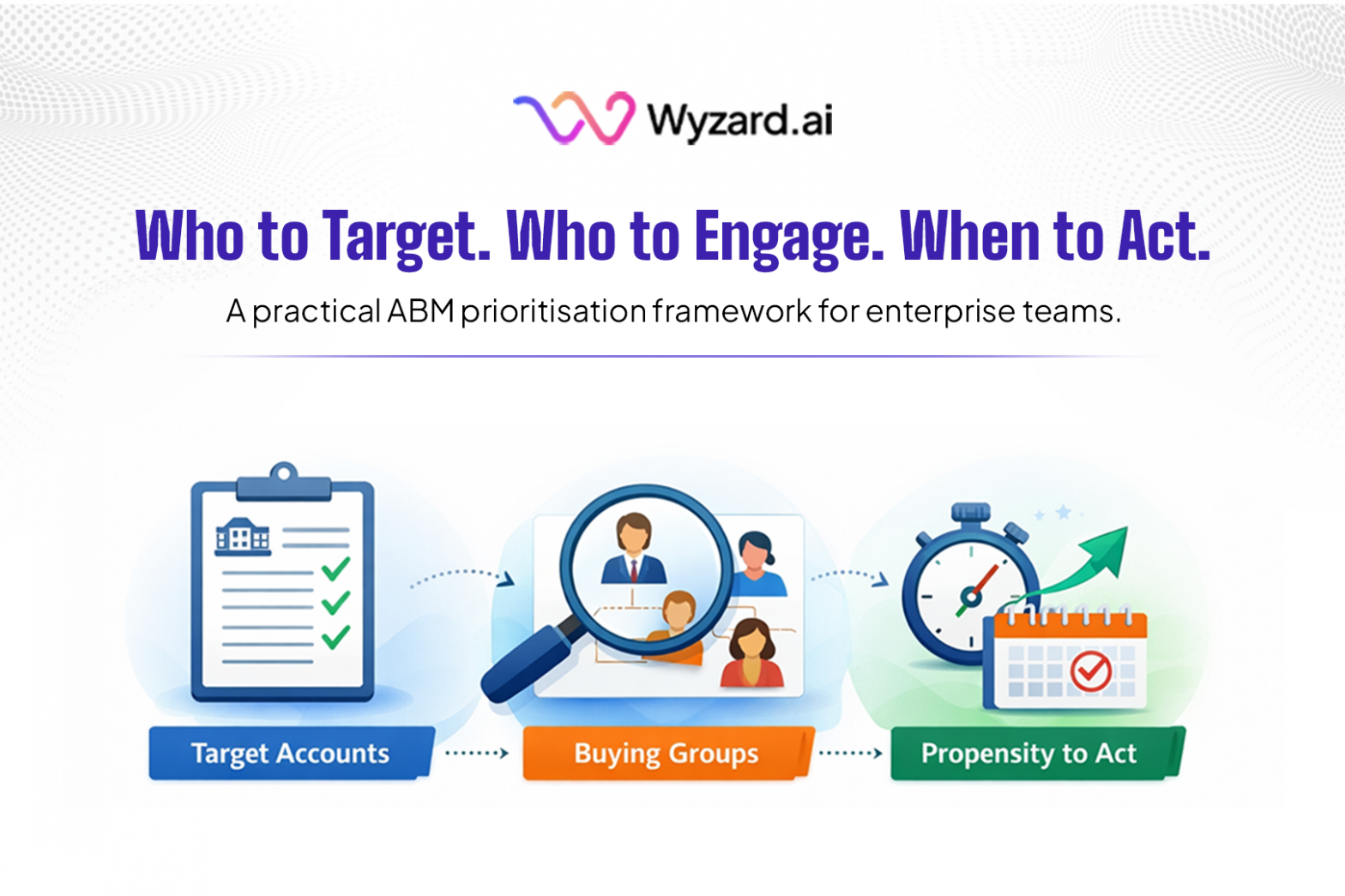
The 3 Decisions Every ABM Program Must Get Right: Account, Buying Group, and Propensity
Published
Categorized as Uncategorized
Subscribe Now
If you are a CMO, one of the hardest moments in ABM comes when the dashboard is full of activity and the next step is still unclear. A target account clicked a LinkedIn ad. Someone attended your webinar. Another contact visited the pricing page. A lead replied to a nurture email. The signals are there, yet the team still lacks a clear call on what to do next. That is where a strong ABM prioritisation framework matters. The best teams do not force fit, engagement, and timing into one score. They separate those questions and answer them one at a time. That is the shift Wyzard.ai is built for. As the Signal-to-Revenue AI, Wyzard connects your GTM stack, captures live signals across channels, and helps teams turn scattered buyer activity into revenue action.
One score creates noise
A lot of ABM programs still rely on a single lead or account score to answer too many questions at once. Is this the right company? Are the right people engaged? Is this the right moment to act? Those are three different decisions. One number cannot handle all three with much precision. Teams end up treating activity as readiness and noise as intent. Many programs collapse account, buying group, and propensity into one lead score, and that is why prioritisation often fails.
A real ABM prioritisation framework needs to work like an operating model, not a summary number. Marketing, sales, growth, and RevOps need a way to answer who to target, who to engage, and when to act, without mixing those decisions together. In practice, that means moving from one blended score to an ABM decision model built on three separate layers of logic.
Decision one: Is this the right account?
The first part of an ABM prioritisation framework is the account decision. This is where account scoring belongs. The goal is not to reward the loudest signal. The goal is to identify whether the account deserves focus at all.
Wyzard.ai’s framework defines this account decision through firmographic fit, technographic fit, intent signals, and engagement signals. That order matters. A random click from a low-fit company should not outrank repeated activity from a high-fit enterprise account. CMOs care about this for a simple reason. Budget gets wasted when teams chase accounts that were never likely to convert. A useful ABM prioritisation framework starts with one direct question: is this a company we should care about right now?
This is one area where Wyzard.ai adds value early in the motion. WyzSignals captures live account activity across website visits, event scans, webinar attendance, LinkedIn clicks, CRM updates, and email engagement. WyzEnrich adds account context so the signal connects to fit, not just activity. That gives teams a cleaner path for deciding which accounts deserve attention now.
Decision two: Are we engaging the right people inside the account?
A strong account choice is only the starting point. The second part of an ABM prioritisation framework is deciding who inside the account actually matters. This is where buying group scoring comes in.
Wyzard.ai’s framework defines this second decision through persona and role fit, behavioral engagement, recency, and hiring signals. Enterprise buying rarely moves through one visible contact. It moves through a group with different priorities, risks, and levels of influence.
This is where many CMOs lose confidence in engagement dashboards. One contact may be active, yet the economic buyer is absent. A practitioner may show real interest, but procurement or security has not entered the process. A sound ABM prioritisation framework helps teams stop treating visible activity as full account coverage. It turns account engagement into buying group visibility.
Wyzard.ai helps here too. Its GTM Intelligence Graph connects buyers, accounts, signals, and history into one shared context layer. That gives revenue teams a fuller view of who is active, which roles still need coverage, and where the account stands across channels such as events, webinars, email, LinkedIn, paid media, and website activity.
Decision three: Is this the moment to act?
The third part of an ABM prioritisation framework is the timing decision. This is where propensity scoring belongs. You can have the right account and the right people, yet poor timing will still kill momentum.
Wyzard.ai’s framework defines this third decision through intent velocity, trigger events, product engagement signals, and relationship depth. This is the layer that separates “interesting” from “actionable.” A pricing-page revisit after a webinar, plus a nurture reply from the same account, means something very different from a single top-of-funnel interaction. A new hiring signal tied to a relevant function means something different from passive content consumption. A serious ABM prioritisation framework gives teams a way to read timing with context instead of reacting to isolated touches.
This matters in omni-channel GTM. Wyzard.ai does not treat website traffic as the whole story. It is built to engage buyers whether they visited your site, got scanned at an event, clicked a LinkedIn ad, attended a webinar, or replied to a nurture email. That is how timing gets sharper. The system sees the account journey across channels, not one channel at a time.
The three-layer model behind the framework
A useful ABM prioritisation framework needs structure behind it. Wyzard.ai’s operating model breaks that into three layers: Intelligence Layer, Decision Layer, and Execution Layer. The Intelligence Layer brings together account signals, buyer intent data, engagement history, and context. The Decision Layer turns that into prioritisation through account scoring, buying group scoring, and propensity scoring. The Execution Layer turns those decisions into outreach, routing, follow-up, channel selection, and outcome tracking.
That structure is one reason Wyzard.ai fits this motion so well. The GTM Intelligence Graph acts as the shared context layer across signals and accounts. WyzSignals captures the activity. WyzEnrich adds fit and depth. WyzGoal translates a revenue objective into a working motion. WyzChannels activates the next action across email, LinkedIn, chat, and calling. The System of Outcomes ties those actions back to measurable revenue impact, and AI GTM Engineers help teams define logic, tune plays, and keep execution aligned with pipeline goals.
Better ABM starts with better decisions
The real issue in ABM is rarely a shortage of data. It is weak decision design. A strong ABM prioritisation framework separates account fit, buying group relevance, and timing into three clear decisions. That makes it easier for marketing to focus spend, for sales to work the right accounts, for RevOps to route with confidence, and for growth teams to act before intent fades.
Wyzard.ai, the Signal-to-Revenue AI, is built for exactly this shift. It helps teams move from scattered signals to clear decisions through the GTM Intelligence Graph, WyzSignals, WyzEnrich, WyzGoal, WyzChannels, a System of Outcomes, and AI GTM Engineers who keep the whole motion grounded in results. If your team wants a stronger ABM prioritisation framework that turns buyer signals into revenue action, book a demo and see it in action.
Other blogs
The latest industry news, interviews, technologies, and resources.
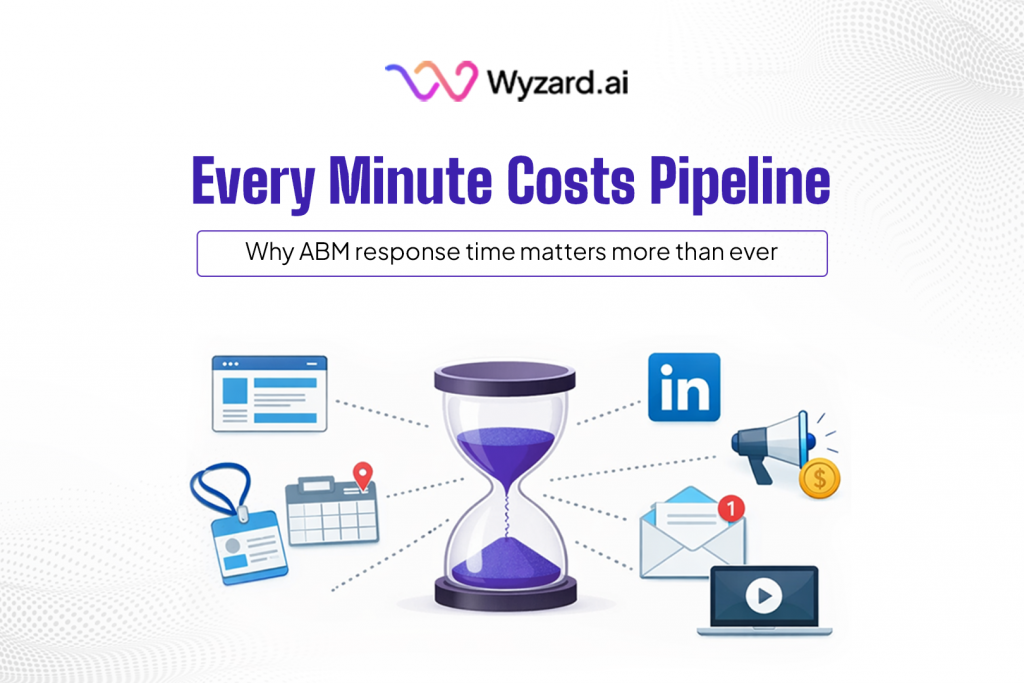
The 5-Minute Rule for ABM: How Fast Response Turns Buyer Intent Into Pipeline
If you are a CMO running enterprise growth, you have probably seen this in a pipeline review. A target ...

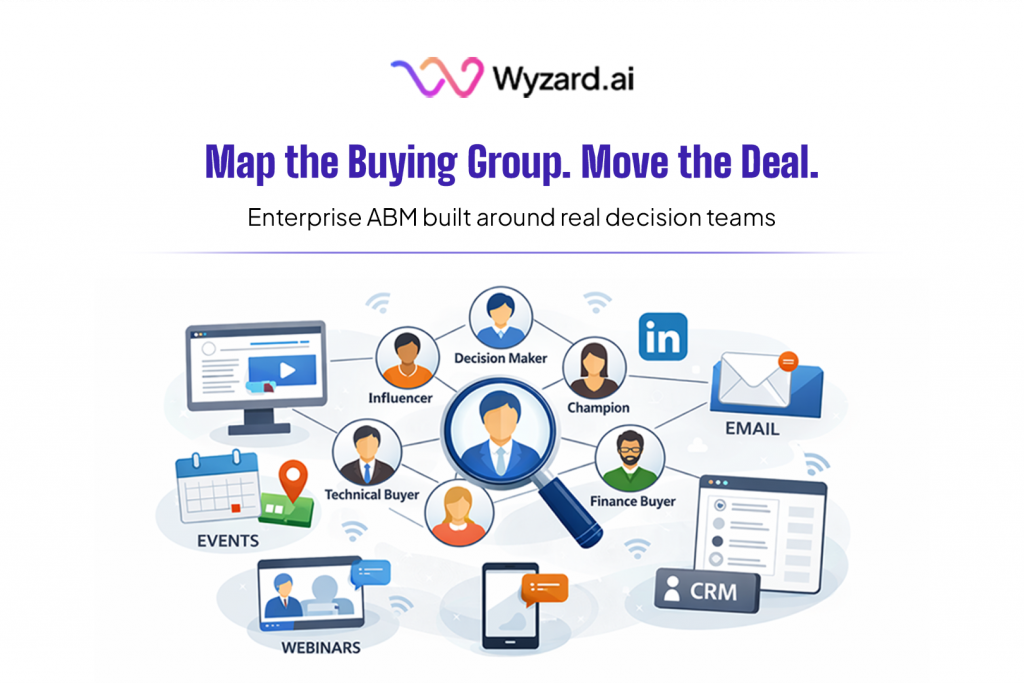
Your Buyer Isn’t One Person: How to Map the Full Buying Group in Enterprise ABM
If you’re a CMO running enterprise ABM, you’ve likely seen this play out. A target account shows strong engagement. ...
