 We’ve secured funding to power Signal-to-Revenue AI to GTM teams globally. →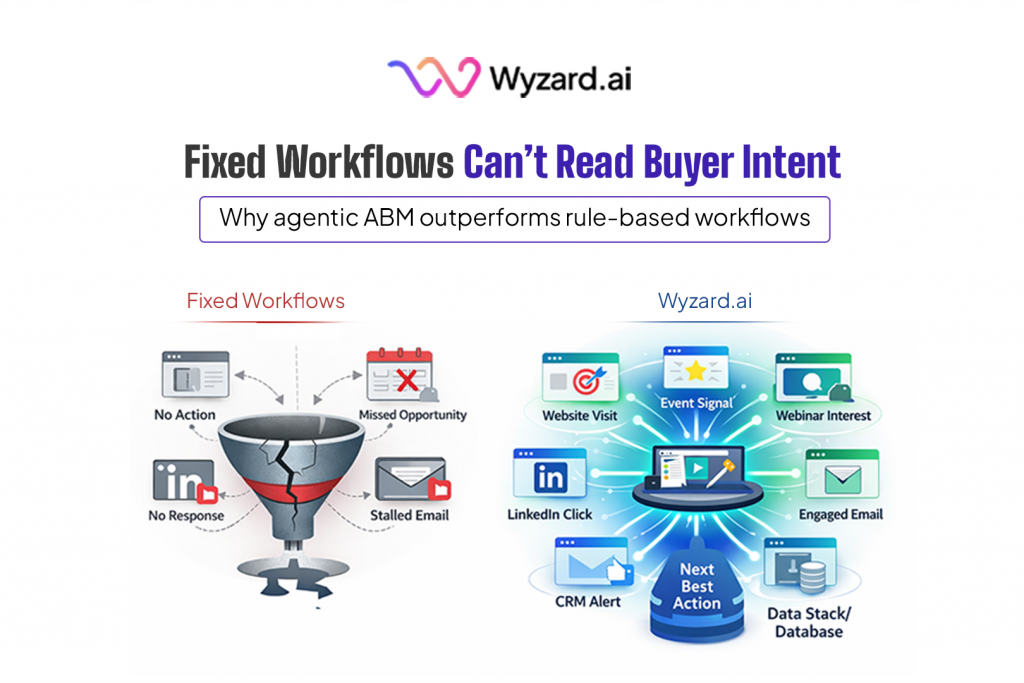
A CMO reviews the weekly pipeline report and sees all the expected activity. A target account visited the website. ...
Your Buyer Isn’t One Person: How to Map the Full Buying Group in Enterprise ABM
Published
Categorized as Uncategorized
Subscribe Now
If you’re a CMO running enterprise ABM, you’ve likely seen this play out. A target account shows strong engagement. Someone clicks a LinkedIn ad, two people attend your webinar, one contact replies to a nurture email, and your team sees fresh website activity. On paper, the account looks warm. Then the deal slows down. Interest did not disappear. Your team was reading one visible thread instead of the full decision process. That is where buying group mapping becomes a revenue issue, not just a data issue. Forrester says the average B2B buying decision involves 13 people, and 89% of purchases involve two or more departments. Wyzard, the Signal-to-Revenue AI, is built for this reality. It captures signals across channels and helps teams act on the full picture before intent fades.
Why buying group mapping matters more than account engagement
Many ABM programs still mistake contact activity for account coverage. That is a risky bet. One active contact can look like momentum, yet enterprise buying rarely moves on one person’s enthusiasm. A typical buying group spans multiple functions, and its guidance is clear: providers need to move from isolated leads to engaging multiple members of the group. Put another way, the account is not progressing just from one visible champion in the CRM. Buying group mapping shows whether the deal has real support behind it. The gap gets bigger in larger deals.
If your motion still centers on one champion, you are relying on a single internal advocate to carry consensus for everyone else.
What buying group mapping actually means
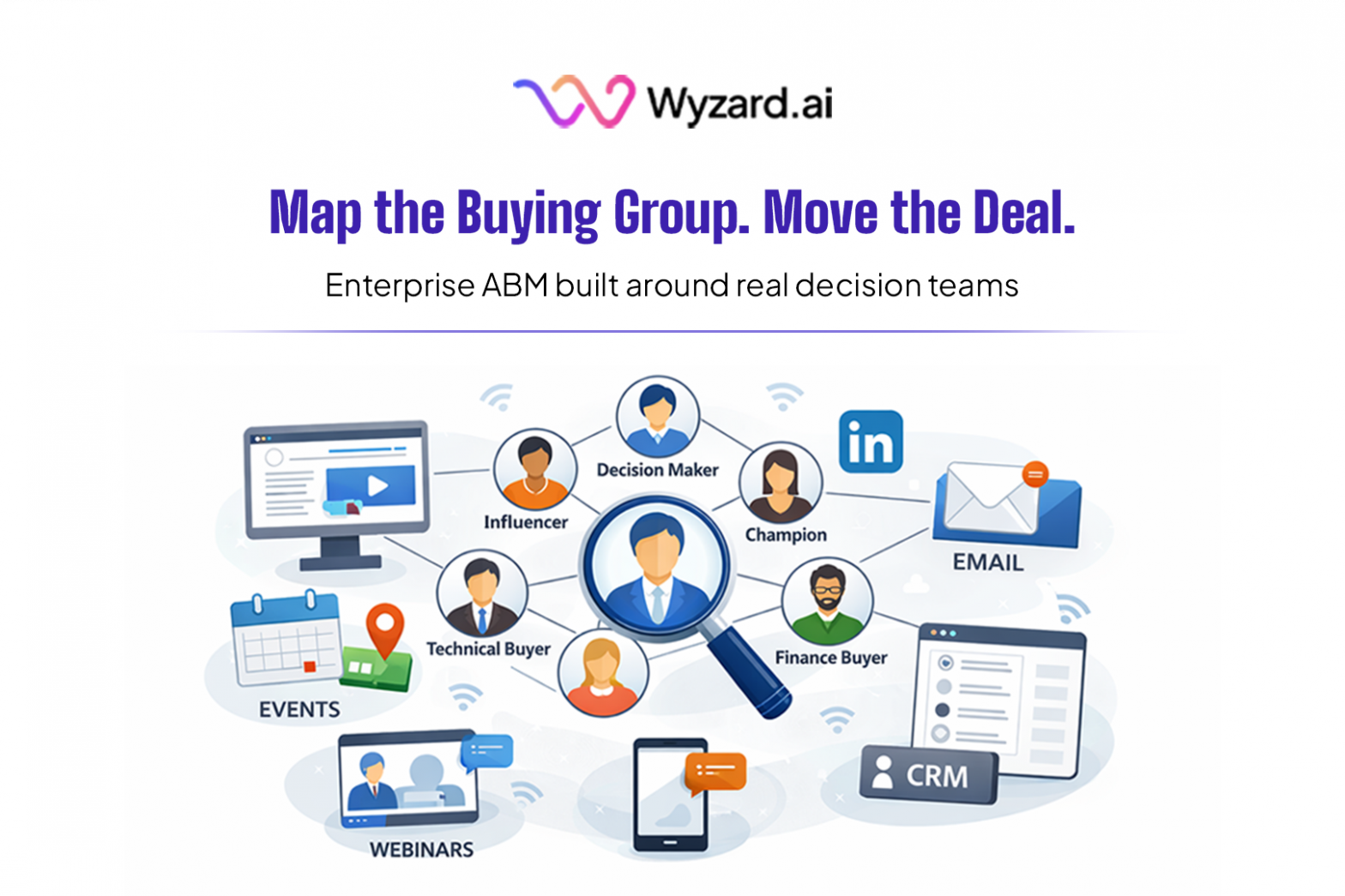
At its core, buying group mapping means identifying who is involved in the decision, what role each person plays, how much influence they carry, and what signal each of them is sending. That includes the economic buyer who cares about business value and budget, the technical buyer who cares about fit, risk, security, and implementation, plus champions, users, approvers, and internal influencers who shape the decision in quieter ways. Forrester describes the buying group as a set of people with distinct roles such as decision-maker, champion, influencer, ratifier, and user.
That is why stakeholder mapping needs to go beyond job titles. You are not building a larger contact list. You are trying to see the buying committee as it actually behaves. Who is researching? Who is comparing vendors? Who is asking security questions? Who is showing up after the webinar but before the demo request? Good buying group mapping makes those patterns visible, which gives sales, marketing, growth, and RevOps a better shot at coordinating the next move.
A practical framework for buying group mapping
The first step in buying group mapping is to start with the account, not the lead. Pull together signals from the places where buying intent actually appears: website visits, event scans, webinar attendance, paid campaign engagement, email clicks, LinkedIn activity, CRM history, and replies from nurture or outbound sequences. Wyzard.ai is built to support that motion, with WyzSignals, that captures and interprets real-time intent across web, email, LinkedIn, CRM, events, and webinar touchpoints, so teams can act before intent fades.
The second step is to identify visible and missing stakeholders. This is where many teams find the real problem. The account may look engaged, yet the active signals are coming from only one function. If marketing is hearing from practitioners but no budget owner is showing intent, the account is interested but not yet covered. If sales is only talking to one contact, the odds are not great. Winning deals have at least three people from the buyer’s side in meetings across the sales cycle. Strong buying group mapping helps you spot those gaps early enough to fix them.
The third step is role-based action. This is where Wyzard.ai becomes useful in practice. WyzEnrich adds firmographic and account context. WyzQualify applies dynamic ICP logic and routes qualified leads with a clear summary of why they matter. WyzGoal turns a plain-language outcome into channel-specific sequences, and WyzChannels executes those plays across email, LinkedIn, chat, voice, and other touchpoints. That means your webinar follow-up does not have to be one generic sequence. You can run one thread for the economic buyer, one for the technical buyer, and another for the broader buying committee, all tied back to the same account context.
Where Wyzard.ai makes buying group mapping operational
Most teams already have signals. What they lack is a system that turns signals into coordinated action. Wyzard.ai positions itself as the Signal-to-Revenue AI, orchestrating every signal into revenue with human oversight. Its GTM Intelligence Graph connects buyers, accounts, campaigns, and behavior so no signal sits in isolation. On top of that, Wyzard.ai runs a System of Outcomes, where goals and measurable results become the unit of work, with AI GTM Engineers guiding execution. That matters for buying group mapping. The job is not just to identify stakeholders. The job is to convert that visibility into relevant outreach and measurable pipeline movement.
This is why the platform fits multiple teams. Wyzard.ai says marketers can turn engagement into pipeline, sales can catch real-time interest and act with context, growth teams can prioritize in-market accounts, and RevOps can unify GTM signals in one governed system. In practice, that means a booth scan, a LinkedIn ad click, a webinar signup, a website revisit, and an email reply can all feed one account view instead of five disconnected workflows. Buying group mapping gets stronger when every channel contributes to one account narrative.
The takeaway for CMOs
The real issue in enterprise ABM is not that your team lacks intent data. The decision happens across more people and more channels than your current process can see clearly. Buying group mapping fixes that. It helps you distinguish one loud contact from real account consensus. It helps marketing build smarter plays, helps sales multithread earlier, helps RevOps route with more confidence, and helps growth teams focus on accounts that are actually moving. For CMOs, buying group mapping is one of the cleanest ways to reduce lead leakage without adding more headcount.
Your buyer is not one person. Your system should not act like they are. Wyzard, the Signal-to-Revenue AI, gives teams a way to connect signals, map the full buying group, and orchestrate action across chat, email, LinkedIn, phone, events, webinars, and paid channels with shared context and human oversight.
If your team wants buying group mapping that leads to revenue, not just cleaner records, book a demo and see it in action.
Other blogs
The latest industry news, interviews, technologies, and resources.
The 5-Minute Rule for ABM: How Fast Response Turns Buyer Intent Into Pipeline
If you are a CMO running enterprise growth, you have probably seen this in a pipeline review. A target ...

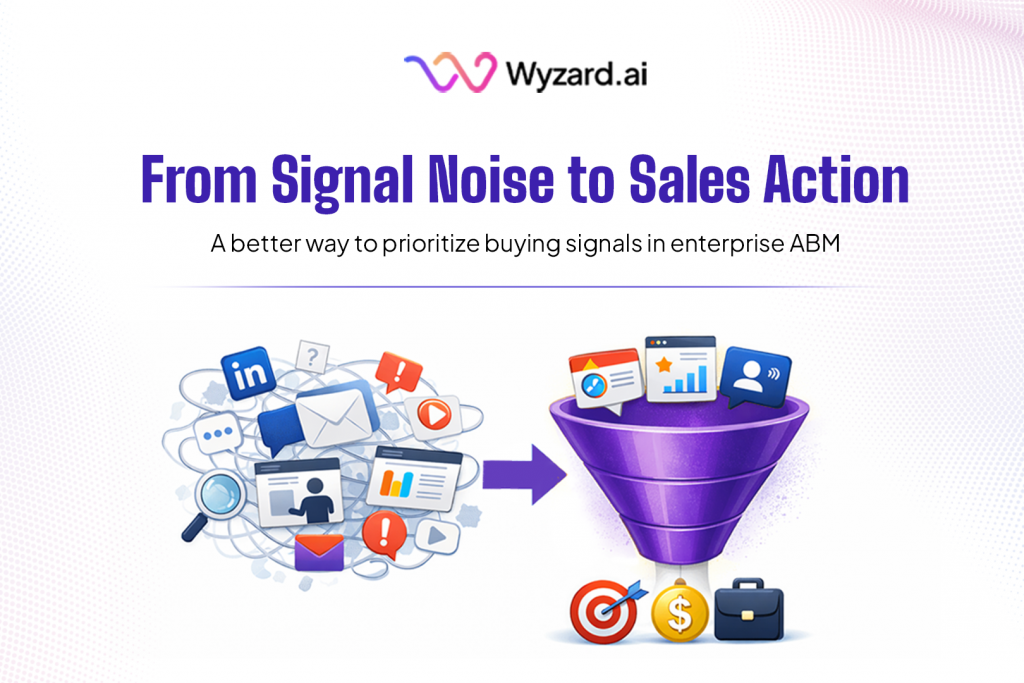
Enterprise ABM Signal Noise: How to Prioritize Buying Signals That Actually Matter
If you are a CMO running enterprise ABM, the problem is rarely a lack of activity. It is an ...
