 We’ve secured funding to power Signal-to-Revenue AI to GTM teams globally. →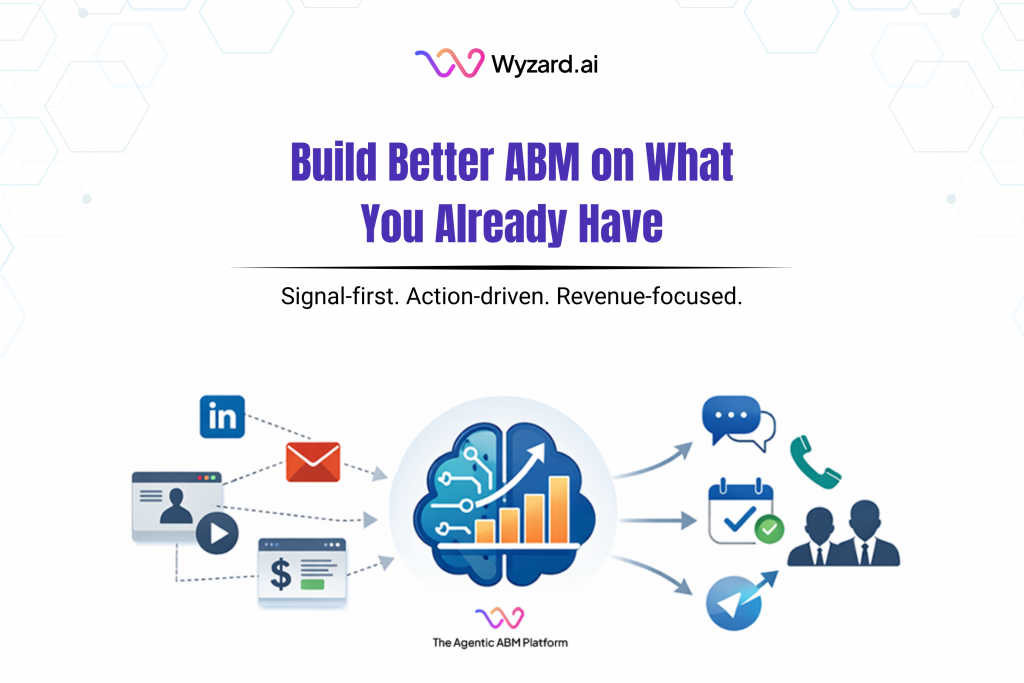
If you are a CMO, this situation feels familiar. Your team has a CRM, marketing automation, paid campaigns, webinars, ...
AI Email Marketing Tools: How to Pick and Use Them Effectively
Published
Categorized as Uncategorized
Subscribe Now
Email still works. But getting people to actually open, read, and click? That’s gotten harder.
Your subscribers see dozens of emails every day. Generic blasts get ignored. Timing feels like guesswork. Writing fresh subject lines for every campaign drains your energy. And manually segmenting lists based on behavior? That’s hours you don’t have.
AI tools for email marketing solve these exact problems. They write copy faster, send emails when each person is most likely to open them, and automatically group your audience based on real actions, not assumptions.
This isn’t about replacing your team. It’s about letting software handle the repetitive work so you can focus on strategy, creativity, and results. Whether you’re a CMO trying to prove marketing ROI or a growth leader managing campaigns across multiple channels, AI email marketing tools help you move faster without burning out.
Let’s look at what these tools actually do and which ones are worth your time.
Best AI Email Marketing Tools: What They Offer and How They Work
Different tools solve different problems. Some specialize in content creation. Others optimize timing or automate workflows. Here’s what matters about each category.
All-in-One Platforms That Combine AI With Email Infrastructure
ActiveCampaign
It focuses on lifecycle automation with predictive send timing. It learns when each contact typically engages, then delivers emails during those windows. The automation builder helps you create multi-step sequences without coding. You can also track deal pipelines inside the platform, connecting email activity directly to revenue outcomes.
Key features include predictive sending, visual automation workflows, and win probability scoring. Best for teams that want mature automation and precise timing without managing multiple tools.
Klaviyo
It serves eCommerce brands with predictive customer lifetime value (CLV), churn risk scores, and expected next order dates. These predictions feed directly into segmentation and flows. If the AI flags a customer as high churn risk, you can automatically send a retention offer.
Key features include CLV forecasting, abandoned cart recovery, and product recommendation engines. Best for online stores that need behavior-based segmentation tied to purchase data.
HubSpot
It connects AI email writing to CRM records. The AI Email Writer pulls contact details and past interactions to generate personalized drafts. Since email activity syncs with contact records and deals, your sales team sees who’s engaging before they reach out.
Key features include AI-generated email copy, CRM-linked personalization, and attribution reporting. Best for teams that want alignment between marketing and sales in one platform.
Mailchimp
It uses Intuit Assist to build on-brand email journeys fast. The AI creates designed emails for common use cases like welcome sequences or cart abandonment, matching your brand kit automatically. You can launch multi-step flows in minutes instead of hours.
Key features include AI-powered flow templates, brand-aware design generation, and basic segmentation. Best for small teams that need speed and simplicity over advanced customization.
Specialized Tools That Solve Specific Email Problems
Seventh Sense
It optimizes send times at the individual level. It plugs into your existing email platform (works with HubSpot and Marketo) and adjusts delivery timing based on each recipient’s engagement history. One company reported a 93% increase in opens after implementing send time optimization.
Key features include per-recipient timing optimization and fatigue analysis. Best for teams that want a high-impact, low-effort way to improve engagement without changing content.
Rasa.io
It personalizes newsletters by curating different article sets for each subscriber. Instead of sending everyone the same five stories, it selects content based on what each person has clicked before. The American Marketing Association reported 48% average open rates and saved more than 75 hours monthly using this approach.
Key features include AI-driven content curation and individual article selection. Best for organizations that publish regular newsletters and want to increase relevance at scale.
Jasper
It accelerates content creation with AI-powered copywriting. It generates email drafts, subject lines, and multiple variations for testing. Brand voice controls help maintain consistency across campaigns. Teams use it to produce more content faster while maintaining quality standards.
Key features include generative copy with brand voice tuning and reusable templates. Best for content teams that need to scale output without adding headcount.
Smartwriter.ai
It specializes in outbound and prospecting emails. It generates personalized subject lines and body copy based on prospect data. Instead of writing each email from scratch, you input prompts and receive multiple angles to test.
Key features include AI-generated outreach copy and personalization helpers. Best for sales development teams that send high volumes of prospecting emails.
How Wyzard.ai Fits Into Your Email Strategy
Most tools focus on either content creation or delivery optimization. Wyzard.ai works differently, it orchestrates signals across your entire GTM stack and triggers the right action at the right moment.
Here’s the core problem it solves: buyer intent signals scatter across disconnected tools. Someone visits your pricing page (tracked in analytics), opens two emails (recorded in your ESP), and engages with a LinkedIn post (sitting in social data). By the time you notice the pattern, they’ve moved on.
Wyzard.ai connects those signals in real time. When the AI detects buying intent, multiple touchpoints within a short window, it triggers immediate engagement through the most relevant channel. That could be an email, but it might be chat or LinkedIn, depending on where the prospect is most active.
Agentic Email capabilities ensure every message matches where the prospect is in their journey. Someone researching solutions gets educational content. Someone comparing vendors gets differentiation points. Someone on your pricing page gets a meeting invitation. The AI adapts messaging based on actual behavior, not static segments.
The platform includes human-in-the-loop architecture. AI handles speed and pattern recognition. Your team maintains oversight and control. You can take over any conversation manually, and AI pauses after replies so your team can step in when needed.
Integration capabilities connect with CRMs like HubSpot and Salesforce, data enrichment tools like ZoomInfo and Apollo, and communication platforms like Slack and Microsoft Teams. This means Wyzard.ai acts as the orchestration layer between systems you already use, rather than requiring you to replace existing tools.
For CMOs struggling with lead response times and conversion rates, this approach proves marketing’s revenue impact by connecting buyer signals directly to engagement actions. For growth leaders frustrated by signal scatter, it improves speed-to-lead without scaling headcount. For RevOps managers seeking a unified view of buyer intent, it orchestrates data flows between marketing and sales systems.
What AI Email Marketing Tools Actually Do for You
AI email marketing tools handle three core jobs: writing, timing, and targeting. Generative AI writes content, subject lines, body copy, and calls to action, giving you multiple options to test. Predictive AI analyzes behavior data to determine who should get which email and when they’re most likely to engage. One subscriber might receive your campaign at 9 AM Tuesday while another gets it at 7 PM Thursday, based on their individual opening patterns.
These tools also segment audiences automatically based on actual behavior. If someone clicks product links but never downloads whitepapers, the AI tags them accordingly and adjusts future sends. Real-time orchestration takes this further, when a prospect visits your pricing page, AI agents for email marketing can trigger a follow-up email within minutes while they’re still evaluating options. The result: higher open rates, better click-through rates, and less time spent on execution.
Common Challenges When Using AI for Email Marketing (And How to Handle Them)
AI doesn’t always work perfectly. Here’s what goes wrong and how to deal with it.
Generative AI sometimes invents facts. It might create statistics that sound plausible but don’t exist. Always treat AI-generated content as a first draft. A human needs to review every email before it goes out.
Data quality determines predictive accuracy. If your CRM contains outdated contact records or your email platform doesn’t track engagement properly, AI recommendations won’t help. Clean your data first. Make sure systems capture behavior consistently. Then let AI analyze patterns.
Integration complexity slows adoption. Connecting multiple tools requires API access, proper configuration, and sometimes custom development. Nine ways to supercharge email marketing with real-time AI agents include ensuring your tech stack shares data smoothly budget time for setup and testing before expecting results.
Privacy regulations affect what data you can use. Make sure your AI email marketing tools comply with requirements like GDPR and CAN-SPAM. Most reputable platforms handle compliance built in, but verify before processing subscriber data.
Team skills matter more than you’d think. Someone needs to understand how the AI works, what prompts generate better output, and how to interpret recommendations. Plan for training when you adopt new tools. Document what works so knowledge doesn’t stay locked in one person’s head.
Over-automation creates its own problems. If every email goes out automatically with no human review, mistakes get amplified. Set up approval workflows for new campaigns. Monitor performance metrics closely during the first few weeks.
The goal isn’t to remove humans from email marketing. It’s to handle repetitive work automatically so your team focuses on strategy, creativity, and relationship building.
FAQs
What are AI email marketing tools, and how do they work?
AI email marketing tools use artificial intelligence to automate and optimize email campaigns. Generative AI writes content like subject lines and body copy, while predictive AI analyzes behavior data to determine optimal send times, segment audiences, and personalize content for each recipient.
Do AI email marketing tools replace human marketers?
No, these tools handle repetitive tasks like drafting copy, scheduling sends, and building segments. Humans still set strategy, review content, make final decisions, and handle relationship building. AI augments your team’s capabilities rather than replacing them.
What’s the biggest benefit of using AI tools for email marketing?
Time savings and improved targeting. AI handles segmentation, timing, and content creation in minutes instead of hours. This lets your team run more campaigns, test more variations, and focus on strategy rather than execution.
How do I choose the right AI email marketing tool for my business?
Start by identifying your biggest email marketing problem: slow content creation, poor timing, or weak segmentation. Choose a tool that solves that specific issue. Check integration requirements with your current systems. Test during a free trial period before committing to a paid plan.
Other blogs
The latest industry news, interviews, technologies, and resources.
March 30, 2026
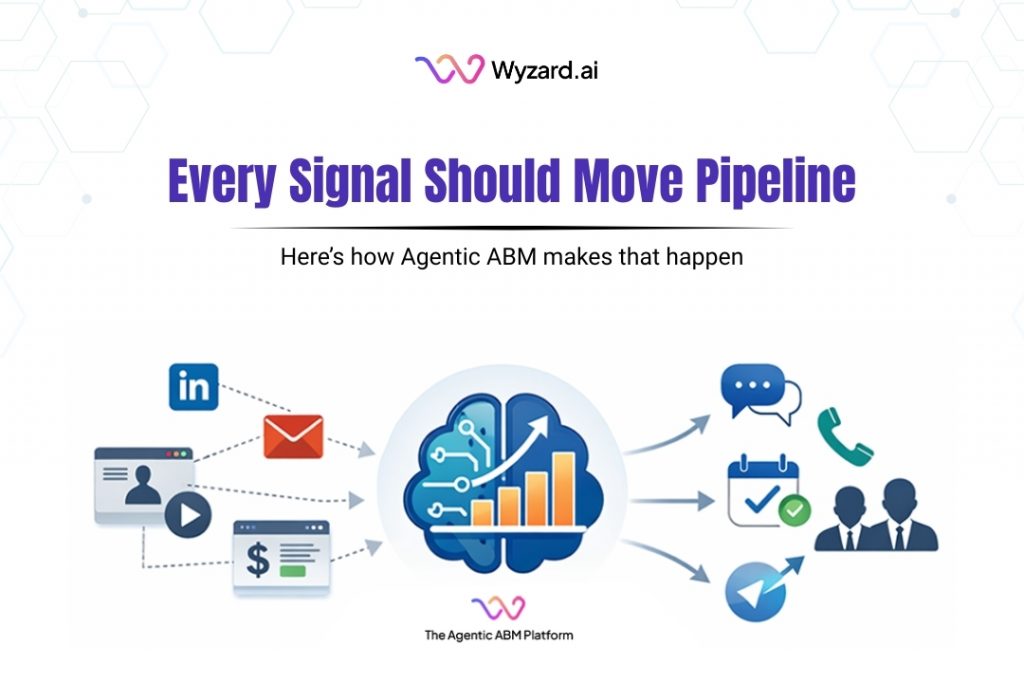
The Signal-to-Revenue Blueprint for Agentic ABM
A CMO reviews the weekly dashboard and sees strong activity. A target account clicked a LinkedIn ad. Another stakeholder ...

March 27, 2026
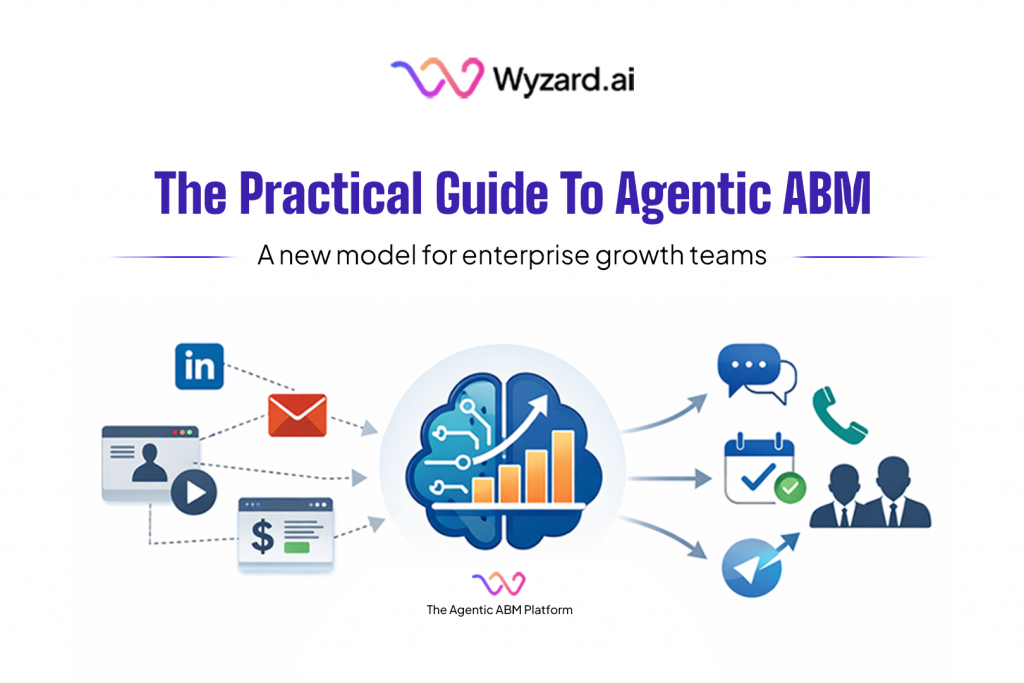
What Is Agentic ABM? A Practical Guide for Enterprise GTM Teams
Enterprise GTM has an action gap. If you are a CMO, this scene is familiar. A target account clicks ...
