 We’ve secured funding to power Signal-to-Revenue AI to GTM teams globally. →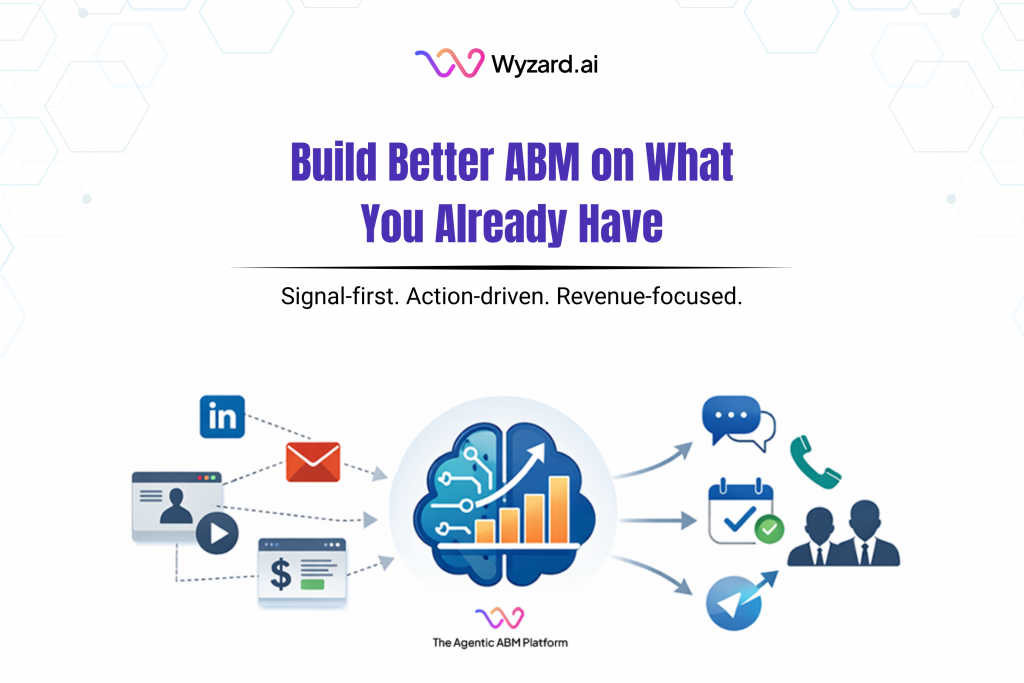
If you are a CMO, this situation feels familiar. Your team has a CRM, marketing automation, paid campaigns, webinars, ...
Subscribe Now
What is Account-Based Marketing?
Account-Based Marketing (ABM) is a strategic approach where marketing and sales teams coordinate efforts to engage specific high-value accounts rather than casting a wide net for individual leads. Instead of generating thousands of prospects and hoping some convert, ABM flips the funnel by identifying your ideal customers first, then creating personalized campaigns to win them.
For B2B SaaS companies, this matters because your revenue often comes from a concentrated set of accounts, not mass-market volume. When a single customer might be worth $50K to $500K in annual contract value, treating every prospect the same wastes resources and misses opportunities.
Why Account-Based Marketing Works for B2B SaaS
Traditional demand generation focuses on lead volume, downloading an ebook, filling a form, become a marketing qualified lead. But B2B software purchases involve multiple stakeholders. Your champion in marketing might love your product, but without buy-in from IT, finance, and the executive team, nothing happens.
ABM recognizes this reality. It treats the entire account as your prospect, not just one contact. You track signals from the CMO researching pricing, the VP of Engineering reading technical docs, and the CFO comparing competitors. When multiple contacts from the same account show interest, you know something real is happening.
The problem most teams face is signal scatter. Buying committee members interact with your brand across disconnected channels: your website, email campaigns, LinkedIn, events, but these signals live in separate tools. By the time you piece together what’s happening, the buying moment has passed. ABM requires orchestration to capture these distributed signals and trigger coordinated responses across your entire buying committee.
The Three Pillars of Account-Based Marketing
Account Selection and Prioritization
ABM starts with choosing the right targets. You define your ideal customer profile based on firmographics, technographics, and fit criteria. Company size, industry, tech stack, growth signals, these factors help you build a target account list. Not every account gets the same treatment. Tier your accounts based on potential value and engagement capacity.
Signal Intelligence Across the Buying Committee
Once you’ve identified target accounts, you need visibility into buying committee behavior. Who’s visiting your pricing page? Which contacts opened your email? Did someone from the account attend your webinar? ABM requires tracking engagement at both the contact and account level. When three people from the same company visit your site in the same week, that’s a signal worth acting on immediately.
Coordinated Multi-Channel Engagement
ABM campaigns engage multiple stakeholders simultaneously through their preferred channels. Your CMO might respond to LinkedIn content while your CTO prefers technical documentation. Your CFO needs ROI case studies delivered via email. Effective ABM orchestrates these touchpoints so each buying committee member gets relevant content matched to their role and stage.
How to Implement Account-Based Marketing
Implementation starts with sales and marketing alignment on target accounts. Build your account list together. Marketing shouldn’t generate campaigns for accounts sales doesn’t want to close. Sales shouldn’t ignore accounts that marketing is investing in. Agree on definitions, responsibilities, and success metrics before launching anything.
Next, research each target account deeply. Understand their business challenges, technology environment, and organizational structure. Map the buying committee, who are the decision makers, influencers, and champions you need to engage? This research informs your messaging and channel strategy.
Create account-specific playbooks that coordinate touchpoints. When someone from a target account visits your website, trigger an immediate chat engagement. Follow up with a personalized email to the specific contact who showed interest. If they engage, expand reach to other buying committee members through LinkedIn. Connect these channels so your response feels cohesive, not disconnected.
Wyzard.ai’s multi-channel orchestration helps here by unifying signals across web, email, and LinkedIn. When a buying committee member shows intent, WyzChannels triggers the right response through the right channel at the right moment, without your team manually monitoring five different tools.
Account-Based Marketing vs. Lead-Based Marketing
| Dimension | Account-Based Marketing | Lead-Based Marketing |
| Target Approach | Focuses on specific high-value accounts | Broad campaigns targeting large audiences |
| Success Metrics | Account engagement depth, pipeline by account tier | Lead volume, MQL conversion rates |
| Sales Alignment | Joint account planning and execution | Handoff model with MQL thresholds |
| Personalization | Customized by account and buying committee role | Segmented by persona or industry |
| Resource Allocation | Concentrated investment in fewer accounts | Distributed across many prospects |
| Speed to Revenue | Faster for target accounts already in-market | Slower due to nurture cycles and qualification stages |
The fundamental difference is focus. Lead-based marketing optimizes for volume and efficiency. ABM optimizes for conversion depth within predetermined accounts. Both have value, but ABM makes sense when customer lifetime value justifies the investment in personalized engagement.
How to Measure Account-Based Marketing Performance
Key ABM Metrics to Track:
- Account Engagement Score – Measure activity across all contacts within the account, not just individual lead scores. Are multiple stakeholders interacting with your content?
- Buying Committee Coverage – Track what percentage of key decision makers and influencers you’ve engaged. Winning accounts require reaching beyond a single champion.
- Pipeline Velocity by Account Tier – How quickly do target accounts move through your funnel compared to non-ABM leads? This reveals ABM’s impact on sales cycle length.
- Account Penetration Depth – Monitor how many contacts per account engage over time. Expansion within accounts indicates growing interest and reduces single-point-of-failure risk.
- Win Rates on Target Accounts – Your close rate on carefully selected ABM accounts should significantly exceed your overall win rate. If it doesn’t, revisit your account selection criteria.
Traditional lead metrics like form fills and email opens still matter, but they’re incomplete. ABM requires account-level intelligence that shows the full buying committee picture. Wyzard.ai’s WyzSignals provides this unified view by capturing intent across contacts and channels, so you see account engagement as a whole rather than isolated interactions.
What Makes Account-Based Marketing Fail
The biggest ABM failure comes from treating it like regular demand generation at smaller scale. Running the same email nurture campaign but targeting fewer companies isn’t ABM, it’s just less efficient marketing. True ABM requires account-specific research, messaging, and coordination.
Lack of sales-marketing alignment kills ABM programs quickly. When marketing invests heavily in accounts sales doesn’t prioritize, or sales ignores marketing-warmed accounts, the whole strategy breaks down. Regular communication and shared goals are essential.
Choosing the wrong accounts wastes resources. If your ICP is poorly defined or you target aspirational accounts that will never buy, ABM burns budget without results. Be honest about fit criteria and prioritize accounts where you have a realistic shot.
Signal scatter across buying committees is another common failure point. You engage the marketing contact but miss procurement’s research on competitor sites. Or you nurture the technical buyer while the CFO explores alternatives elsewhere. Without orchestration to capture signals from all stakeholders, you’re reacting to incomplete information.
Technology Stack for Account-Based Marketing
Essential ABM Tool Categories:
- Account Intelligence Platforms – Identify target accounts, reveal buying committee structures, and track account-level intent signals.
- Personalization and Engagement Tools – Create customized experiences across web, email, and advertising based on account and role.
- Orchestration Layers – Connect your scattered tools so signals from one channel trigger actions in another. This prevents buying committee signals from getting lost between systems.
- CRM and Enrichment Integration – Maintain clean account records with up-to-date firmographic and technographic data so your targeting stays accurate.
The challenge isn’t finding these tools, it’s connecting them. Most teams assemble five to ten platforms that each solve one piece of the ABM puzzle. Without an orchestration layer, you’re manually checking each tool and deciding what action to take. Wyzard.ai solves this by acting as the intelligence layer between your tools, capturing every buying signal and triggering coordinated engagement across channels while maintaining human oversight for strategic accounts.
FAQs
What is ABM in simple terms?
ABM is a targeted marketing strategy where you identify specific high-value companies you want as customers, then create personalized campaigns to engage all the decision makers at those companies simultaneously. Instead of generating thousands of random leads, you focus resources on accounts that match your ideal customer profile and coordinate efforts to win them.
How is ABM different from traditional marketing approaches?
Traditional marketing casts a wide net to generate lead volume, then filters for quality later. ABM flips this by identifying quality accounts first, then creating customized campaigns for those specific targets. You focus on account-level engagement across buying committees rather than individual lead conversion, which matters in B2B where multiple stakeholders influence purchase decisions.
What size company should use ABM?
ABM makes sense for B2B companies where customer lifetime value justifies personalized engagement investment. If your average deal is $25K+ and involves multiple decision makers, ABM is worth considering. Mid-market and enterprise B2B SaaS companies typically benefit most because their deals are complex with longer sales cycles and concentrated revenue from fewer customers.
How many accounts should I target with ABM?
Start with 20-50 tier-one accounts where you’ll invest heavily in personalization. Add 50-200 tier-two accounts that get scaled personalization through automation and smart targeting. The exact number depends on your resources and deal size. Quality beats quantity; it’s better to deeply engage 30 accounts than superficially touch 300.
Can ABM work with limited resources?
Yes, but you need smart orchestration. Small teams can’t manually personalize for hundreds of accounts, but AI-powered platforms can coordinate engagement at scale. Focus your human effort on account research, playbook creation, and high-value conversations. Let technology handle signal capture, qualification, and initial engagement so your team focuses on where personalization matters most, closing strategic deals.
Other blogs
The latest industry news, interviews, technologies, and resources.
March 30, 2026
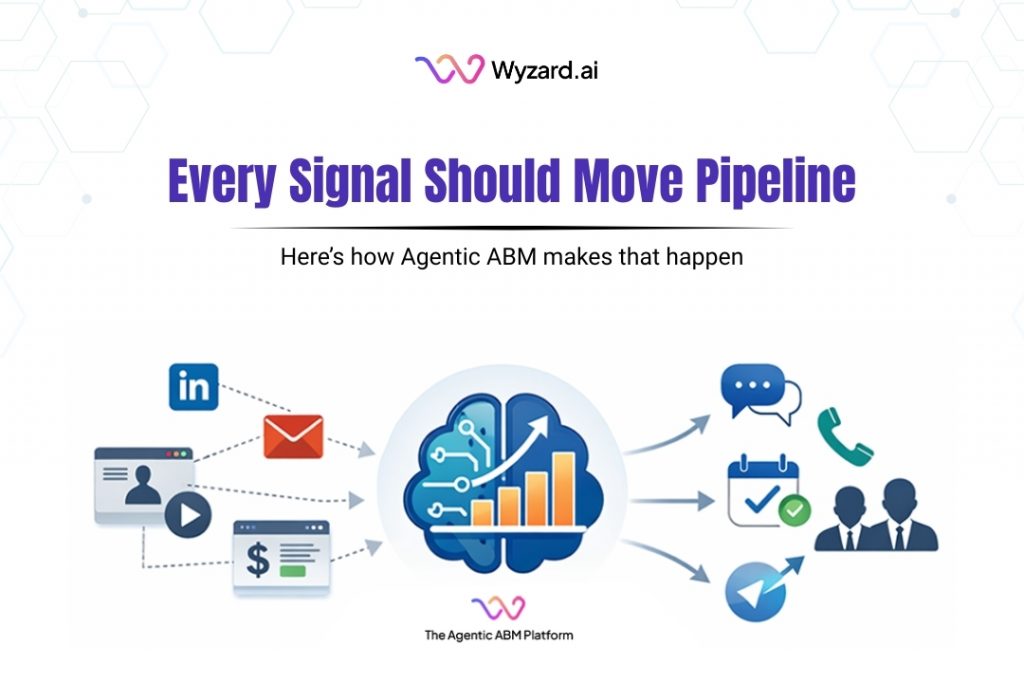
The Signal-to-Revenue Blueprint for Agentic ABM
A CMO reviews the weekly dashboard and sees strong activity. A target account clicked a LinkedIn ad. Another stakeholder ...

March 27, 2026
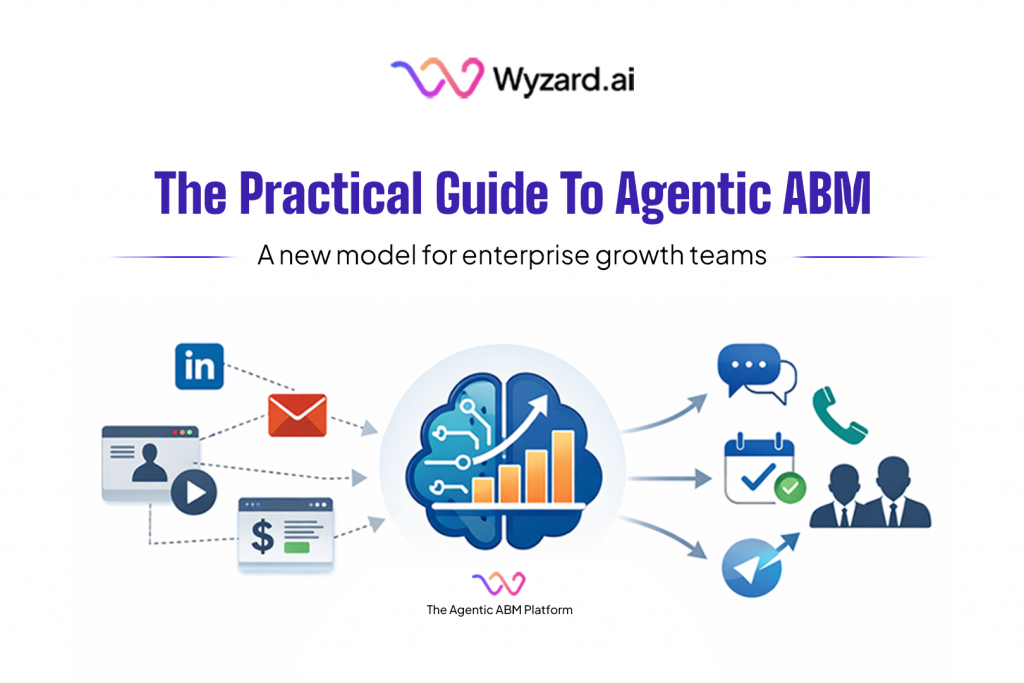
What Is Agentic ABM? A Practical Guide for Enterprise GTM Teams
Enterprise GTM has an action gap. If you are a CMO, this scene is familiar. A target account clicks ...
