 We’ve secured funding to power Signal-to-Revenue AI to GTM teams globally. →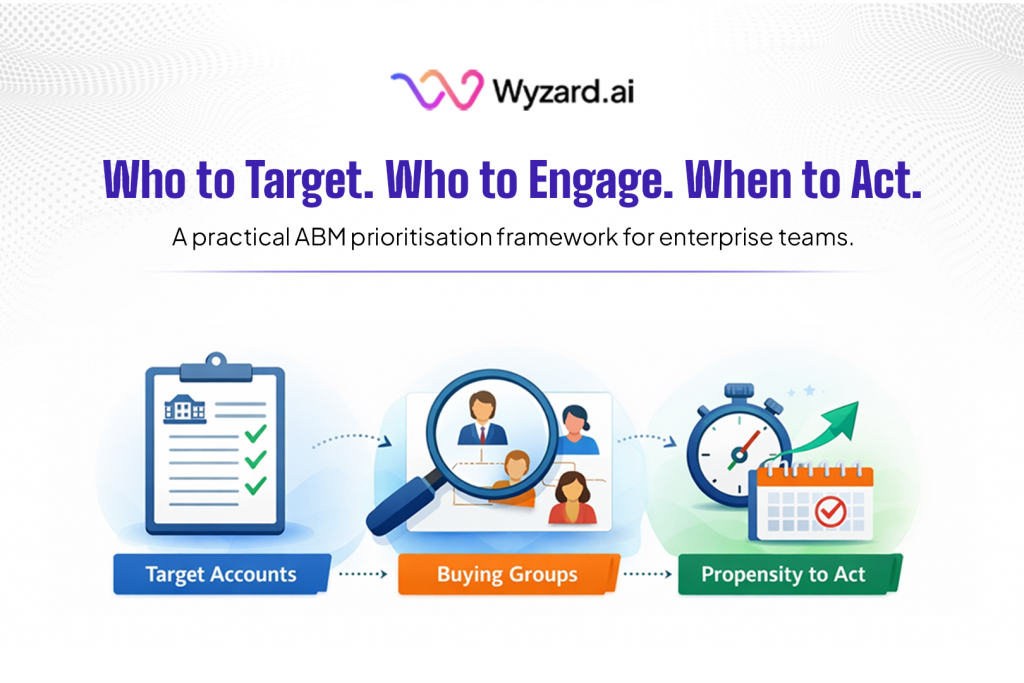
If you are a CMO, one of the hardest moments in ABM comes when the dashboard is full of ...
Data Enhancement vs. Data Enrichment: Which Actually Works Better?
Published
Categorized as Uncategorized
Subscribe Now
Your marketing database holds thousands of records, but here’s the truth: most of that data isn’t working for you. Some records have outdated emails. Others are missing crucial details like job titles or company size. And then there’s the information that’s just plain wrong.
This is where data enhancement and data enrichment come in. But which one do you actually need? The answer isn’t as simple as choosing one over the other; it’s about understanding what each process does and when to use it.
What Is Data Enhancement and Why Does It Matter
Data enhancement focuses on fixing and improving the information you already have. Think of it as cleaning your house before inviting guests over; you’re not adding new furniture, just making sure everything is in its right place and working properly.
This process tackles the messy reality of most marketing databases. It corrects typos in email addresses, updates outdated phone numbers, standardizes formats (like making sure all dates follow the same pattern), and removes duplicate entries that waste your team’s time. When you’re running campaigns, and your bounce rate keeps climbing, that’s data enhancement territory.
For B2B SaaS teams, this matters because poor data quality directly impacts revenue. When your sales team calls disconnected numbers or emails bounce back, you’re not just wasting time; you’re missing opportunities. Data enhancement ensures that when a buyer signal comes in, your team can actually reach that person. Tools like Wyzard.ai’s Signal Quality features help identify which records need attention before they cost you deals.
Understanding Data Enrichment and Its Strategic Value
Data enrichment works differently. Instead of fixing what you have, it adds new information from external data sources to create a more complete picture of your prospects and customers. You might start with just a name and email address, then add their job title, company revenue, technology stack, and recent business activities.
This process answers questions your current database can’t. What industry does this contact work in? How big is their company? Are they showing signs of being ready to buy? Data enrichment pulls this context from third-party providers, social platforms, and business databases to help you understand not just who your contacts are, but whether they’re worth pursuing right now.
The difference between data enhancement and data enrichment becomes clear here: enhancement makes your existing data reliable, while enrichment makes it more useful for decision-making. When you’re trying to prioritize which leads to contact first or personalize your outreach, enriched data gives you the intelligence you need.
Data Enhancement vs. Enrichment Comparison: Key Differences
Let’s break down the data enhancement vs. enrichment comparison with specifics that matter for your GTM strategy:
| Aspect | Data Enhancement | Data Enrichment |
| Primary Goal | Fix and standardize existing records | Add new information from external sources |
| Data Source | Internal database cleanup | Third-party data providers |
| Common Use Cases | Reducing email bounces, removing duplicates, correcting errors | Lead scoring, account prioritization, and personalization |
| Impact Timeline | Immediate improvement in data accuracy | Gradual improvement in targeting precision |
| Cost Driver | Processing and validation services | External data acquisition and licensing |
| Best For | Teams with high bounce rates or outdated records | Teams needing deeper customer insights |
When Data Enhancement Should Come First
You need data enhancement before anything else if your database has serious quality problems. Here are the clear signals:
- Your email bounce rate exceeds 5%: This means a significant portion of your contact data is wrong or outdated. No amount of enrichment will help if you can’t reach people in the first place.
- You’re seeing duplicate records across systems: When the same contact appears three times with slightly different information, your team wastes time and looks unprofessional, sending multiple touches to the same person.
- Your CRM data doesn’t match reality: contact information changes constantly, people switch jobs, companies get acquired, and phone numbers change. If you haven’t cleaned your database in over six months, enhancement needs to happen first.
- Compliance requirements are tightening: With privacy regulations becoming stricter, having accurate consent and contact information isn’t optional. Enhancement ensures you’re not inadvertently violating data protection rules.
The customer acquisition funnel breaks down when your foundation, the data itself, is unreliable. Clean it first, then build on it.
When Data Enrichment Drives Better Results
Data enrichment becomes valuable once your foundation is solid. Here’s when to prioritize it:
- Your lead qualification process is too manual: If your SDRs spend hours researching each prospect before reaching out, enrichment can automate that research. Adding firmographic data, technographic details, and intent signals helps them focus on conversations instead of investigation.
- You need better targeting for campaigns: Generic outreach doesn’t work anymore. Enriched data lets you segment by industry, company size, technology stack, or growth stage, creating campaigns that actually resonate with specific audiences.
- Pipeline velocity is too slow: When deals sit in your pipeline for months, it’s often because you’re talking to the wrong people or at the wrong time. Enrichment data helps identify which prospects are actually in buying mode versus those just browsing.
- Personalization at scale feels impossible: you can’t manually customize every email, but you can use enriched data to automatically adjust messaging based on industry, role, company size, or recent business events.
This is where Wyzard.ai’s WyzSignals becomes particularly useful; it captures buyer signals in real time and enriches that data with context about what actions to take next.
The Sequential Approach: Why Order Matters
Here’s what most teams get wrong: they try to enrich bad data. It’s like painting a house with a cracked foundation; you’re just covering up deeper problems.
The sequential approach works better. Start with data enhancement to ensure accuracy. Once you trust your base records, layer in data enrichment to add strategic value. This order matters because enriched data is only useful if it’s attached to the correct contact information.
Think about it this way: if you enrich a record with perfect firmographic data but the email address is wrong, that enrichment is worthless. You can’t reach the person. But if you enhance first to fix that email and then enrich to understand their buying signals, you’ve created an actionable record.
For SaaS marketing teams, this sequential model solves a common problem: too many leads, not enough context. Enhancement ensures your leads are reachable. Enrichment tells you which ones deserve immediate attention. Together, they create a system where your team focuses on the right prospects at the right time.
Wyzard.ai’s WyzQualify automates this process by continuously updating contact data while simultaneously enriching it with behavioral signals, so you’re always working with accurate, contextual information.
How These Strategies Impact Revenue Conversion
Data quality directly affects your ability to convert interest into revenue. But the data enrichment vs. enhancement differences matter specifically at different funnel stages.
In early-stage prospecting, enhancement keeps your outreach from failing. If your initial emails bounce or calls don’t connect, you never get a chance to qualify the lead. That’s a pure data accuracy problem that enhancement solves.
As prospects engage and show interest, enrichment becomes critical. You need to know if they’re the right fit, whether they have a budget, and what pain points matter most to them. This context, which enrichment provides, determines whether you waste time on low-quality opportunities or focus on deals that will close.
For GTM teams trying to scale without proportionally scaling headcount, this combination becomes essential. You can’t manually research and verify every lead. But you can systematically enhance your database, enrich it with relevant signals, and let AI-powered tools like Wyzard.ai handle the heavy lifting while your team focuses on conversations.
The human-in-the-loop approach ensures that while automation handles data processing, your team maintains control over strategy and high-value interactions. This is where data enhancement and enrichment move from operational tasks to strategic advantages.
Making the Right Choice for Your Team
Stop thinking about data enhancement vs. enrichment as an either-or decision. Your database probably needs both, just at different times and for different reasons.
Start by auditing your current data quality. Check your email bounce rates, look for duplicate records, and assess how often contact information is outdated. If these numbers are concerning, enhancement is your first move. Clean up what you have before trying to add more to it.
Once your foundation is solid, look at your qualification and personalization processes. If your team is manually researching every prospect or your campaigns feel too generic, enrichment will provide the context you need to improve both efficiency and effectiveness.
The goal isn’t perfect data, it’s actionable data that helps your team identify and convert the right opportunities faster. Wyzard.ai brings this together by capturing buyer signals the moment they happen, enriching them with relevant context, and triggering the right follow-up actions automatically. That’s how you turn scattered data into revenue.
FAQs
What is the main difference between data enhancement and data enrichment?
Data enhancement fixes and improves your existing records by correcting errors and filling gaps. Data enrichment adds new information from external sources to provide deeper context. Enhancement focuses on accuracy, while enrichment focuses on adding strategic value.
Should I enhance or enrich my database first?
Always start with data enhancement. Clean, accurate records create a reliable foundation. Enriching bad data just adds more information to wrong or outdated records, which doesn’t help your team reach the right people or make better decisions.
How does data quality affect lead qualification?
Poor data quality slows qualification because your team spends time verifying information instead of having conversations. Enhanced and enriched data automates research, letting your team focus on evaluating fit and moving qualified prospects forward faster.
Can I automate both data enhancement and enrichment?
Yes, modern platforms can automate both processes. They continuously verify and update contact information while adding behavioral signals and firmographic data. This keeps your database accurate and contextual without manual effort from your team.
Other blogs
The latest industry news, interviews, technologies, and resources.
March 16, 2026
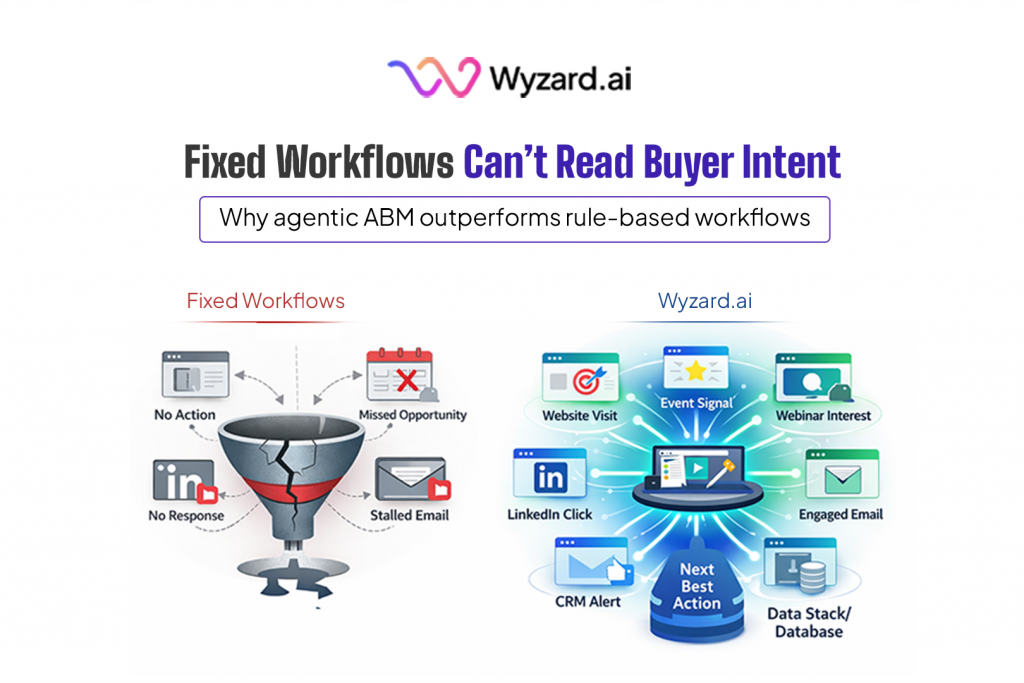
Automation Isn’t Intelligence: Why Agentic ABM Outperforms Rule-Based Workflows
A CMO reviews the weekly pipeline report and sees all the expected activity. A target account visited the website. ...

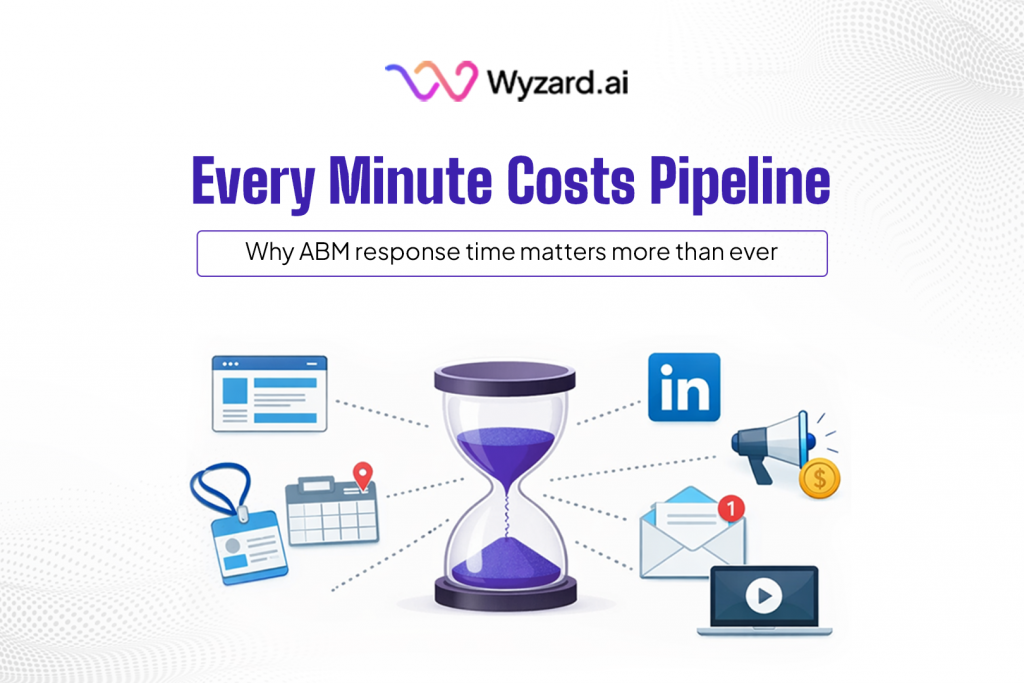
The 5-Minute Rule for ABM: How Fast Response Turns Buyer Intent Into Pipeline
If you are a CMO running enterprise growth, you have probably seen this in a pipeline review. A target ...
