 We’ve secured funding to power Signal-to-Revenue AI to GTM teams globally. →
Leads don’t slip away from a lack of traffic. They slip away in the moments right after intent shows ...
Managed Plays: Launch 10 High-Intent Workflows Without Hiring
Published
Categorized as Uncategorized
Subscribe Now
A CMO sits in a planning meeting with a familiar tension. Demand is coming in from every direction. Events are booked out. Webinars are full. Paid campaigns are driving clicks. The website shows steady intent. Ideas are not the problem. Execution capacity is.
Every new GTM workflow turns into a negotiation. RevOps has a backlog. Automation teams move carefully. Agencies ask for onboarding time. Hiring adds months. Meanwhile, buyer intent keeps showing up, then fading before anyone can act.
This is the gap managed GTM plays are built to close. It is also where Wyzard, the Signal-to-Revenue AI, fits in, capturing buyer signals the moment they happen and orchestrating execution across channels, so GTM teams can launch at scale without adding headcount.
Why Execution Slows as GTM Teams Grow
Growth rarely stalls from lack of strategy. It stalls from workflow friction.
Most teams launch one or two GTM workflows and then hit a wall. Requests stack up. Priorities compete. Every new play needs approval, build time, testing, and coordination across tools.
Internal teams optimize for stability. Growth needs motion.
As a result, high-intent signals from events, webinars, paid ads, email replies, and website activity arrive faster than teams can act on them. The gap between intent and execution widens. That is where managed GTM plays become a strategic advantage.
What “Managed Plays” Actually Mean
A play is not a campaign. It is not a one-off automation. A play is a repeatable motion tied to buyer intent and owned through outcomes.
Managed plays follow a simple pattern:
- A signal appears
- An action triggers across channels
- Ownership is clear
- Outcomes get measured and refined
This aligns with a System of Outcomes, where signals lead to actions, actions lead to results, and results guide the next iteration.
Managed plays stay active. They do not get launched and forgotten.
Why Launching 10 Plays Internally is Rare
Ask most GTM teams how many workflows they truly maintain with confidence. The number is usually small.
Internal automation teams face constraints:
- Limited build capacity
- Dependency on engineering or RevOps cycles
- Long QA and approval loops
- Single-channel bias that creeps in over time
Even strong teams struggle to launch and maintain 10 high-intent workflows at the same time. This is not a talent issue. It is bandwidth.
This is where managed GTM plays change the math.
Speed as a Competitive Advantage
Growth today is shaped by speed of execution, not just quality of ideas.
Workflow velocity measures how quickly a team can move from signal to live execution. Faster velocity means more captured intent. Slower velocity means more missed opportunities.
Buyer interest does not pause for internal planning cycles. Speed compounds. Delays erase leverage.
CMOs feel this pressure most. They are accountable for revenue impact, yet dependent on teams that cannot always move at the pace intent demands.
The Role of the GTM Intelligence Graph
Signals rarely live in one place. Website visits, event scans, webinar attendance, paid clicks, email replies, and CRM activity all carry context. Without unification, that context gets lost.
The GTM Intelligence Graph solves this by connecting signals across tools and channels into one intelligence layer. It preserves account context, behavior history, and intent strength.
This foundation lets managed GTM plays scale without chaos. Routing improves. Follow-up stays relevant. Ownership remains clear.
How Wyzard.ai Launches 10 Managed GTM Plays
Wyzard.ai is built for execution at scale. As the Signal-to-Revenue AI, we combine platform and managed execution into one system.
Here is how it works.
WyzGoal defines the outcome of each play in practical, plain terms. Managed Execution brings it live. Signals flow through the GTM Intelligence Graph, triggering actions across channels.
Plays launch without internal build cycles. Multi-channel execution spans email, LinkedIn, chat, voice, events, webinars, and paid campaigns. Oversight comes from AI GTM Engineers who monitor performance and refine execution based on live outcomes.
This approach lets teams run multiple plays at once without adding headcount.
Examples of high-intent managed plays
To make this concrete, here are examples of managed GTM plays that can run in parallel across the channels modern CMOs rely on.
Event acceleration play
A lead scans a badge at an event. The play triggers fast follow-up across email and LinkedIn, routes to the right owner, and moves next steps forward while context is fresh.
Webinar conversion play
Attendance triggers a follow-up sequence across channels. Messaging adjusts based on engagement, questions asked, and replies.
Paid demand capture play
High-intent clicks route instantly, keeping response speed consistent even during campaign spikes.
Website intent play
Repeat visits, pricing-page activity, or high-intent content consumption triggers coordinated outreach across channels.
Nurture reply play
When a prospect replies to a nurture email, the play routes the reply to the right rep with full context and launches supporting touches across LinkedIn and voice where appropriate.
Account re-engagement play
Dormant accounts showing new activity move into a focused motion without manual review, pulling in the right message for the moment.
Each play has a clear signal, action path, owner, and outcome.
Why Managed Execution Beats Agencies and Internal Teams
Agencies can bring strategy. Execution often lags. Onboarding takes time. Iteration cycles can be slow. Ownership often stops at recommendations.
Internal teams know the business. Capacity is limited. Priority conflicts slow delivery. Workflow changes compete with everything else in the queue.
Managed GTM plays sit in the middle. Execution starts fast. Ownership is outcome-driven. Velocity stays high. For CMOs under hiring pressure, this model unlocks GTM Scale without expanding teams.
Who Managed GTM Plays are Built for
This approach fits teams that:
- Generate demand across multiple channels
- Rely on events and webinars
- Run paid acquisition at scale
- Operate with lean RevOps or sales teams
- Face hiring constraints
It gives leadership confidence that intent will be acted on consistently, across the channels buyers already use.
Scale Comes From Execution, Not Headcount
Growth stalls when execution depends on capacity debates. It accelerates when systems handle velocity.
Managed GTM plays compress time from intent to revenue. They turn signals into action without internal bottlenecks. They keep momentum high as demand grows.
Wyzard, the Signal-to-Revenue AI, was built for this operating model. It orchestrates every signal into revenue with human oversight from AI GTM Engineers.
If your team has ideas waiting on execution, it is time to rethink scale. Book a demo to see how Wyzard.ai launches managed GTM plays fast, without hiring, and keeps high-intent workflows moving.
Other blogs
The latest industry news, interviews, technologies, and resources.
February 23, 2026
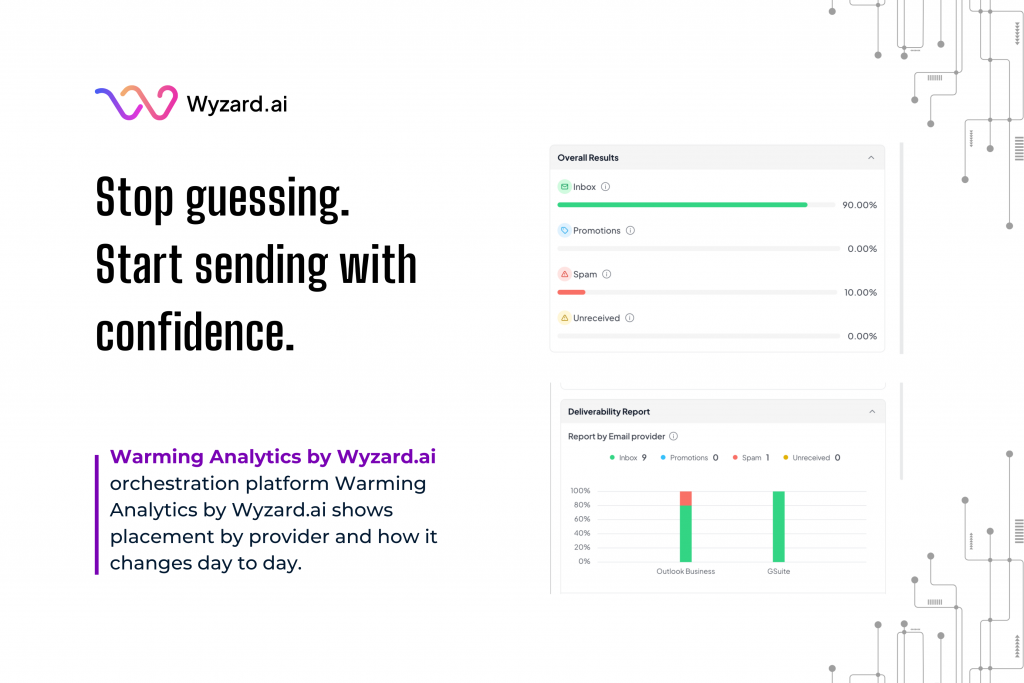
Warming Analytics: Know When a Mailbox Is Ready to Send
Outbound works best when trust stays intact. Many teams ramp up sending, then see replies drop or spam placement ...

February 20, 2026
How To Generate Leads at Events
You spent weeks planning the booth, flew your team across the country, and showed up ready to make an ...
