 We’ve secured funding to power Signal-to-Revenue AI to GTM teams globally. →
Leads don’t slip away from a lack of traffic. They slip away in the moments right after intent shows ...
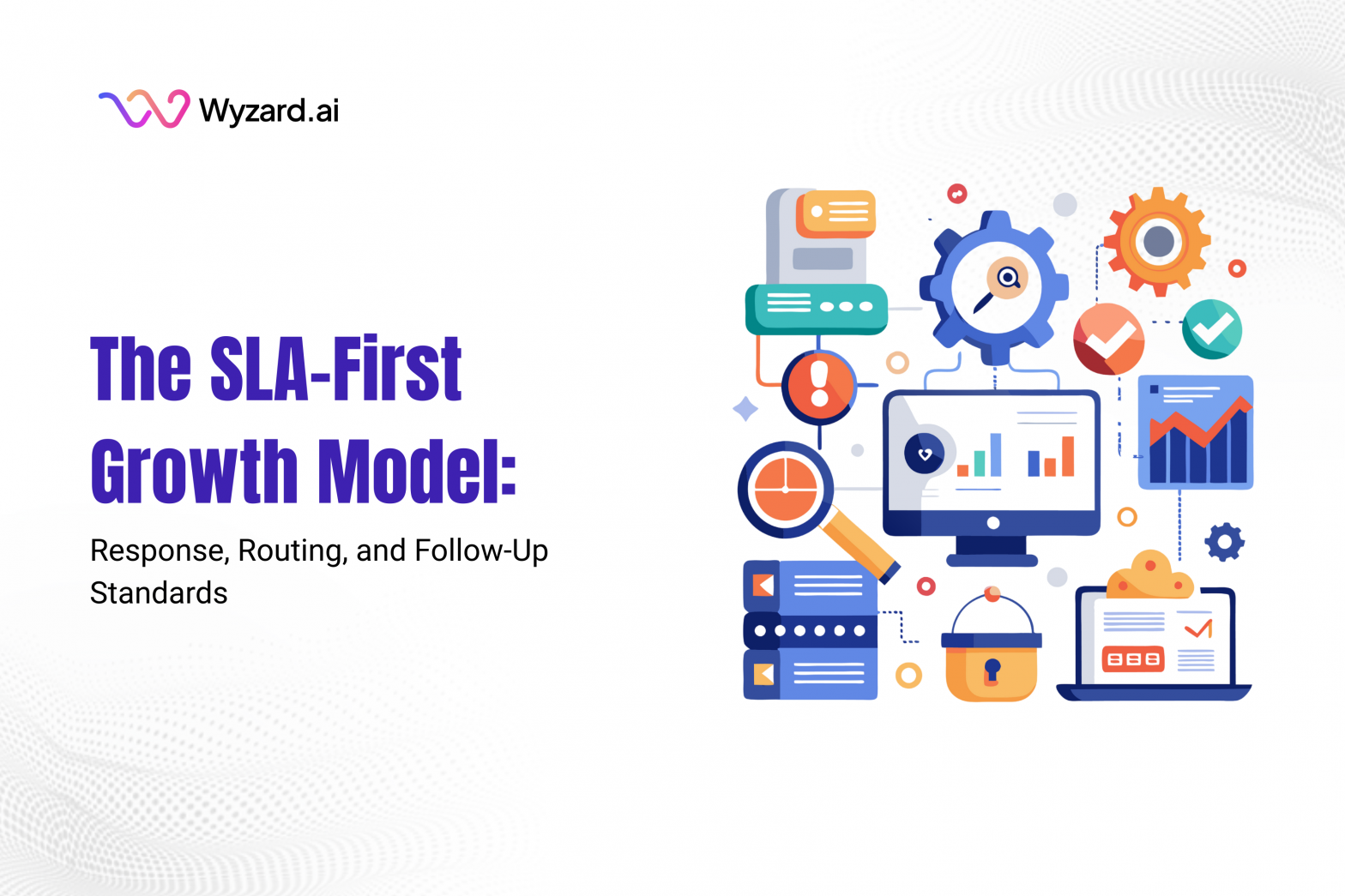
The SLA-First Growth Model: Response, Routing, and Follow-Up Standards
Published
Categorized as Uncategorized
Subscribe Now
A CMO opens their dashboard on a Monday morning and sees something familiar. Leads arrived over the weekend. Event scans from last week still sit untouched. A webinar drew strong attendance, yet meetings booked do not reflect that interest. Nothing is visibly broken, yet momentum feels uneven.
That is the quiet cost of treating follow-up speed as optional. Growth leaks rarely show up as dramatic failures. They show up as delays, inconsistencies, and missed moments. This is where GTM SLAs stop being an ops footnote and become a growth lever.
Wyzard.ai exists for this exact problem. We’re Wyzard, the Signal-to-Revenue AI. We capture buyer signals the moment they happen and turn them into revenue by orchestrating action across channels. That positioning matters since growth today is defined by how reliably teams act on intent, not how many leads they generate.
Why Growth Breaks When Speed Becomes Optional
Most teams believe they respond quickly. In reality, response time varies by channel, by rep, and by day. Website inquiries might get attention within minutes. Event leads often wait days. Webinar attendees fall into nurture tracks with no clear owner. Paid clicks sometimes route faster than email replies, sometimes slower.
From a CMO’s perspective, inconsistency is risky. Buyers experience your brand as disjointed. Sales sees leads as uneven in quality. Marketing struggles to forecast pipeline contribution. Revenue becomes harder to predict.
This is why GTM SLAs belong in the growth conversation. They set expectations for action, not just intent.
The Hidden Cost of Informal Follow-Up
Informal processes rely on best effort. Someone checks notifications. Someone sorts a queue. Someone decides which lead looks urgent.
That approach does not scale. As signal volume increases across events, webinars, paid campaigns, inbound traffic, and email replies, judgment becomes inconsistent. Speed varies. Ownership blurs.
The impact shows up quietly. Speed-to-Lead stretches. Buyer interest cools. Conversion rates flatten. Revenue reliability drops since execution depends on individuals instead of systems.
Why GTM SLAs are a Growth Lever
SLAs define standards. They turn intent into an obligation. When every signal has a response expectation, routing rule, and follow-up path, growth becomes repeatable.
Strong GTM SLAs do three things:
- They protect buyer intent by enforcing timely action.
- They create consistency across channels.
- They make execution measurable and improvable.
This is how SLAs move from operations into strategy.
The SLA-First Growth Model
An SLA-first approach treats every buyer signal as part of a System of Outcomes. Signals trigger actions. Actions produce outcomes. Outcomes inform the next decision.
In this model:
- No signal exists without ownership.
- No response happens without a standard.
- No follow-up is left to memory.
This framework is simple, yet powerful when enforced.
The Three SLAs that Drive Reliable Growth
A strong SLA-first model rests on three standards that work together.
Response SLAs
Response SLAs define how fast the first touch must happen after intent appears.
This applies to every channel:
- A visitor submits a form on your website.
- A lead is scanned at an event.
- A prospect attends a webinar.
- A buyer clicks a LinkedIn ad.
- Someone replies to a nurture email.
Response timing shapes perception. Fast engagement signals relevance and intent alignment. Delays create doubt.
Routing SLAs
Routing SLAs define who owns the signal and how quickly it reaches the right destination.
Without routing standards, leads sit in queues. Reps reassign manually. Context gets lost. High-intent signals get treated like low-intent ones.
This is where the GTM Intelligence Graph becomes critical. Wyzard.ai uses it to connect account context, historical behavior, channel activity, and intent signals into one view. Routing decisions become context-aware, not rule-based guesswork.
Follow-Up SLAs
Follow-Up SLAs define what happens after the first touch.
One email is rarely enough. Reliable growth depends on multi-step, multi-channel follow-up with clear ownership. Email, LinkedIn, chat, and voice work together. Each step has a timeline and a goal.
Follow-Up SLAs turn effort into structure. They reduce dependency on heroics and increase predictability.
Why CRM Rules and SDR Judgment Fall Short
Many teams try to enforce GTM SLAs through CRM rules or manual prioritization. These approaches break down quickly.
CRM rules are static. Buyer behavior is not. SDR judgment varies by experience, workload, and timing. Events and webinars often sit outside standard workflows entirely.
The result is execution drift. Some leads get fast follow-up. Others wait. Growth becomes uneven.
How Wyzard.ai Enables SLA-First Growth
Wyzard.ai was built to operationalize GTM SLAs across channels. As the Signal-to-Revenue AI, we connect your GTM stack, capture buyer signals live, and orchestrate response, routing, and follow-up without manual effort.
Here is how it works in practice:
- WyzSignals capture intent from websites, events, webinars, paid campaigns, email replies, and CRM activity.
- Signals flow into the GTM Intelligence Graph, where context is preserved across touchpoints.
- WyzChannels execute response and follow-up across email, LinkedIn, chat, and voice.
- Managed GTM enforces SLAs continuously, not just during business hours.
Human oversight remains through AI GTM Engineers who monitor SLA performance, tune logic, and refine execution based on outcomes. This balance keeps standards strict and strategy flexible.
What SLA-First Growth Looks Like in Action
Consider a common scenario. A buyer attends a webinar in the morning, clicks a LinkedIn ad in the afternoon, and replies to a nurture email that evening.
In an informal system, these signals sit in different tools. Follow-up is delayed. Context is missed.
In an SLA-first model with Wyzard.ai:
- A response SLA triggers immediate engagement.
- A routing SLA assigns ownership with full context.
- A follow-up SLA launches a coordinated multi-channel motion.
The buyer experiences relevance. Sales sees intent clearly. Marketing sees predictable movement.
SLAs Create Reliability, Not Rigidity
Some teams worry that GTM SLAs create rigidity. In reality, they create freedom. Standards remove ambiguity. Systems handle speed. Humans focus on strategy and messaging.
For CMOs, this means fewer surprises and more predictable pipeline contribution. Revenue reliability improves when execution becomes consistent.
Growth Needs Standards, Not Best Effort
Growth breaks when speed depends on memory. It accelerates when standards govern action.
GTM SLAs are not a checklist. They are a growth system. When paired with a System of Outcomes, a GTM Intelligence Graph, and human oversight from AI GTM Engineers, they turn intent into revenue reliably.
Wyzard.ai was built for this reality. We’re the Signal-to-Revenue AI, orchestrating every signal into revenue across channels with human oversight.
If your growth depends on speed, consistency, and accountability, it is time to treat SLAs as a growth lever. Book a demo to see how Wyzard.ai’s managed GTM brings the SLA-first growth model to life.
Other blogs
The latest industry news, interviews, technologies, and resources.
February 23, 2026
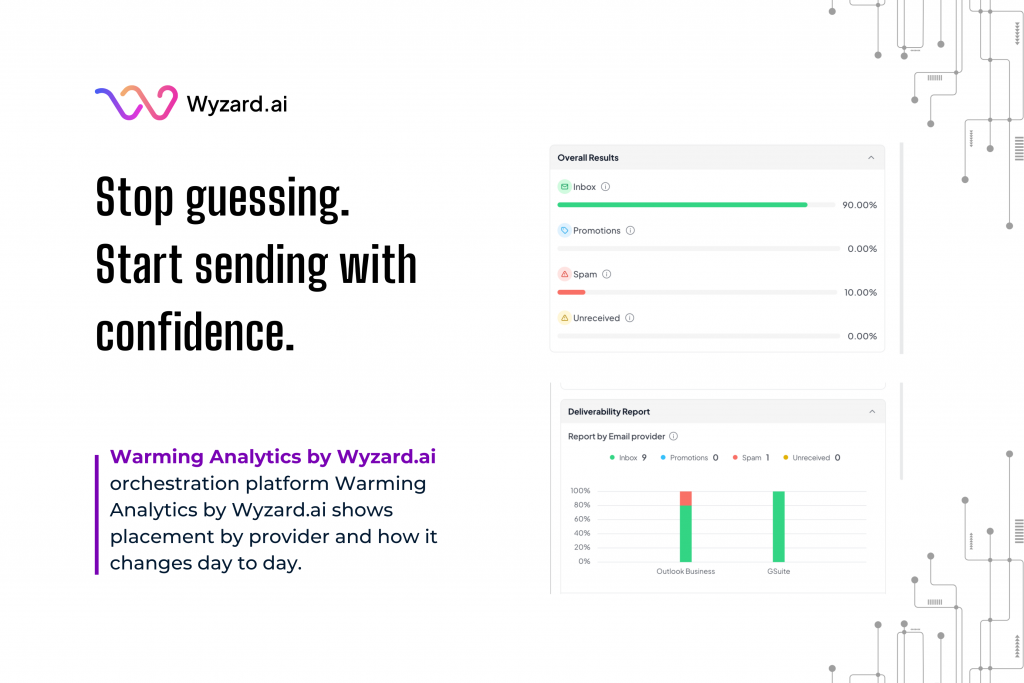
Warming Analytics: Know When a Mailbox Is Ready to Send
Outbound works best when trust stays intact. Many teams ramp up sending, then see replies drop or spam placement ...

February 20, 2026
How To Generate Leads at Events
You spent weeks planning the booth, flew your team across the country, and showed up ready to make an ...
