 We’ve secured funding to power Signal-to-Revenue AI to GTM teams globally. →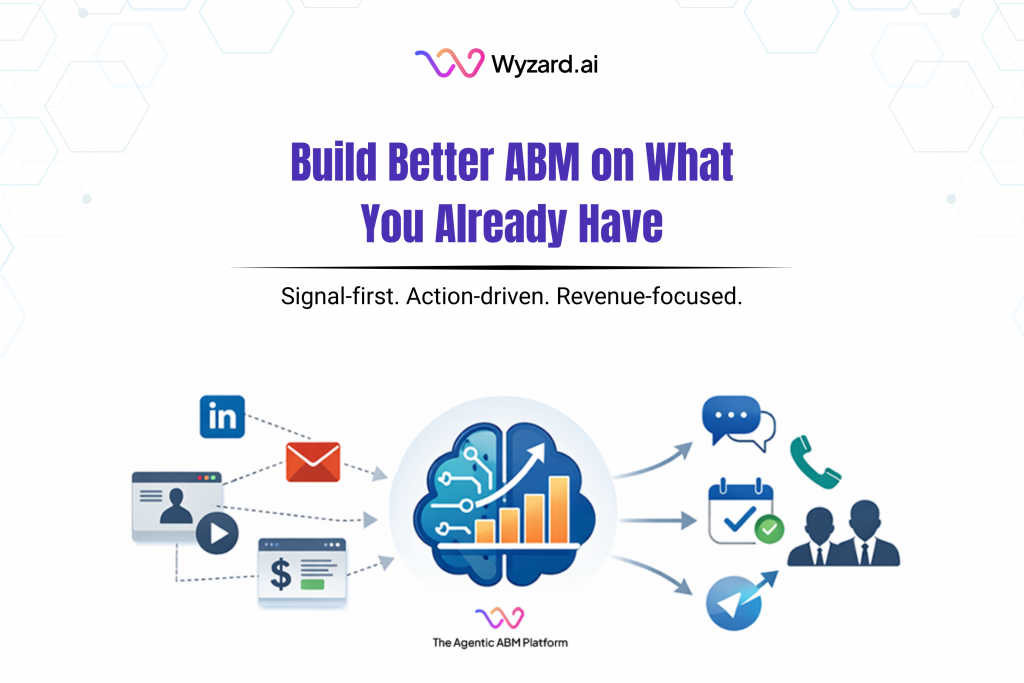
If you are a CMO, this situation feels familiar. Your team has a CRM, marketing automation, paid campaigns, webinars, ...
Subscribe Now
It often starts with a clean win. A CMO approves a small automation experiment. One workflow connects a form fill to an email. Another routes webinar attendees into a follow-up sequence. A few no-code flows sync fields across tools. Early signals look good. Leads respond. Sales books meetings. The pilot feels “done.”
Then volume arrives.
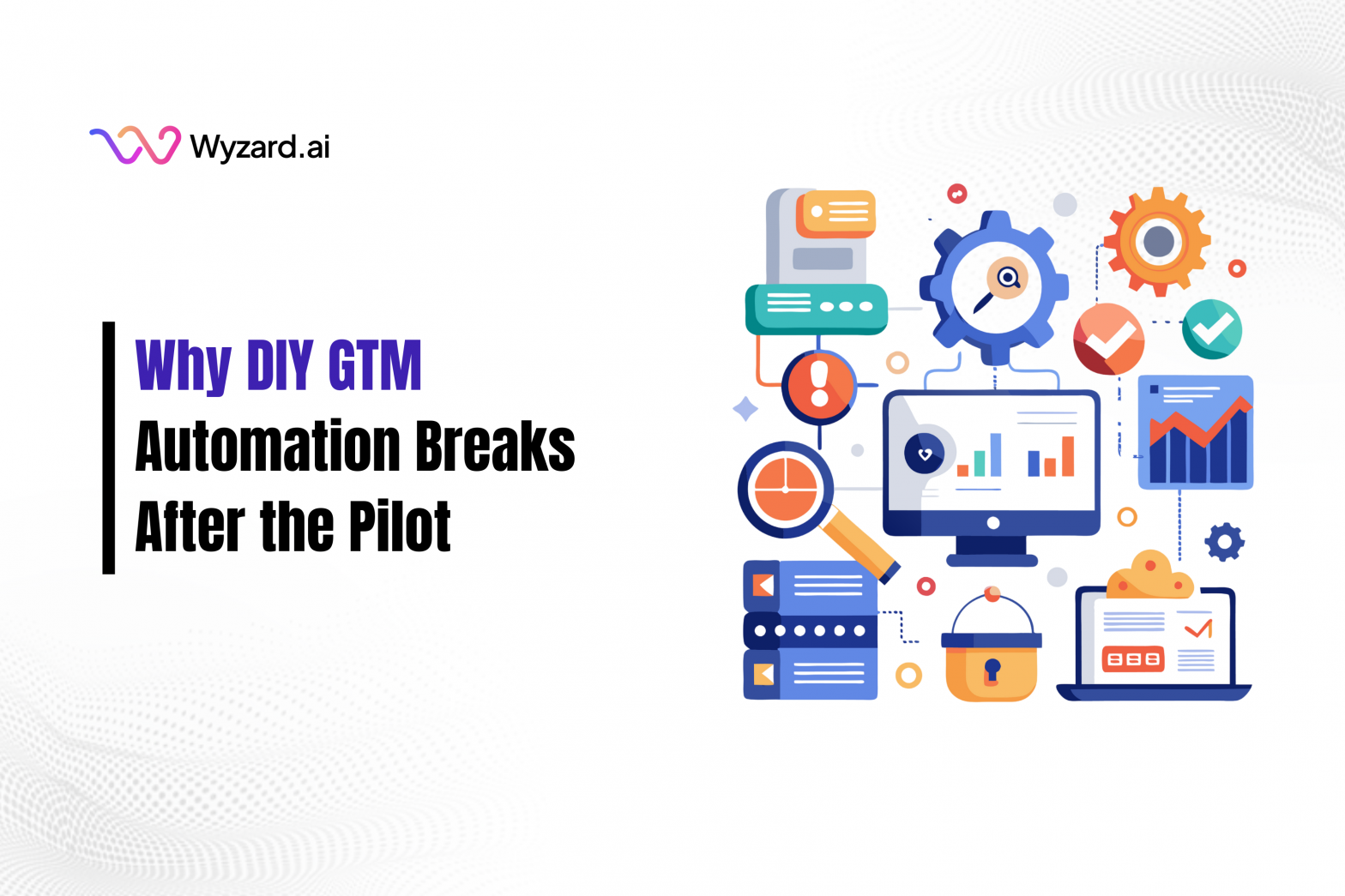
Inbound rises. Events add hundreds of scanned leads in a day. LinkedIn ads spike traffic for a new campaign. Nurture emails start getting replies from accounts that were never part of the original logic. The setup that worked at low volume begins to strain. This is the point where DIY GTM automation starts to crack, and many CMOs realize the pilot solved a narrow workflow, not the GTM system.
Wyzard, the Signal-to-Revenue AI, exists for this exact moment. It captures buyer signals the moment they happen and orchestrates follow-up across channels, turning early experiments into a system that can support revenue at scale.
Why DIY GTM Automation Feels Effective in the Pilot
The appeal of DIY GTM automation is straightforward. It is fast. It feels flexible. It avoids new vendors. A RevOps manager can spin up flows in a day. Marketing can see activity without waiting on engineering. For a pilot, speed and visibility matter.
Early success often comes from controlled conditions. Signal volume is low. Channels are limited. Manual checks quietly fill in gaps. Human judgment smooths edge cases. The automation looks smarter than it really is.
For a CMO facing pressure to move quickly, this phase feels comforting. Something is moving again.
The Breaking Point Most Teams Do Not Plan For
Problems surface when the pilot meets real GTM volume. More signals arrive from more places. A lead scans a badge at an event. Another attends a webinar. A third clicks a LinkedIn ad, then replies to a nurture email two days later. Each signal enters the stack through a different path.
At that point, DIY GTM automation often struggles. Logic trees grow longer. Exceptions multiply. One broken step causes silent failures. RevOps spends time troubleshooting instead of improving performance. Marketing loses confidence in routing. Sales stops trusting alerts.
This is classic scale failure. What worked at 50 leads does not survive 5,000 signals spread across five channels.
Execution Debt Builds Quietly, Then Shows Up All at Once
Every shortcut taken during the pilot creates future cost. Hard-coded rules. One-off conditions. Manual overrides. Over time, these choices accumulate into execution debt.
It shows up in everyday friction:
- New campaigns take longer to launch.
- Changes require careful testing so other flows do not break.
- Ownership becomes unclear when something fails.
- High-intent moments slip through unnoticed.
From the CMO seat, this is maddening. The stack looks automated, yet the team feels slower than before.
No-Code Tools Move Data. Revenue Systems Need More Than Data Movement.
Most no-code tools focus on moving information from one system to another. They do not interpret intent. They do not connect signals across journeys. They do not learn from pipeline outcomes. They rarely carry context across channels.
That is the core limitation of DIY Automation. It optimizes tasks, not outcomes. It answers “what happened” but it rarely answers “what should happen next, given what we know about this buyer?”
Revenue teams need orchestration. They need context that follows the buyer across touchpoints. They need feedback loops that tie actions back to pipeline.
Scale Exposes the Missing Layer: Intent Context + Feedback Loops
At scale, GTM requires a system that treats each signal as part of a bigger story. A website visit means something different when paired with webinar attendance, an event scan, and an email reply from the same account. A LinkedIn ad click from an existing opportunity account has a different weight than the same click from a new logo.
This is where a System of Outcomes changes everything. Signals feed decisions. Decisions trigger actions. Actions generate learning. Learning refines the system. Each loop improves speed and relevance.
Wyzard.ai is built around that loop. As the Signal-to-Revenue AI, it captures signals live and connects them inside a GTM Intelligence Graph. That graph links accounts, people, channels, and actions so context gets richer over time, instead of breaking into disconnected records.
How Wyzard.ai Solves What DIY GTM Automation Cannot
Wyzard.ai approaches GTM from a different angle. It is the Signal-to-Revenue AI, built to orchestrate outcomes, not just automate tasks.
Here is what changes with Wyzard.ai:
Signal capture across channels
Wyzard.ai captures signals from website activity, event scans, webinar platforms, LinkedIn ads, email replies, and CRM updates as they occur. No waiting for batch syncs. No “we’ll follow up tomorrow.”
Unified intelligence with a GTM Intelligence Graph
Signals are connected inside the GTM Intelligence Graph, so context carries forward. A webinar attendee, an event scan, and a LinkedIn ad click from the same account do not look like three unrelated events. They become one intent story with a clear next step.
Outcome-driven execution through WyzAgents
WyzAgents orchestrate engagement across email, LinkedIn, chat, and voice based on intent and timing, not static rules. A scanned event lead can trigger the right follow-up sequence. A webinar attendee can move into a meeting-booking motion. A nurture email reply can route straight to the correct owner with context attached.
Human oversight from AI GTM Engineers
Wyzard.ai includes human guidance through AI GTM Engineers who help set goals, tune motions, refine qualification logic, and interpret results. This keeps the system aligned with revenue goals as volume and complexity rise.
This combination removes the fragility that shows up once DIY GTM automation meets real scale.
DIY vs Managed GTM at Scale
Here is the difference in plain terms:
DIY GTM automation
- Quick to launch pilots
- Fragile as volume grows
- High maintenance overhead
- Outcome ownership often unclear
Wyzard.ai Managed GTM
- Built around a System of Outcomes
- Signal-aware across channels
- Designed to scale with demand
- Clear accountability for revenue motion
For CMOs, the distinction matters. Pilots prove a point. Systems carry a number.
Who DIY GTM Automation Fits, and Where It Breaks
DIY GTM automation still has a place. It works for:
- Early experimentation
- Narrow use cases
- Low signal volume
- Short-lived campaigns
It breaks for:
- Multi-channel GTM motions
- High inbound volume
- Event-heavy strategies
- Teams accountable for predictable revenue
Most growth-stage and enterprise CMOs hit this inflection point sooner than they expect.
From Pilot Wins to a System That Holds Up Under Pressure
The shift away from DIY GTM automation is not about convenience. It is about ownership. Who owns outcomes when signals spike? Who keeps intent from fading between tools?
Wyzard.ai answers that question. As the Signal-to-Revenue AI, it connects your stack, captures every buyer signal live, and orchestrates the right follow-up across channels with human oversight.
If your GTM automation looked great during the pilot and feels brittle now, that is not a failure. It is a signal. Your team has outgrown scripts and needs a system built for outcomes.
Book a demo to see how Wyzard.ai replaces fragile DIY GTM automation with a scalable system that turns every signal into revenue.
Other blogs
The latest industry news, interviews, technologies, and resources.
March 30, 2026
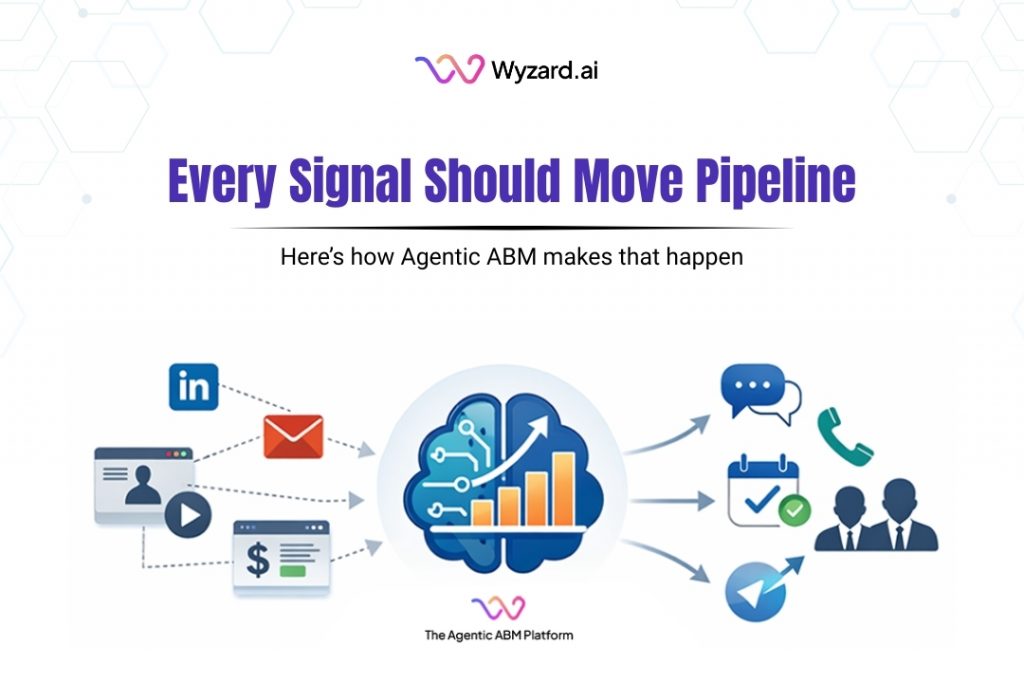
The Signal-to-Revenue Blueprint for Agentic ABM
A CMO reviews the weekly dashboard and sees strong activity. A target account clicked a LinkedIn ad. Another stakeholder ...

March 27, 2026
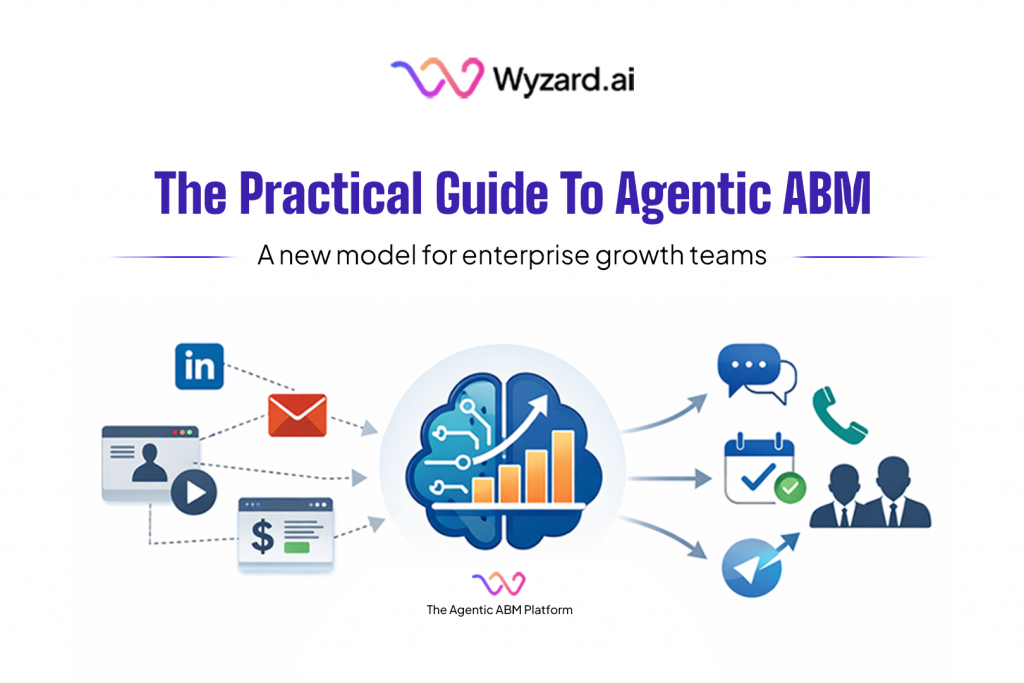
What Is Agentic ABM? A Practical Guide for Enterprise GTM Teams
Enterprise GTM has an action gap. If you are a CMO, this scene is familiar. A target account clicks ...
