 We’ve secured funding to power Signal-to-Revenue AI to GTM teams globally. →
Leads don’t slip away from a lack of traffic. They slip away in the moments right after intent shows ...
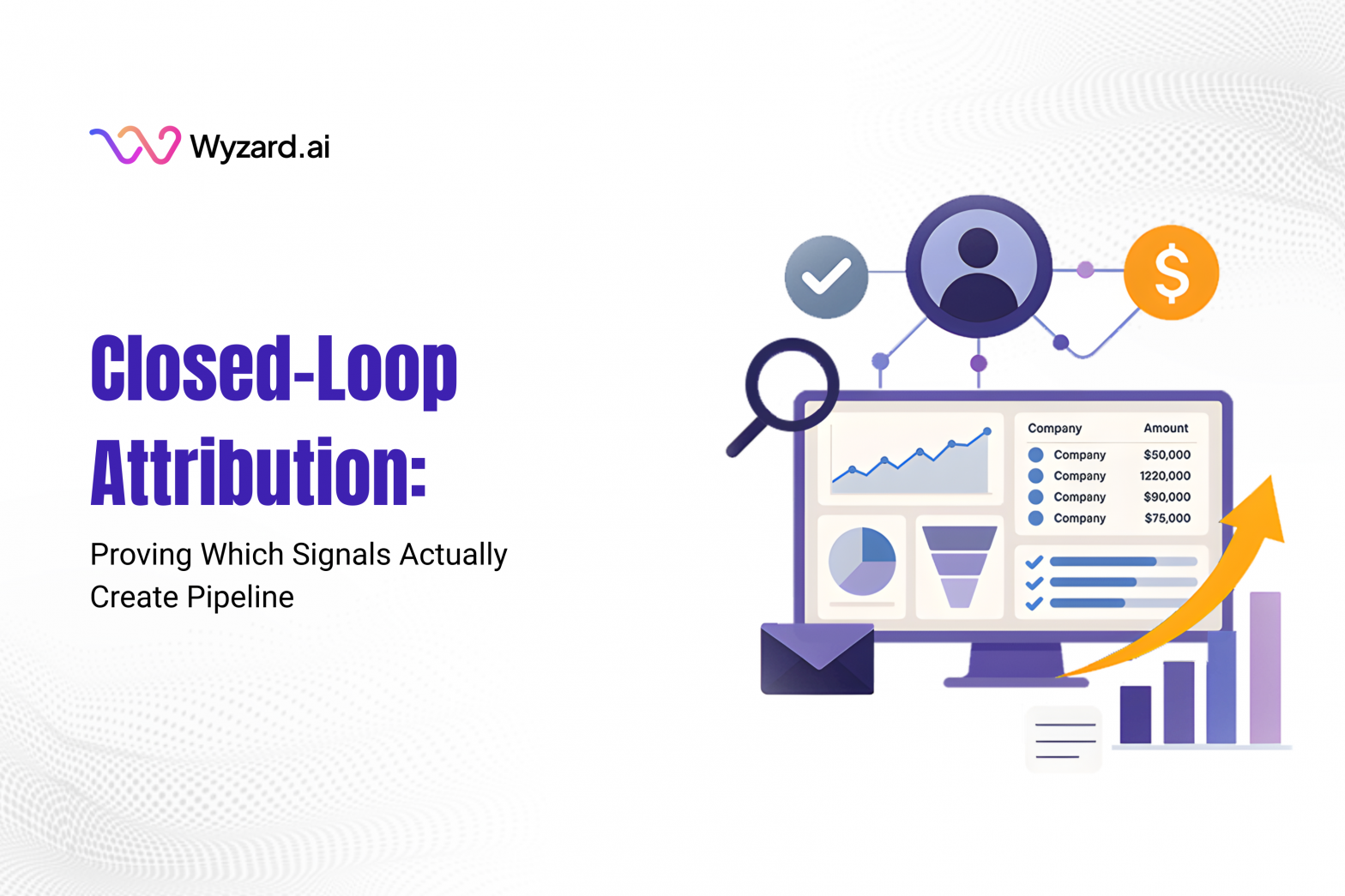
Closed-Loop Attribution: Proving Which Signals Actually Create Pipeline
Published
Categorized as Uncategorized
Subscribe Now
CMOs know this moment. The pipeline dashboard shows activity across channels, leads keep coming in, and the board asks a direct question: which signals created real pipeline? The answer often turns into a debate about credit, channel bias, and last-touch math.
Wyzard, the Signal-to-Revenue AI, changes that dynamic. It captures intent signals as they happen and orchestrates follow-up across your GTM stack so revenue teams act on interest before it cools off. That includes website visits, event badge scans, LinkedIn ad clicks, webinar attendance, nurture email replies, and sales conversations. The goal is simple: connect signals to outcomes with proof you can defend.
Why Attribution Keeps Failing CMOs
Most attribution setups were built for a simpler buying motion. Modern B2B deals rarely follow a clean path. Buying groups move across channels, loop back weeks later, and show intent in places your model does not capture well.
Attribution breaks for three common reasons:
- Signals are scattered. Web analytics, ads, event platforms, webinar tools, marketing automation, inboxes, and CRM all hold partial truth.
- Follow-up is inconsistent. Response speed and message quality vary by rep, region, and workload. High-intent moments get treated like routine leads.
- Reporting favors influence, not outcomes. Many models tell you what was touched, then stop before proving pipeline creation tied to a specific signal and response.
CMOs do not need more charts. They need a repeatable way to prove which signals deserve budget, attention, and fast action. They need a Signal-to-Revenue AI.
What Closed-Loop Attribution Means in Practice
Closed-loop attribution connects three things in one chain:
- The signal that happened
- The action taken after that signal
- The sales outcome tied back to that chain
That is the standard for pipeline proof. It goes beyond “influenced pipeline.” It shows “signal triggered action, action produced opportunity.”
Closed-loop attribution becomes valuable when it changes GTM behavior. It guides routing, prioritization, and follow-up plays across channels.
Build a System of Outcomes, Not a System of Activity
Many teams track activity well. Outcomes are a different story. A System of Outcomes puts pipeline creation and revenue predictability at the center, then works backward into signals and actions.
A System of Outcomes does three jobs:
- Defines which signals count as buying moments
- Routes those moments into the right play across channels
- Measures the downstream effect in the CRM opportunity record
Wyzard, the Signal-to-Revenue AI, supports this by turning raw signals into orchestrated execution, then tying the execution back to pipeline results.
Why a GTM Intelligence Graph Changes Everything
Disconnected data creates weak attribution. One person registers for a webinar, a second person from the same account clicks a LinkedIn ad, and a third visits your pricing page. Traditional models treat these as separate threads.
A GTM Intelligence Graph connects identities, accounts, buying groups, and timestamps into one view. That unlocks clean attribution for modern buying behavior:
- Signal patterns at the account level
- Buying group activity across channels
- Sequencing and timing between moments
- A single record of actions taken after intent appears
With a GTM Intelligence Graph, attribution stops being “best guess.” It becomes traceable, explainable, and usable in weekly revenue meetings.
Measure Signal ROI, Then Move Budget With Confidence
Once signals and actions connect to outcomes, you can calculate signal ROI. That is the point where a CMO can stop defending spend and start reallocating spend.
A useful signal ROI structure:
- Pipeline created tied to a signal-action chain
- Cost to generate the signal (media, events, content, webinar production)
- Cost to act on the signal (SDR time, tooling, enrichment)
With that in place, you can answer questions like:
- Are event scans producing more pipeline than paid clicks for this segment?
- Which webinar behaviors correlate with opportunities, not just attendance?
- Which nurture replies lead to meetings when response is fast?
Wyzard, the Signal-to-Revenue AI, helps by capturing signals across channels, triggering the right follow-up through WyzAgents, and logging each step so Signal ROI reflects real execution, not theory.
Where Multi-Touch Attribution Tools Help, and Where They Fall short
Multi-touch tools can support campaign reporting and channel storytelling. Many teams use them to communicate influence across stakeholders.
Closed-loop attribution serves a different goal: proof that a specific signal led to a measurable sales outcome after a specific action. Multi-touch reporting often stops short of operational follow-up. Offline signals like events and sales conversations can be hard to stitch cleanly. Buying group behavior across channels adds more complexity.
Pipeline proof needs more than credit assignment. It needs connected data and triggered action.
How Wyzard.ai Orchestrates Signal-to-Revenue Across Channels
Wyzard is the Signal-to-Revenue AI and an AI GTM orchestration platform. It engages leads across every channel where intent shows up:
- Visiting your website
- Lead scanned at an event
- Clicking on a LinkedIn ad
- Attending a webinar
- Replying to a nurture email
- Engaging with sales outreach
Here is how the system works together:
- WyzSignals capture intent signals in real time across your channels and tools.
- The GTM Intelligence Graph unifies those signals into an account and buying group view.
- WyzAgents trigger follow-up across chat, email, LinkedIn, and voice, with human oversight.
- Closed-loop attribution ties signals and actions back to opportunities, meetings, and pipeline.
This is where AI GTM Engineers come in. They build and refine plays that match your sales motion, routing logic, and messaging standards. The result is consistent execution across the funnel, even with a lean team.
The CMO Story: Board-Ready Answers, Not Attribution Debates
Picture a CMO walking into QBR. The conversation shifts from “which channel deserves credit” to “which signals create pipeline and how fast we acted.” She can show that event badge scans from ICP accounts converted when outreach happened quickly and included a relevant follow-up asset. She can show that webinar questions predicted pipeline more reliably than webinar registrations. She can show which LinkedIn ad engagements should route straight to sales and which belong in nurture.
That is the outcome CMOs want: clarity, repeatability, and budget decisions backed by proof.
Wyzard, the Signal-to-Revenue AI, makes that standard achievable by orchestrating every signal into revenue.
If you want to prove which signals actually create pipeline and turn those moments into action across channels, book a demo and see Wyzard, the Signal-to-Revenue AI, in action.
Other blogs
The latest industry news, interviews, technologies, and resources.
February 23, 2026
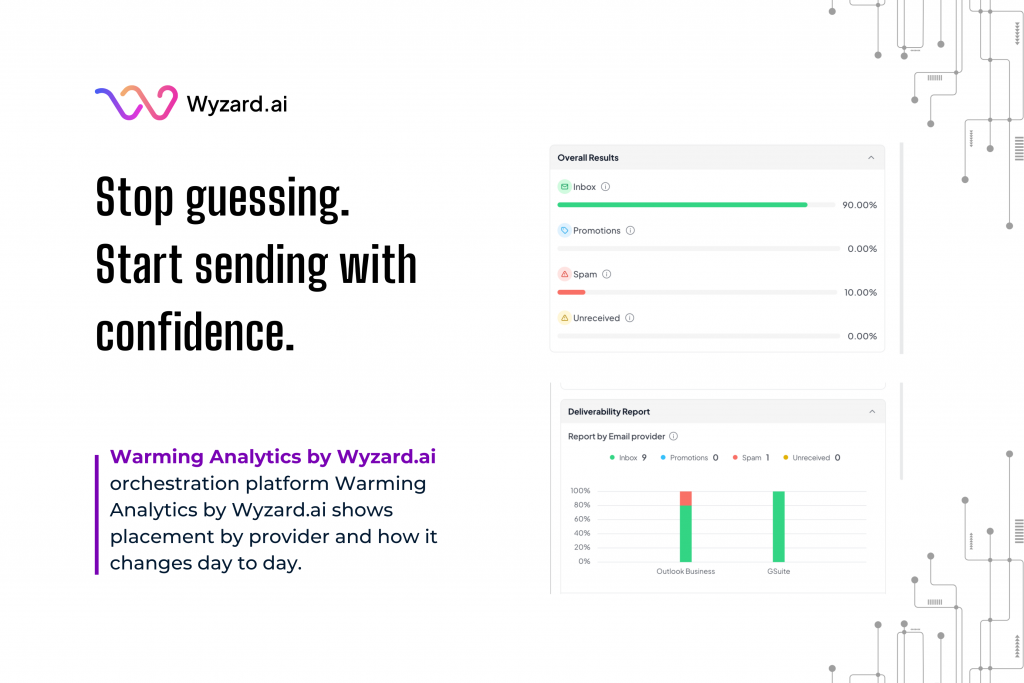
Warming Analytics: Know When a Mailbox Is Ready to Send
Outbound works best when trust stays intact. Many teams ramp up sending, then see replies drop or spam placement ...

February 20, 2026
How To Generate Leads at Events
You spent weeks planning the booth, flew your team across the country, and showed up ready to make an ...
