 We’ve secured funding to power Signal-to-Revenue AI to GTM teams globally. →
Leads don’t slip away from a lack of traffic. They slip away in the moments right after intent shows ...
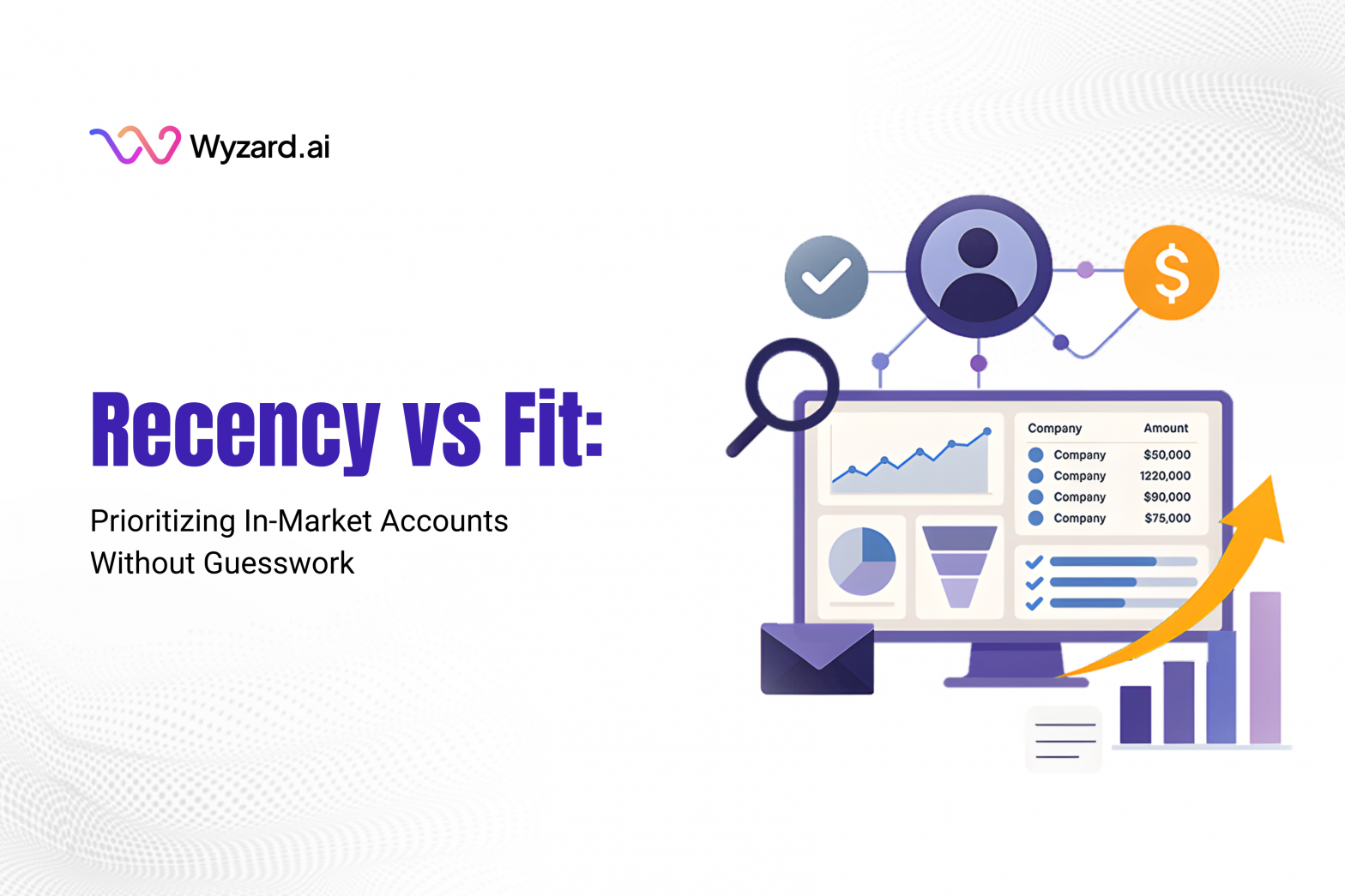
Recency vs Fit: Prioritizing In-Market Accounts Without Guesswork
Published
Categorized as Uncategorized
Subscribe Now
Every CMO hits the same friction point in pipeline reviews. Should the team prioritize accounts that showed activity recently, or accounts that match the ICP perfectly but have gone quiet?
One set feels urgent but messy. The other feels strategic but slow.
This tension shows up across channels. A buyer clicks a LinkedIn ad today. Another account matches your ICP but has not engaged in weeks. A third shows up at an event booth, gets scanned, then disappears. A webinar attendee asks a question but never fills out a form. A nurture email reply comes from someone outside the buying group.
This is where Wyzard, the Signal-to-Revenue AI, helps. It captures buyer signals as they happen, connects them across your GTM stack, and helps revenue teams prioritize accounts based on buying intent rather than gut feel.
The False Choice CMOs Keep Getting Boxed Into
From a CMO’s seat, pressure comes from every direction. Sales wants hotter accounts. Marketing wants ICP alignment. RevOps wants repeatability.
Recency feels actionable. Something just happened, so it must matter.
Fit feels safe. The account matches firmographics, industry, and deal size.
Many teams pick one and accept the downside of the other. That is not a strategy. It is a compromise.
The real issue is not recency or fit. The issue is how signals get interpreted.
Why Recency Alone Creates Noise
Recency-based prioritization looks straightforward. Whoever acted last rises to the top.
A click. A page visit. An email open. A booth scan.
Without context, recency turns activity into urgency. Sales teams chase accounts that may never buy. SDR time gets spent on curiosity rather than intent.
CMOs see this when pipeline fills quickly, then stalls just as fast. Activity spikes without conversion.
Recency without context rewards motion, not buying behavior.
Why Fit Alone Slows Revenue
On the other side sits traditional fit scoring. Accounts get ranked using firmographics, technographics, and ICP rules.
Fit scoring helps with targeting. It does not tell you when someone is ready to buy.
A perfect-fit account that shows no interest still creates a timing problem. Outreach lands flat. Conversations feel forced. Buyers disengage.
CMOs see this when outbound looks disciplined but underperforms. The accounts look right. The timing is off.
The Real Issue: Signals Split Across Too Many Systems
Recency data sits in marketing automation and ad platforms. Fit data sits in CRM and enrichment tools. Event data sits elsewhere. Webinar engagement lives in another system.
Humans are left to reconcile all of it.
This is where prioritization breaks. Teams debate spreadsheets instead of acting on intent. Buying moments cool off while signals wait to be connected.
What is missing is a signal-led framework that brings recency and fit into one view.
A Signal-Led Framework That Removes the Tradeoff
The right question is not “recency or fit.”
The right question is “who is in-market right now, and how well do they fit?”
That answer comes from patterns, not single actions.
A signal-led framework looks at:
- Who is engaging
- How engagement repeats over time
- Which channels show activity
- Whether behavior matches buying stages
This approach fits a System of Outcomes, where actions tie back to revenue results, not surface-level activity.
What In-Market Signals Look Like Across Channels
True in-market signals show momentum building over time.
Examples include:
- Repeat visits across product and pricing pages
- Event attendance followed by site activity
- Webinar participation paired with email replies
- LinkedIn ad clicks followed by return visits
- Multiple people from the same account engaging across channels
A single action rarely tells the story. Patterns do.
That is why timing and momentum matter more than any one click.
How the GTM Intelligence Graph Adds Context
Connecting recency and fit takes more than dashboards. It takes memory.
A GTM Intelligence Graph connects identity, account data, behavior, and timing into one view. It shows how signals relate across channels and over time.
For CMOs, recency no longer sits in isolation. It gets evaluated alongside account context.
For RevOps, prioritization logic becomes cleaner and easier to maintain.
For sales teams, it leads to fewer cold conversations and better timing.
Why Traditional Lead Scoring Falls Short
Traditional lead scoring, including HubSpot lead scoring, relies heavily on static rules and point systems. Points get added. Thresholds get crossed. Alerts fire.
These systems struggle with nuance. A single action can trigger urgency without showing a real intent pattern.
Buyer behavior now spreads across events, ads, webinars, email, and websites. Static scoring struggles to keep up.
That gap is where prioritization turns into guesswork.
How Wyzard.ai Prioritizes In-Market Accounts
Wyzard, the Signal-to-Revenue AI, removes guesswork by focusing on signals, not scores.
Through WyzSignals, Wyzard.ai captures real-time activity across channels, including:
- Website engagement
- Event scans
- LinkedIn ad interactions
- Webinar behavior
- Nurture email replies
These signals feed into a unified intent view that weighs recency in the context of account fit and momentum.
Instead of forcing sales to choose between fresh accounts or perfect accounts, Wyzard.ai highlights accounts that are both relevant and active.
WyzSignals in Action
WyzSignals acts as the listening layer for your GTM stack. It unifies signals without forcing teams to maintain endless scoring rules.
For CMOs, this builds confidence that prioritization reflects real buying interest.
For RevOps, it cuts down manual tuning and one-off exceptions.
For sales leaders, it surfaces accounts that are worth calling today.
Under the hood, AI GTM Engineers run prioritization and orchestration with human oversight, so strategy stays controlled and execution stays fast.
Who This Framework Supports
This approach benefits every revenue role.
CMOs gain clarity on which accounts deserve focus and why.
RevOps teams get consistency without brittle scoring logic.
Sales teams engage accounts that are active, relevant, and ready.
All three align around outcomes, not opinions.
Ending the Recency vs Fit Debate
The choice between recency and fit is a false one. Revenue growth comes from knowing when the right accounts are ready to buy.
Wyzard, the Signal-to-Revenue AI, connects your GTM stack, captures buyer signals live, and prioritizes accounts based on intent patterns. The result is faster engagement, fewer wasted cycles, and more predictable revenue.
Curious to see the Signal-to-Revenue AI in action? Book a demo with Wyzard.ai.
Other blogs
The latest industry news, interviews, technologies, and resources.
February 23, 2026
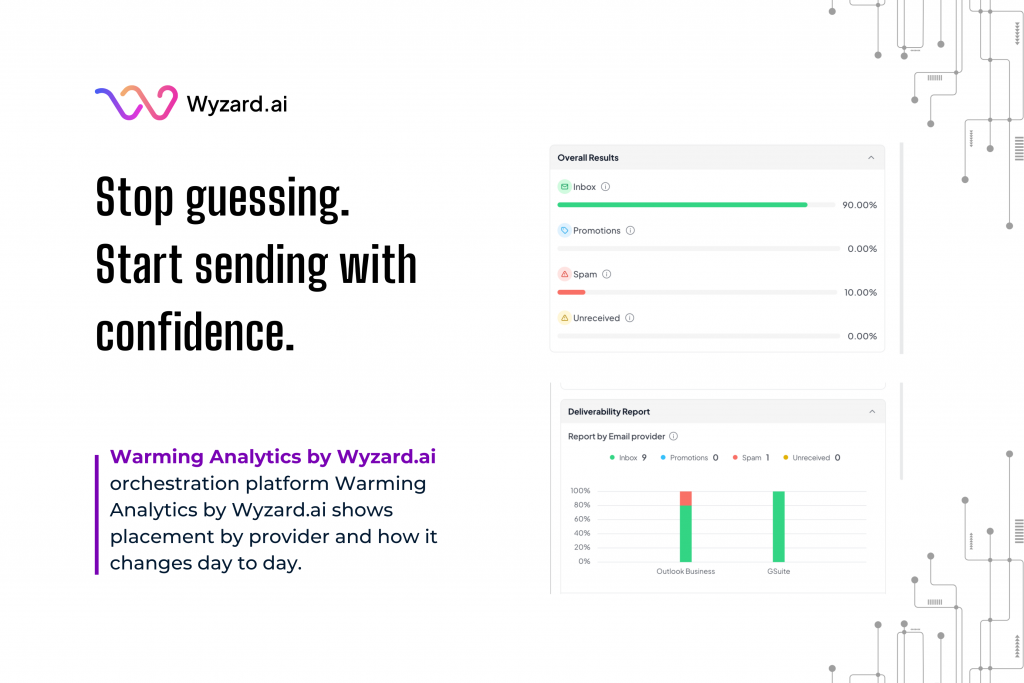
Warming Analytics: Know When a Mailbox Is Ready to Send
Outbound works best when trust stays intact. Many teams ramp up sending, then see replies drop or spam placement ...

February 20, 2026
How To Generate Leads at Events
You spent weeks planning the booth, flew your team across the country, and showed up ready to make an ...
