 We’ve secured funding to power Signal-to-Revenue AI to GTM teams globally. →
If you are a CMO, this situation feels familiar. Your team has a CRM, marketing automation, paid campaigns, webinars, ...
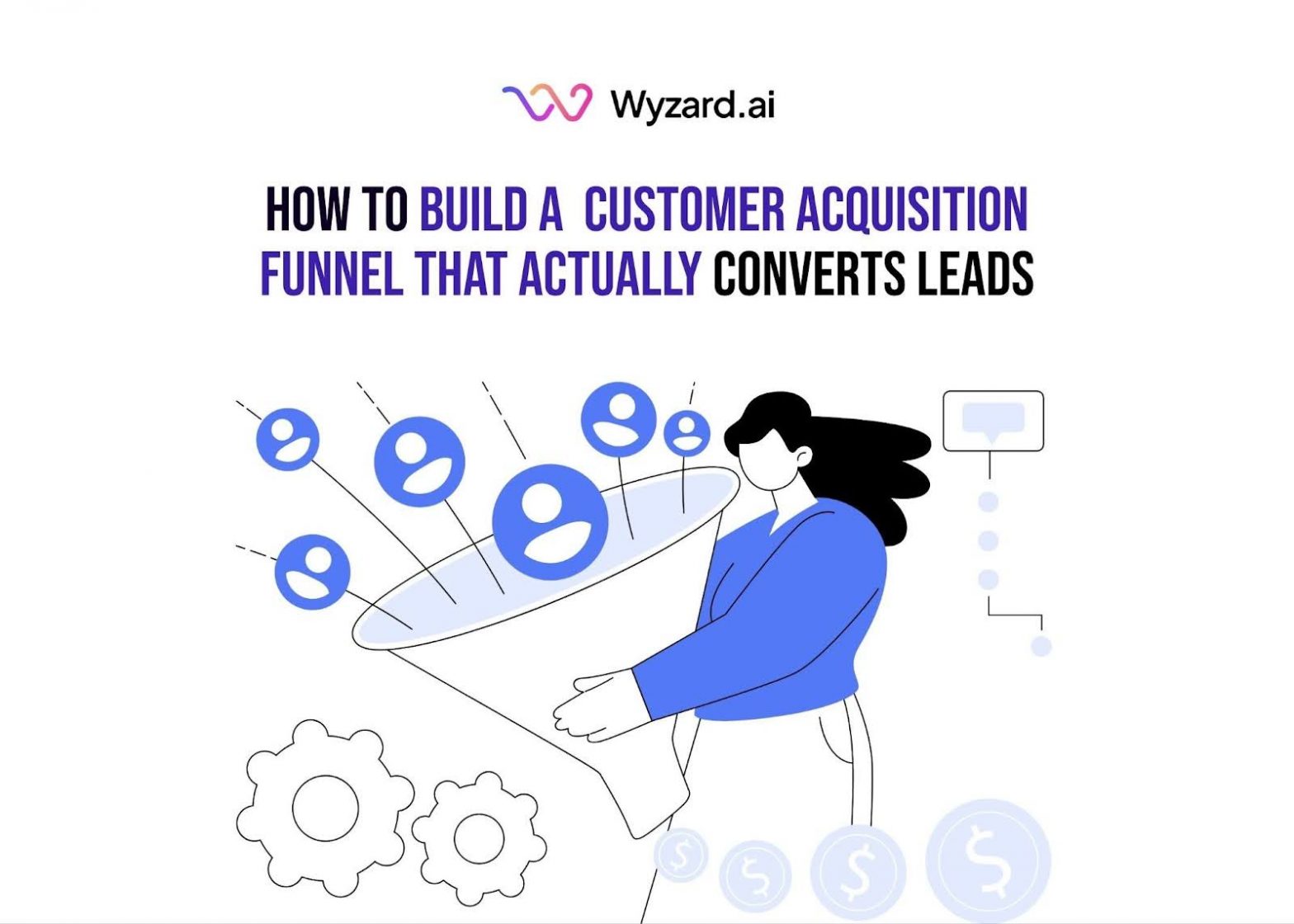
How to Build a Customer Acquisition Funnel That Actually Converts Leads
Published
Categorized as Uncategorized
Subscribe Now
You’re generating traffic. Leads are visiting your website. But conversions? They’re barely moving the needle.
The problem isn’t your traffic; it’s what happens after someone lands on your site. Most B2B SaaS teams struggle with the same issue: scattered buyer signals, delayed follow-ups, and leads slipping through the cracks before your team can engage them.
A well-structured customer acquisition funnel changes that. It maps the exact path prospects take from first discovering your solution to becoming paying customers, helping you identify where leads drop off and what you can do to keep them moving forward.
This guide walks you through building a customer acquisition funnel that actually converts from capturing early interest to closing deals with practical steps tailored for mid-market SaaS teams looking to scale without adding headcount.
What Is a Customer Acquisition Funnel and Why It Matters
A customer acquisition funnel is the framework that tracks how prospects move from awareness to purchase. Unlike generic marketing funnels, it focuses specifically on the actions and touchpoints that turn interested visitors into qualified customers.
Think of it as a roadmap. At the top, you’re reaching a broad audience. As prospects move down, they engage more deeply, downloading resources, booking demos, and evaluating pricing until they’re ready to buy. Each stage requires different strategies, messaging, and follow-up.
For B2B SaaS teams, this matters because your buying cycles are longer and involve multiple stakeholders. A mapped-out b2b customer acquisition funnel helps you understand where prospects get stuck, which channels drive the best leads, and how to automate qualification without losing the human touch. When you know exactly where leads are in their journey, you can respond faster and with the right message, turning more visitors into revenue.
The Core Stages of a Customer Acquisition Funnel
Every effective customer acquisition funnel follows a similar structure, though the specifics vary by business model and buyer journey. Here’s how the stages typically break down:
- Awareness: Prospects discover your product through content, ads, search, or referrals. They’re researching solutions but haven’t committed to anything yet. Your goal is to get on their radar and establish credibility.
- Interest: They’re paying attention now. They visit your website multiple times, read blog posts, or engage with your content. This is where you capture contact information through lead magnets, newsletter signups, or gated resources.
- Consideration: Prospects are actively evaluating whether your solution fits their needs. They compare you to competitors, request demos, and ask specific questions. Your job is to provide proof: case studies, product tours, and answers to common objections.
- Decision: They’re ready to move forward but need final assurance. Pricing discussions happen, contracts are reviewed, and internal buy-in is secured. Clear CTAs, limited-time offers, and personalized outreach can push deals over the line.
- Retention: The funnel doesn’t end at purchase. Onboarding, support, and ongoing engagement determine whether customers renew, expand, or churn. Happy customers also become referral sources, feeding the top of your funnel.
- Understanding these stages helps you identify where prospects are and what they need next. Without this clarity, you’re guessing, and guessing doesn’t scale.
Building Your Customer Acquisition Funnel: A Step-by-Step Approach
Creating a customer acquisition funnel template that works for your business requires more than copying someone else’s model. You need to map it to how your prospects actually buy, then optimize each stage based on real behavior.
Step 1: Start by Mapping Your Buyer Journey
Before building anything, understand how prospects find and evaluate your product. Talk to recent customers. Review sales call transcripts. Identify the common questions, objections, and decision points that come up repeatedly.
Document the typical path: What content do they engage with first? How many touchpoints happen before they book a demo? Who else gets involved in the decision? This real-world insight forms the foundation of your funnel.
Step 2: Identify and Track Key Touchpoints
List every interaction a prospect can have with your brand: website visits, email opens, content downloads, demo requests, and pricing page views. These touchpoints signal intent and help you prioritize follow-up.
The challenge is that these signals are often scattered across tools. One prospect might click an ad, visit your pricing page, download a guide, then go silent for two weeks before re-engaging through a retargeting campaign. Without unified tracking, you miss the full picture and respond too late. Capturing high-intent buyer signals as they happen makes all the difference.
Step 3: Implement Conversion-Focused Content for Each Stage
Different stages need different content. Top-of-funnel prospects want education, not sales pitches. Mid-funnel leads need proof. Bottom-funnel prospects want to know pricing, implementation time, and ROI.
Create targeted assets for each stage: blog posts and guides for awareness, case studies and comparison pages for consideration, and free trials or consultations for decision-makers. Make sure each piece has a clear next step that moves prospects forward.
Step 4: Set Up Lead Qualification and Scoring
Not all leads are equal. A visitor who downloads a generic ebook isn’t the same as someone who requests a demo and views your pricing page three times in one week. Lead scoring helps you prioritize by assigning points based on engagement, fit, and behavior.
Automate this where possible. When a lead hits a certain threshold, trigger a notification to sales or send a personalized follow-up. This ensures your team focuses on prospects most likely to convert rather than chasing cold contacts.
Step 4: Automate Follow-Up Without Losing the Personal Touch
Speed matters in B2B SaaS. Prospects who don’t hear back within an hour are far less likely to engage. But your sales team can’t respond instantly to every signal, especially when leads come in through multiple channels.
This is where automation helps, but only if it feels relevant. Automated emails should reference the prospect’s specific behavior, like the page they visited or the resource they downloaded. Generic drip campaigns get ignored. Contextual, timely responses get replies.
Wyzard.ai’s Agentic Email ensures every message matches where your prospect is in their journey, timely, relevant, and ready to convert without needing manual intervention at every step.
Optimizing Your Customer Acquisition Funnel for Better Conversions
Building the funnel is step one. Making it perform is where the real work begins. Most teams lose leads not because their offer is weak, but because they don’t know where friction exists or how to fix it.
Analyze Drop-Off Points at Every Stage
Pull data on conversion rates between each funnel stage. If 500 people visit your pricing page but only 10 book a demo, something’s wrong. If 50 people start a trial but only 5 convert to paid, your onboarding needs work.
Identify the biggest leaks first. A 2% improvement at a high-volume stage will drive more revenue than a 10% improvement at a stage that only sees a handful of leads. Focus on where the opportunity is largest.
Test and Iterate Your Messaging
The difference between a 2% and a 5% conversion rate often comes down to messaging. Test headlines, CTAs, email subject lines, and landing page copy. Small changes like swapping “Get a Demo” for “See How It Works” can significantly impact response rates.
Run A/B tests on one variable at a time so you know what’s driving results. Track performance for at least a few weeks before concluding, especially if your traffic volume is low.
Remove Friction from the Conversion Path
Every extra step between interest and action reduces conversions. If your demo request form has 12 fields, cut it to 4. If prospects have to navigate through three pages to find pricing, make it easier.
Review your funnel from the prospect’s perspective. Are you asking for too much information too soon? Is your CTA buried at the bottom of the page? Are load times slowing people down? Small friction points add up, and losing leads that visit your website often comes down to avoidable obstacles.
Connect Your Tools for Seamless Data Flow
Most teams use separate platforms for ads, website analytics, email, and CRM. When these tools don’t talk to each other, you lose context. A lead might engage with five different touchpoints, but if your sales team only sees the demo request, they’re missing valuable signals.
Integrating your GTM stack ensures every interaction is tracked and accessible in one place. This helps your team respond faster and with better context, improving both conversion rates and customer experience. Connecting the right GTM tools creates a smoother, more effective funnel.
Turning Buyer Signals Into Revenue Faster with Wyzard.ai
The biggest challenge with customer acquisition funnels isn’t building them, it’s keeping up with the signals they generate. Prospects move fast. They visit your site, engage with content, compare pricing, and make decisions in days or even hours. If your team can’t respond in real time, you lose deals to competitors who can.
Wyzard.ai, the Signal-to-Revenue AI, captures buyer intent as it happens, whether someone’s reading a blog post, revisiting your pricing page, or engaging through email and triggers immediate, relevant responses across channels. No manual handoffs. No delays. Just fast, contextual engagement that keeps prospects moving forward.
If your funnel is generating leads but conversions are lagging, the problem isn’t traffic. It’s timing. Explore how Wyzard.ai helps B2B SaaS teams turn signals into revenue without scaling their teams.
Common Mistakes That Kill Customer Acquisition Funnels
Even well-designed funnels fail when execution misses the mark. Here are the most common mistakes that cause leads to drop off and how to avoid them.
- Focusing Only on Top-of-Funnel Traffic: More visitors don’t equal more revenue. If you’re driving traffic but ignoring mid- and bottom-funnel optimization, you’re wasting budget. Prioritize converting the leads you already have before chasing more.
- Ignoring Lead Response Time: Leads go cold fast. Waiting hours or days to follow up drastically reduces your chances of conversion. Automate initial responses so prospects hear from you immediately, even if a human conversation happens later.
- Overcomplicating the Path to Conversion: Every extra click, form field, or page reduces conversions. Simplify your funnel. Make it easy for prospects to take the next step, whether that’s booking a demo, starting a trial, or talking to sales.
- Not Personalizing Follow-Up: Generic emails and one-size-fits-all messaging don’t work in B2B. Prospects expect relevance. Reference their behavior, answer their specific questions, and tailor your outreach based on where they are in the funnel.
- Failing to Close the Loop Between Marketing and Sales: If marketing generates leads but sales doesn’t follow up or follows up without context, you lose deals. Align your teams, share data, and ensure every handoff includes the full picture of how that lead has engaged.
Final Thoughts
A customer acquisition funnel isn’t a static template you set up once and forget. It’s a living system that evolves with your business, your buyers, and your market. The best funnels are built on real customer behavior, optimized through testing, and supported by tools that eliminate delays between interest and action.
For mid-market B2B SaaS teams, the goal isn’t just generating leads; it’s converting them efficiently without adding more people. That means capturing signals as they happen, responding with speed and relevance, and ensuring nothing falls through the cracks.
Start by mapping your current funnel, identifying where leads drop off, and testing changes that remove friction. Then, focus on the one thing that separates high-performing teams from the rest: real-time response. The faster you engage, the higher your conversions.
Building a customer acquisition funnel that actually converts isn’t about perfection. It’s about clarity, speed, and continuous improvement. Get the structure right, eliminate the gaps, and let the right tools handle the rest.
Frequently Asked Questions
Q1. What is a customer acquisition funnel?
A customer acquisition funnel is a framework that maps how prospects move from first awareness of your product to becoming paying customers. It breaks the buyer journey into stages: awareness, interest, consideration, decision, and retention, so you can optimize each step for higher conversions.
Q2. How do you build a b2b customer acquisition funnel?
Start by mapping your buyer journey, identifying key touchpoints where prospects engage with your brand. Create stage-specific content, implement lead scoring, and set up automated follow-ups that respond to buyer signals in real time. The goal is to move prospects forward without manual effort at every step.
Q3. What’s the difference between a marketing funnel and a customer acquisition funnel?
A marketing funnel focuses on generating awareness and capturing leads. A customer acquisition funnel goes further; it tracks the entire journey from discovery to purchase and retention. It’s a complete view of how prospects become customers and stay engaged.
Q4. How can I improve conversion rates in my customer acquisition funnel?
Analyze where leads drop off, then test changes to reduce friction. Speed up response times, personalize follow-up based on behavior, and simplify your conversion path. Small improvements at high-traffic stages often have the biggest impact on revenue.
Q5. Why do leads drop off in the middle of the funnel?
Mid-funnel drop-offs usually happen when prospects don’t get the information they need to move forward. They might be comparing alternatives, facing internal objections, or waiting too long for a response. Providing proof points, case studies, and fast follow-up keeps them engaged.
Other blogs
The latest industry news, interviews, technologies, and resources.
March 30, 2026
The Signal-to-Revenue Blueprint for Agentic ABM
A CMO reviews the weekly dashboard and sees strong activity. A target account clicked a LinkedIn ad. Another stakeholder ...

March 27, 2026
What Is Agentic ABM? A Practical Guide for Enterprise GTM Teams
Enterprise GTM has an action gap. If you are a CMO, this scene is familiar. A target account clicks ...
