 We’ve secured funding to power Signal-to-Revenue AI to GTM teams globally. →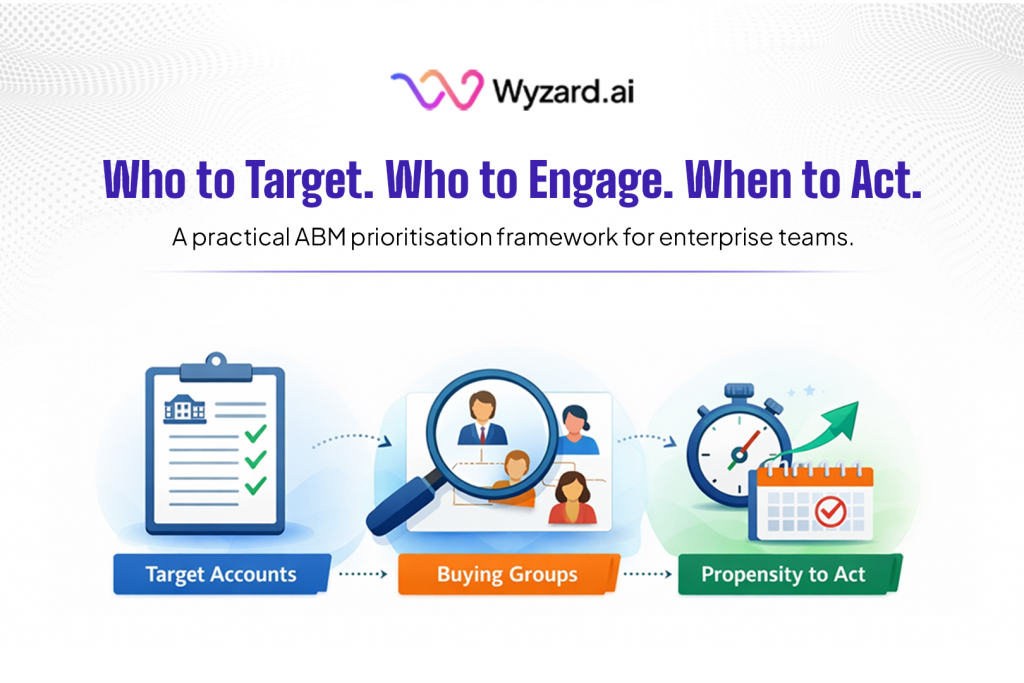
If you are a CMO, one of the hardest moments in ABM comes when the dashboard is full of ...
Why 40% of Agentic AI Projects Will Fail and How GTM Leaders Can Avoid It
Published
Categorized as Uncategorized
Subscribe Now
GTM leaders are excited about the promise of agentic AI, yet many are discovering the same frustration that surrounded early martech tools. More software, more data, more automation, yet less clarity about what moves revenue forward. The danger is rising quickly because many teams are deploying AI inside stacks that were never prepared for actual autonomy. The result is a surge in activity without progress.
Most generative AI pilots fail to reach production because of data quality problems, poor design, and unclear business goals. Presently, when only a handful of companies consider themselves highly prepared for widescale AI adoption. This gap is why an estimated 40 percent of agentic AI projects will fall short in GTM environments. The tools act, but the strategy is missing.
Wyzard, the Signal-to-Revenue AI, perspective begins with a clear belief. A revenue engine cannot depend on automation alone. It needs accountability, structure, context, and HITL control. This blog outlines the core AI failure modes behind failing projects and offers a path to build real, predictable impact.
The Hidden Failure Pattern: Autonomy Without Alignment
Most failing projects share the same flaw. They automate existing chaos instead of transforming it. GTM teams often work across a patchwork of disconnected systems, and AI becomes one more layer on top. When agentic AI executes inside this environment, it behaves like an accelerated version of the System of Action that came before it. More sends. More tasks. More noise.
This problem is amplified by scattered buyer signals. McKinsey found that companies who activate real time signals see conversion improvement, while those who miss those signals fall behind due to slow response and incomplete information.
This means the enemy of true progress is not AI itself. It is AI that operates without context, oversight, or strategic clarity.
Why GTM Projects Fail: Three Structural Issues
Many failing projects trace back to three root causes. Each one breaks the foundation needed for reliable autonomy.
1. Data Without Meaning
Signals across chat, web, product, and CRM remain isolated. AI models attempt to act on incomplete information. Without a unified state, autonomy turns into blind execution.
2. Automation Without Goals
Teams deploy workflows with no clear definition of success. When goals are missing or vague, agentic AI cannot understand what progress looks like.
3. Autonomy Without Oversight
Most tools marketed as agents lack real HITL checkpoints. The system acts, but no one verifies whether those actions match strategy. This is the quiet collapse point for many projects.
These patterns form the backbone of why the next generation of GTM systems must shift away from activity and toward outcomes.
A Better Answer: Build Around Outcomes, Not Motion
To avoid failure, leaders need a framework that treats every action as part of a measurable outcome. This is the logic behind the System of Outcomes. Instead of asking AI to do more, teams ask AI to move accounts toward specific revenue goals.
In this structure:
- Strategy is set by humans.
- Execution is handled by agentic AI.
- Alignment is maintained by HITL oversight.
- Motion is guided by signals, not static workflows.
This shift brings clarity to what AI should do and prevents wasteful motion.
The Architecture That Makes Accountability Possible
Success requires a foundation that understands the buyer, the moment, and the desired outcome. Wyzard, the SIgnal-to-Revenue AI, builds this foundation through the GTM Intelligence Graph, a structured representation of accounts, signals, intent patterns, and relationships.
WyzSignals captures activity across your digital footprint. WyzEnrich fills in missing details so signals carry depth. WyzQualify interprets intent through contextual modeling. WyzGPT supports reasoning and message creation inside each motion.
The GTM Intelligence Graph holds everything together inside a unified state. This ensures agentic AI never acts without understanding and allows HITL control to guide approval, review, and escalation.
Recognizing why HITL is the new non-negotiable helps GTM leaders anticipate failure modes before they damage customer relationships or pipeline quality.
This is where many failed projects break. They lack a data model that gives AI true context. Wyzard.ai solves this at the architectural level.
Human Guided Intelligence: Where Strategy Remains Human
Every effective agentic system combines machine speed with human judgment. Wyzard.ai calls this Human Guided Intelligence. It is a practical expression of HITL in a GTM environment.
Humans set the WyzGoal. AI designs the plan. WyzChannels activates it across Agentic Chat, Agentic Email, Agentic LinkedIn, and the upcoming Agentic Calling. The system learns and improves with clear auditability.
This ensures leaders retain control over narrative, brand, and audience priorities while the AI handles the volume, timing, and personalization that humans cannot match at scale.
The AI GTM Engineering Flow: Turning Strategy Into Motion
Wyzard.ai’s execution engine follows a predictable and accountable flow that removes ambiguity from the AI’s role.
- Capture
WyzSignals collects signals across the full GTM infrastructure. - Contextualize
WyzEnrich and WyzQualify align them with account readiness. - Plan
WyzGoal converts human intent into structured, interpretable direction for Agentic AI. - Act
WyzChannels and WyzGPT engage through the right channel with the right message.
This closed loop eliminates guesswork and keeps execution anchored to human direction.
The Payoff: Better Conversion and Better Predictability
External research supports the power of accountable agentic systems. Forrester reports that organizations using real time engagement models see higher pipeline quality and faster progression. Accenture found that companies with structured AI governance outperform peers in operational efficiency and speed.
This is what strong AI readiness looks like. Not more activity, but progress tied to strategy.
Where Leaders Should Begin
Avoiding failure starts with clarity.
- Define the outcome before defining the workflow.
- Use the GTM Intelligence Graph to unify the buyer picture.
- Apply HITL control to approve patterns before expanding scope.
- Integrate signals, not steps.
- Build motions using thoughtful Playbook Design.
Each of these steps creates resilience in the system and prevents the pitfalls that leave many projects stuck in early stages.
This Is How GTM Teams Avoid Becoming Part of the 40 Percent
The difference between success and failure sits in the architecture, not in the interface. If your AI runs without context, oversight, or a clear anchor to outcomes, you are at risk.
If your AI runs with unified signals, human direction, HITL guardrails, and a structured model for progress, you have a path to predictable revenue.
Wyzard.ai, the Signal-to-Revenue AI, brings this structure to life through WyzSignals, WyzEnrich, WyzQualify, WyzGoal, WyzChannels, WyzGPT, and the GTM Intelligence Graph.
Book a demo and see how accountable Agentic AI transforms your GTM engine.
Other blogs
The latest industry news, interviews, technologies, and resources.
March 16, 2026
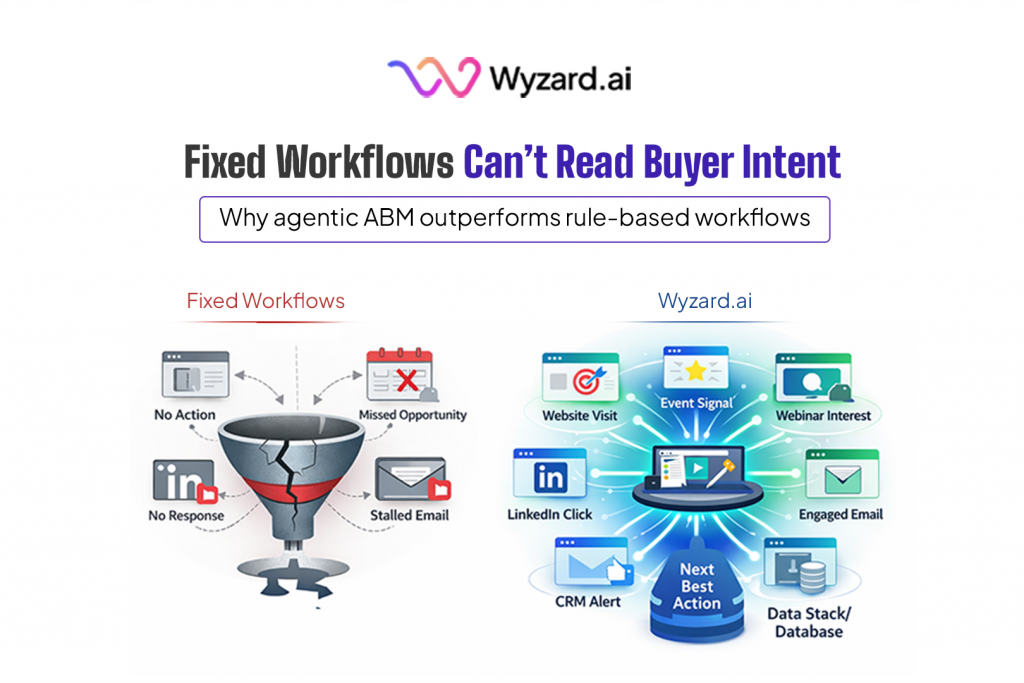
Automation Isn’t Intelligence: Why Agentic ABM Outperforms Rule-Based Workflows
A CMO reviews the weekly pipeline report and sees all the expected activity. A target account visited the website. ...

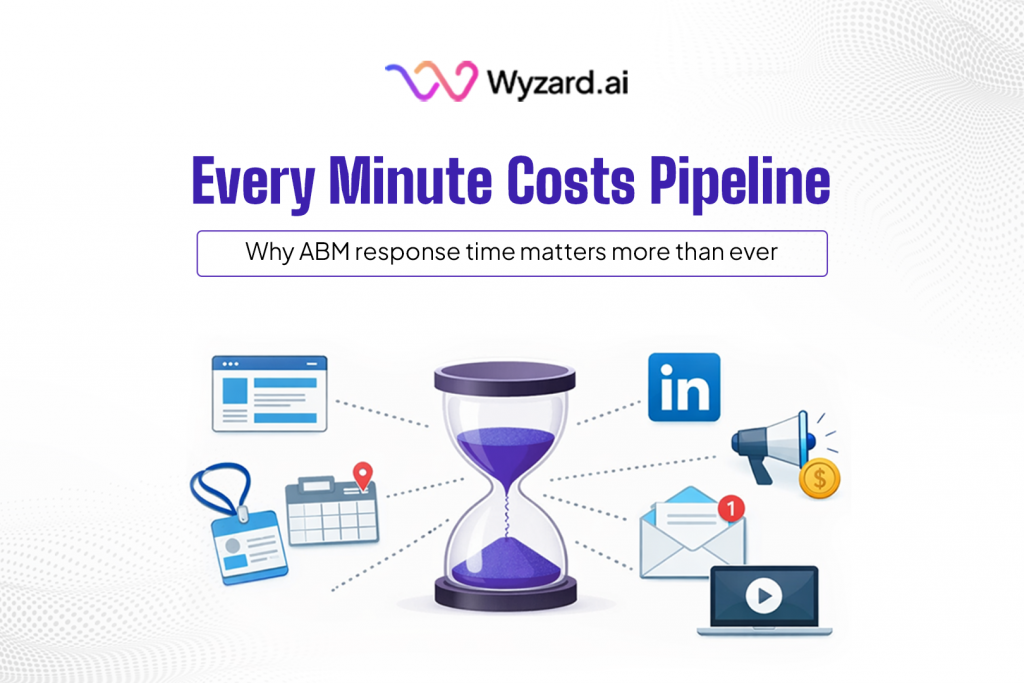
The 5-Minute Rule for ABM: How Fast Response Turns Buyer Intent Into Pipeline
If you are a CMO running enterprise growth, you have probably seen this in a pipeline review. A target ...
