 We’ve secured funding to power Signal-to-Revenue AI to GTM teams globally. →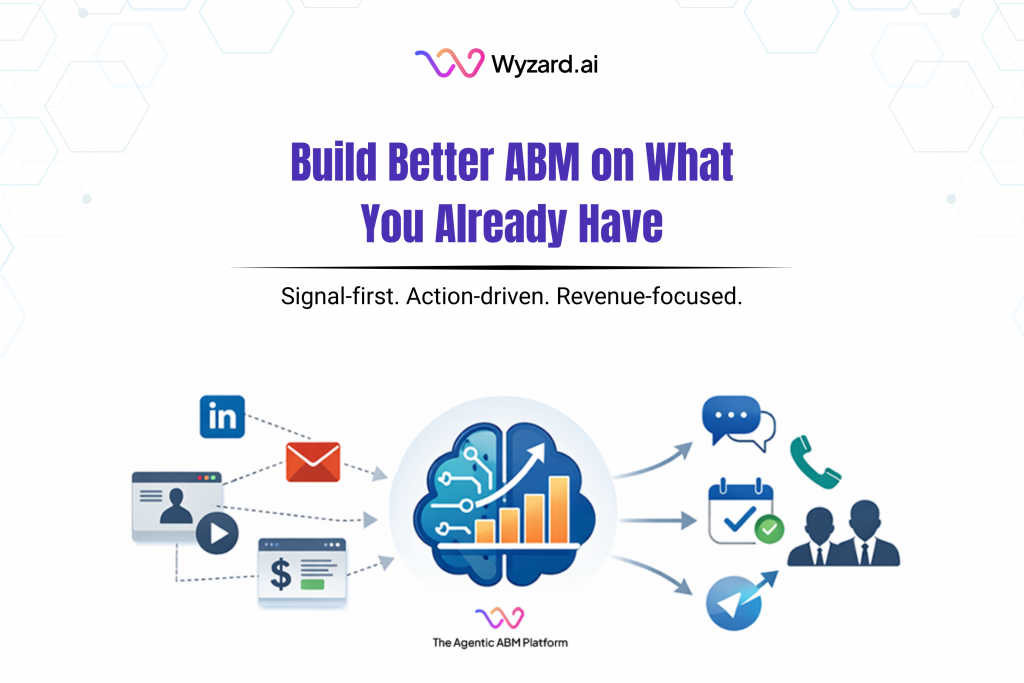
If you are a CMO, this situation feels familiar. Your team has a CRM, marketing automation, paid campaigns, webinars, ...
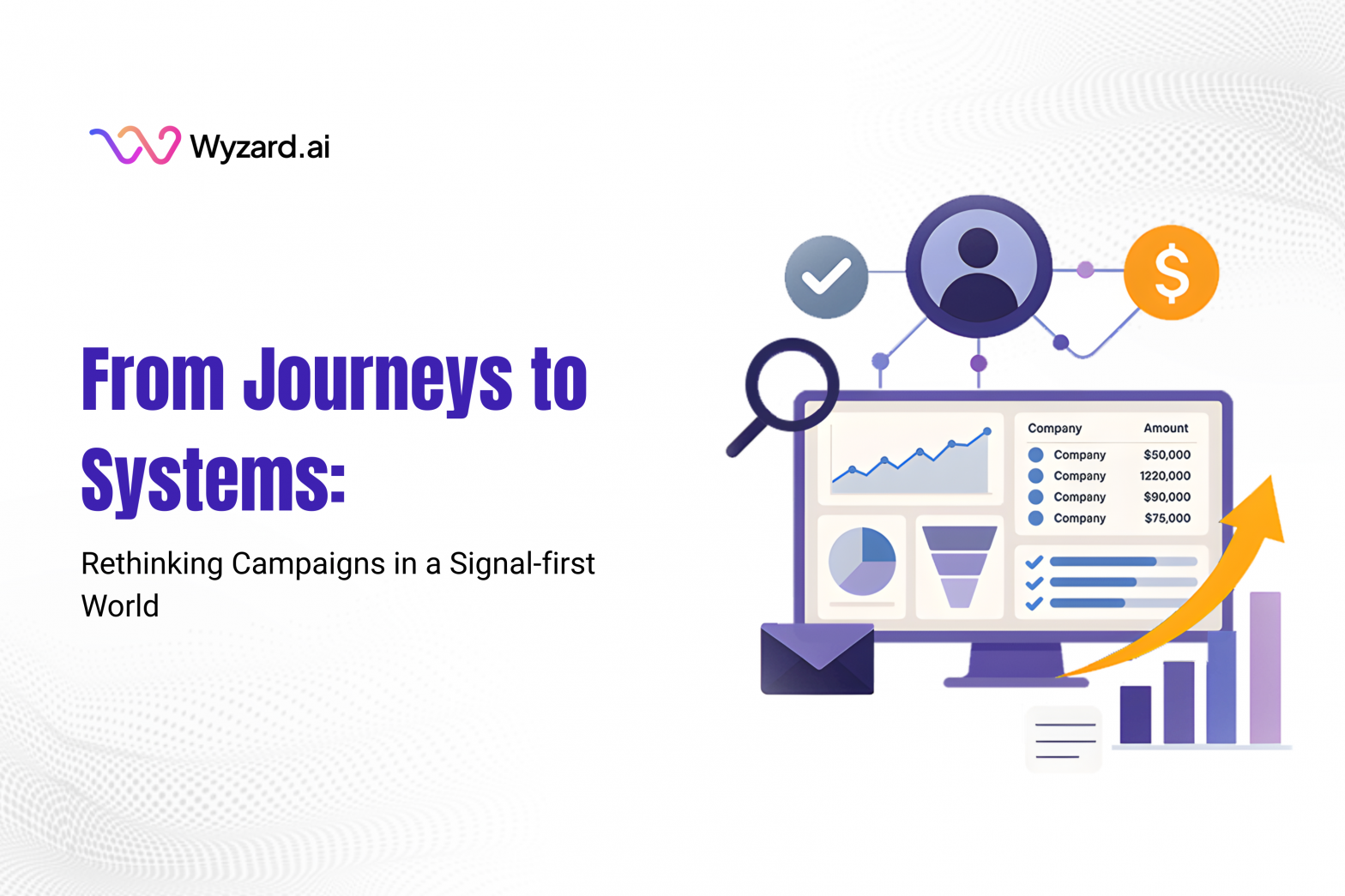
From Journeys to Systems: Rethinking Campaigns in a Signal-First World
Published
Categorized as Uncategorized
Subscribe Now
Marketing teams often talk about “running campaigns,” but most campaigns no longer run the way teams expect. Timelines stretch, interest peaks at unexpected moments, and buyers jump across channels before a launch even finishes. The calendar moves in one direction. Buyers move in another.
This mismatch is growing more noticeable. Audiences browse privately. They interact across many surfaces. They return without warning. They ignore the sequences that once guided them from one step to the next.
Campaigns still matter. They just no longer serve as the engine of engagement. Today’s leading teams build systems that react to signals the moment they appear. They operate in a signal-first GTM model.And the engine behind that shift is Wyzard, the Signal-to-Revenue AI.
The Problem With Calendar-Driven Campaigns
Campaigns were once predictable. A theme, a launch date, a nurture track, a handoff. But buyer behavior is now shaped by personal timing and self-directed research.
Research from Gartner found that over 70% of the B2B buying cycle is completed before a prospect ever speaks with a company.
This means many campaigns engage buyers after they have already formed opinions. Not because the campaigns are weak, but because the timing rarely aligns with actual behavior.
As a result:
- Interest surfaces long before a campaign is ready
- Engagement peaks on days unrelated to launches
- High-fit accounts move faster than planned
- Sequences misfire when context changes
The gap widens whenever teams rely on fixed journeys instead of buyer-initiated signals.
Signals Replace Stages, and Systems Replace Calendars
Signals emerge in small bursts:
- A pricing view.
- A repeat return to a product page.
- A direct reply to an email.
- A spike in usage during a trial.
These moments tell the truth behind buyer readiness.
In leading teams, signals start to matter more than messaging themes. Instead of designing a linear nurture path, they design systems that respond the moment real-time intent appears.
WyzSignals brings these signals into one stream. WyzEnrich adds clarity about who is acting and why. WyzQualify interprets urgency. WyzGPT brings reasoning to each signal. WyzChannels (Agentic Chat, Agentic Email, Agentic LinkedIn, Agentic Calling) adapts outreach based on the moment, not the plan. And WyzGoal defines the outcome the team wants each system to achieve.
This creates the foundation for continuous engagement, not scheduled engagement.
Why the Campaign Model Struggles to Keep Up
A fixed campaign assumes a stable journey. Buyers follow steps. Messaging guides them. Timelines stay aligned.
But modern journeys rarely look that way.
A study by McKinsey showed that B2B buyers revisit digital touchpoints multiple times across the buying process and switch channels unpredictably.
This fluid motion creates friction for the traditional campaign model:
- Timing loses relevance
- Segmentation becomes outdated fast
- Nurture tracks feel disconnected
- Buyers expect personalization before the campaign is ready
Campaigns tell buyers when to engage. Signals reveal when buyers want to engage.
Systems built around signals don’t wait for a date. They adapt instantly.
Enter the Intelligence Graph: The Backbone of Modern Engagement
Signals alone aren’t enough. Teams must understand how signals relate, what patterns matter, and which actions improve outcomes.
This is where the GTM Intelligence Graph shifts the structure entirely.
It acts as the connective layer that unifies identity, behavior, fit, and timing. Instead of analyzing marketing activity and sales activity separately, the graph interprets both as part of a larger pattern.
It reveals:
- How interest builds
- Where friction appears
- Which sequences accelerate
- Which moments matter most
And it provides the clarity required to make autonomous execution possible.
Autonomy isn’t about replacing teams. It’s about giving systems the ability to respond faster than human coordination allows.
From Campaign Motion to Autonomous Execution
Traditional execution depends on humans moving tasks forward. A workflow updates. A rep reviews a dashboard. Someone follows up. Someone adjusts a segment. Someone schedules the next message.
Autonomous Execution removes this lag.
Wyzard, the Signal-to-Revenue AI interprets signals in real time and activates the next touch through the right channel.
- WyzChannels delivers the message instantly.
- WyzGoal ensures the system is aligned with the desired outcome.
- WyzGPT ensures the response feels thoughtful, relevant, and contextual.
This unlocks a new level of velocity. Not speed for the sake of speed, but speed at the exact moments when interest rises.
Campaigns create movement. Autonomous systems create momentum.
A System of Outcomes, Not a Sequence of Tasks
Teams adopting a signal-first structure begin to notice something subtle but important – They stop measuring campaigns, and start measuring progress.
Progress looks like:
- Faster follow ups
- More meaningful conversations
- Engagement that matches intent, not assumptions
- A smoother path from interest to revenue
This is what we describe as a System of Outcomes. Not just a product or an operating layer – a mindset shift.
It moves GTM teams away from activity tracking and toward results-driven execution. Campaigns still exist. But they run inside a system that adapts to signals rather than waiting for a date.
Why Signal-to-Revenue AI Sits at the Center of This
The modern GTM environment is unpredictable:
- Signals appear everywhere.
- Interest spikes at unexpected times.
- Buyers expect immediate relevance.
The Signal-to-Revenue AI brings cohesion to this environment. It listens through WyzSignals, understands through WyzGPT, enriches through WyzEnrich, qualifies through WyzQualify, engages through WyzChannels, and stays aligned through WyzGoal.
It gives teams a real-time engine that responds to intent without losing strategic oversight. It blends automation with intelligence. It blends structure with flexibility. It blends creativity with timing.
This is what allows campaigns to evolve into systems.
If You Want Systems That Adapt to Signals, Not Calendars
Your GTM engine does not need more campaigns.
It needs a structure that reacts with clarity when buyers show intent.
Wyzard gives teams that structure.
Book a demo and see how the Signal-to-Revenue AI helps your organization move from rigid journeys to systems that adapt the moment signals appear.
Other blogs
The latest industry news, interviews, technologies, and resources.
March 30, 2026
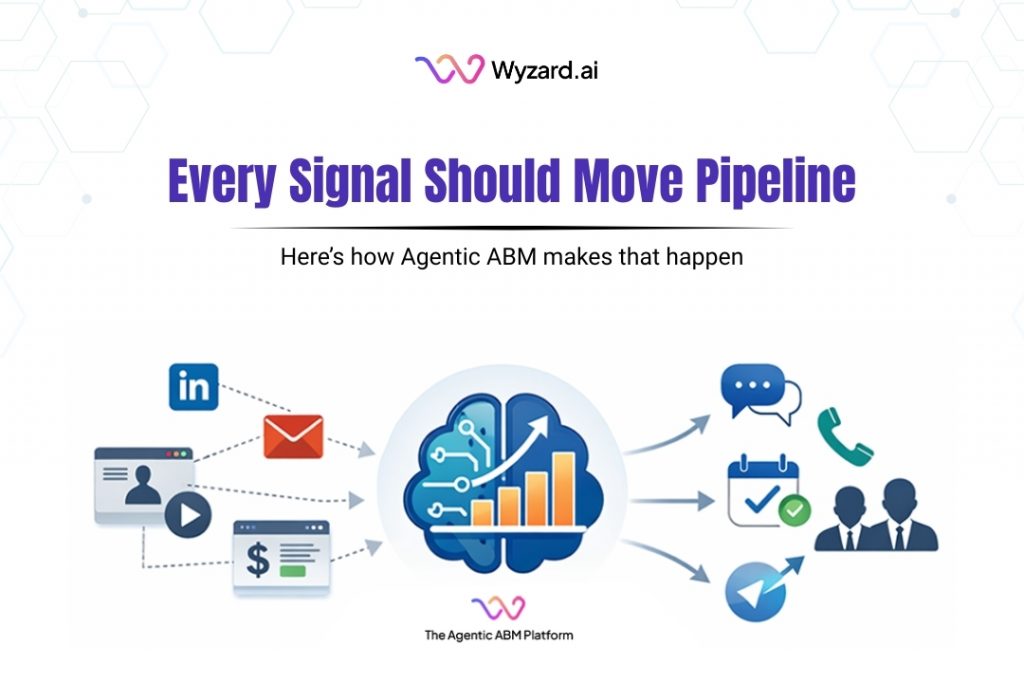
The Signal-to-Revenue Blueprint for Agentic ABM
A CMO reviews the weekly dashboard and sees strong activity. A target account clicked a LinkedIn ad. Another stakeholder ...

March 27, 2026
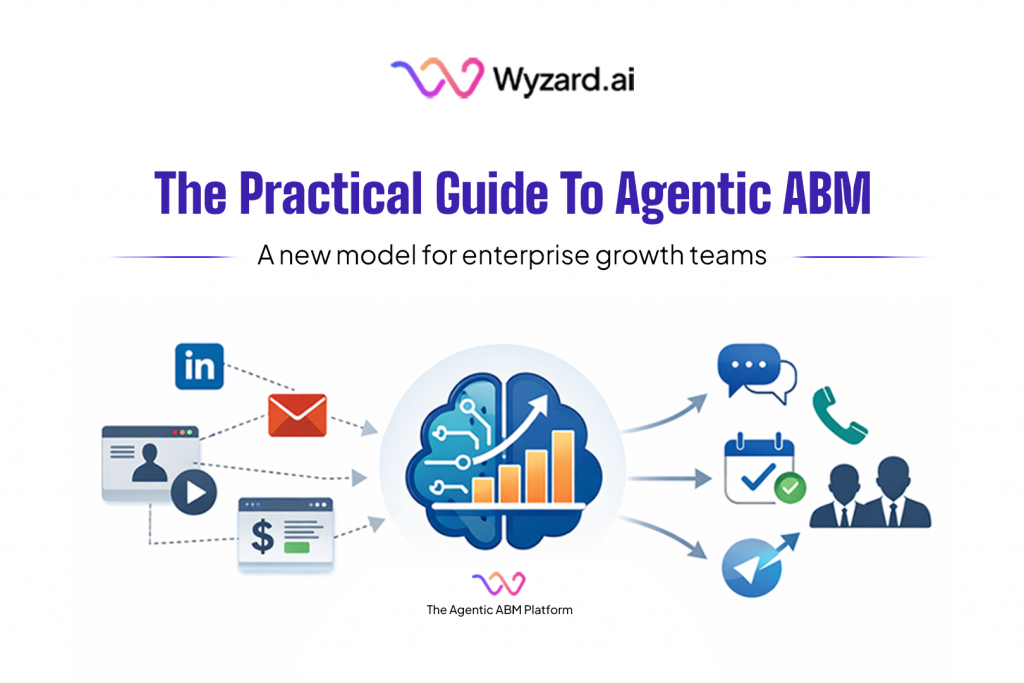
What Is Agentic ABM? A Practical Guide for Enterprise GTM Teams
Enterprise GTM has an action gap. If you are a CMO, this scene is familiar. A target account clicks ...
