 We’ve secured funding to power Signal-to-Revenue AI to GTM teams globally. →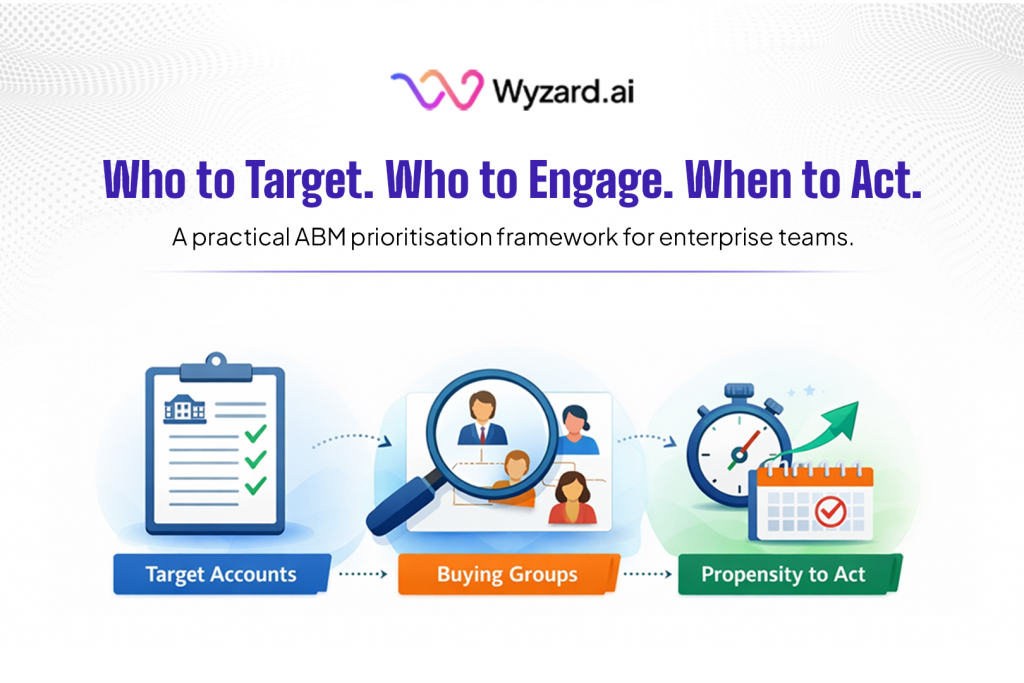
If you are a CMO, one of the hardest moments in ABM comes when the dashboard is full of ...
Why More Traffic Isn’t Solving Your Lead Problem (And What Will)
Published
Categorized as Uncategorized
Subscribe Now
In the digital age, it’s tempting to equate increased website traffic with business growth. More visitors should mean more opportunities, right? However, for many B2B SaaS companies, a surge in traffic doesn’t necessarily translate into a surge in revenue. The real challenge lies not in attracting visitors but in converting them into qualified leads and, ultimately, loyal customers. This is the heart of effective lead conversion optimization.
Too many teams celebrate growing traffic metrics without seeing a corresponding increase in pipeline or closed deals. That disconnect is more than frustrating—it’s expensive. What gets missed is that lead conversion optimization is not a nice-to-have; it’s the strategic core of marketing effectiveness. Without it, you’re just renting attention without earning outcomes.

The Traffic Illusion: More Isn’t Always Better
At first glance, a spike in website visits appears promising. It suggests heightened interest, broader reach, and potential growth. Yet, without a robust strategy to engage and convert these visitors, increased traffic can become a vanity metric—impressive on paper but lacking tangible business impact.
What often goes unaddressed is that most of these visitors leave without any interaction at all. They bounce because nothing relevant speaks to them in the moment. The missed opportunity here isn’t just about better CTAs or form design—it’s about recognizing that each visit is a live signal of potential intent. Failing to engage that signal is what keeps traffic high but pipeline flat.
The issue isn’t traffic volume; it’s engagement quality. Without timely and personalized interactions, potential leads slip through the cracks. For businesses to see real ROI, lead conversion optimization must be a core focus.
The Real Culprit: Ineffective Lead Conversion Strategies
While generating traffic is essential, the real bottleneck often lies in the conversion process. Many organizations focus heavily on attracting visitors but falter when it comes to converting them into actionable leads.
One major factor is response time. Research indicates that businesses are 21 times more likely to qualify a lead if they respond within five minutes compared to 30 minutes. Yet, the average B2B lead response time is 42 hours. This delay is a massive growth bottleneck and highlights a breakdown in lead conversion optimization.
Additionally, many teams still treat lead capture as a one-time event—a form fill or a chatbot ping. But conversion isn’t transactional; it’s a journey. Modern buyers expect instant, personalized interactions. Delays or generic follow-ups damage trust and reduce conversions. To stay competitive, businesses must enhance their lead conversion optimization strategies with speed, relevance, and continuity.
The right strategy goes beyond capturing attention—it qualifies, nurtures, and transitions the buyer toward readiness. Without this, you’re relying on hope instead of a repeatable system.
Why Does High-Quality Traffic Still Fail to Convert?
Even when you’re attracting the right visitors, decision-makers from target companies showing buying intent, conversions can still flatline.
Here’s why:
- Weak calls to action: “Learn more” and “Contact us” are vague and uninspiring. High-quality traffic needs specific, compelling direction: “See ROI in 90 days” or “Book a 15-minute demo.”
- Poor user experience: Slow page loads destroy conversion rates. If your pricing page takes 4+ seconds to load, prospects bounce before they even see your offer. Mobile-unfriendly forms and cluttered layouts create unnecessary friction.
- Disconnect between ad promise and landing page: When your ad promises “instant lead qualification” but your landing page talks about “comprehensive marketing solutions,” visitors feel misled. Message mismatch kills trust immediately.
- No clear next step: Prospects showing genuine interest need obvious paths forward. Multiple CTAs competing for attention, unclear navigation, or missing contact options leave high-intent visitors confused about how to proceed.
The traffic quality might be perfect, but if your site experience doesn’t match the sophistication of your visitors, conversions suffer regardless of intent levels.
The Traffic vs. Conversion Debate: Shifting Focus
In the traffic vs conversion debate, many teams wrongly prioritize the former. It’s like pouring water into a leaky bucket. Without addressing how to retain and convert, more traffic won’t help.
Traffic becomes a means to an end—not the goal itself.
The key is alignment. Often, marketing focuses on MQLs while sales teams chase SQLs. This misalignment stalls lead conversion optimization.
To shift from volume to value:
- Implement lead scoring to prioritize high-potential prospects.
- Encourage collaboration between marketing and sales.
- Optimize landing pages and CTAs.
- Focus on lead conversion optimization metrics, not just click-through rates.
It’s also about timing. Visitors land on your site at all hours—weekends, nights, lunch breaks. If your engagement strategy only works during business hours, you’re leaving revenue on the table. Having always-on engagement, backed by intelligent automation, is what closes the gap.
Refining these areas drives stronger marketing ROI and ensures your efforts translate into pipeline. It also reinforces a revenue-first mindset, where traffic becomes a means to an end—not the goal itself.
Lead Gen Strategy Pitfalls: Common Missteps
Many B2B teams fall into avoidable traps:
- Delayed follow-ups
- Overuse of generic templates
- Underutilized behavioral data
- Inflexible automation workflows
These lead gen strategy pitfalls severely undercut your chances of converting high-intent traffic. A mature lead conversion optimization program recognizes and resolves these gaps.
Marketing ROI Blockers: What’s Holding You Back?
There are recurring themes that hinder performance:
- Vanity metrics clouding real performance insights
- Disjointed data pipelines
- CRM clutter
- Poor funnel visibility
Each of these marketing ROI blockers chips away at your ability to drive consistent growth. A strong focus on lead conversion optimization helps overcome them, enabling smarter, more adaptive decision-making.
How Do You Know If Your Traffic Is Actually High-Quality?
Not all traffic is created equal. Here’s how to diagnose whether you have a traffic quality problem or a conversion problem:
Engagement metrics reveal intent:
- Time on site: Quality visitors spend 2+ minutes exploring
- Pages per session: 3+ pages indicates genuine research
- Bounce rate: Below 40% for B2B typically signals interested prospects
- Return visitor rate: 20%+ suggests your content resonates
Firmographic indicators matter:
Check if visitors match your ideal customer profile. Are they from companies in your target industries? Do they have the right employee count and revenue range? Tools like visitor identification can reveal whether you’re attracting relevant accounts.
Behavioral signals show readiness:
High-quality traffic visits high-intent pages: pricing, product demos, case studies, comparison pages. If most visitors only read blog posts and never explore your product, you have a targeting problem, not a conversion problem.
The Role of a Marketing Copilot: Precision at Scale
Bridging the traffic-to-lead gap requires intelligent systems. Wyzard’s Marketing Copilot goes beyond basic automation to deliver:
- Real-Time Engagement: Engage visitors the moment they land with intelligent, context-aware AI.
- Behavior-Based Personalization: Tailor experiences based on actions, not just demographics.
- Omnichannel Follow-Up: Continue conversations via chat, email, and more—24/7.
- Effortless CRM Sync: Plug-and-play integration routes qualified leads instantly to your pipeline.
Wyzard doesn’t wait for leads to ask. It senses. It acts. It qualifies. While your team sleeps, Wyzard engages pricing page visitors, picks up chat drop-offs, and syncs qualified leads to CRM in real time
It also solves for the growth bottlenecks that lean GTM teams face—limited SDR capacity, missed follow-ups, and high-intent leads bouncing off your site unengaged. Wyzard turns your website into a high-performing conversion layer, working around the clock to qualify and route leads without friction.
Conclusion: Turn Traffic Into Revenue
Lead conversion optimization isn’t optional. It’s fundamental.
You can spend more on ads. You can drive more clicks. But unless your system is built to convert, you’re simply amplifying inefficiency.
To overcome lead gen strategy pitfalls, remove marketing ROI blockers, and eliminate growth bottlenecks, start where it counts: with lead conversion optimization that works.
By investing in the right strategy and tools—including a Marketing Copilot that actually does the work—you’re not just filling your funnel. You’re future-proofing your pipeline.
Ready to turn more clicks into customers?
Book a demo of Wyzard’s Marketing Copilot today.
Frequently Asked Questions
Q: Why is my website traffic high but conversions are low?
High traffic with low conversions typically indicates targeting problems (wrong audience), user experience issues (slow pages, poor mobile design), weak messaging (unclear value proposition), or missing trust signals (no testimonials or social proof). The solution involves conversion rate optimization focused on these core elements rather than driving more traffic.
Q: What is the difference between traffic quality and traffic quantity?
Traffic quantity measures total visitor volume. Traffic quality measures how well visitors match your ideal customer profile and their likelihood to convert. High-quality traffic shows longer time on site (2+ minutes), multiple page views (3+), visits to high-intent pages (pricing, demos), and comes from relevant companies in your target market.
Q: How can I tell if I have a traffic problem or a conversion problem?
Examine these metrics: If bounce rates exceed 60%, time on site is under 30 seconds, and visitors view only one page, you have targeting issues attracting wrong visitors. If engagement metrics are strong but form completions are low, you have conversion obstacles. Tools like heatmaps and session recordings reveal exactly where prospects disengage.
Q: What conversion rate should I expect from website traffic?
B2B SaaS companies typically see 1-3% conversion rates from organic traffic, 2-5% from direct/branded searches, and 1-2.5% from paid campaigns. Conversion rates vary significantly by industry, offer type (demo vs. content download), and traffic source quality. Focus on improving your specific baseline rather than comparing to broad benchmarks.
Q: How quickly should I respond to website leads?
Research shows businesses are 21 times more likely to qualify leads when responding within five minutes versus 30 minutes. Yet average B2B response time is 42 hours. Immediate response dramatically improves conversion rates, making real-time engagement systems essential for competitive advantage.
Q: Can lead scoring really improve conversion rates?
Yes, systematically. Businesses using lead scoring report 77% higher lead generation ROI and 68% of highly effective marketers point to lead scoring as a top revenue contributor. By prioritizing prospects based on fit and intent rather than chronological order, sales teams focus efforts on opportunities most likely to close.
Other blogs
The latest industry news, interviews, technologies, and resources.
March 16, 2026
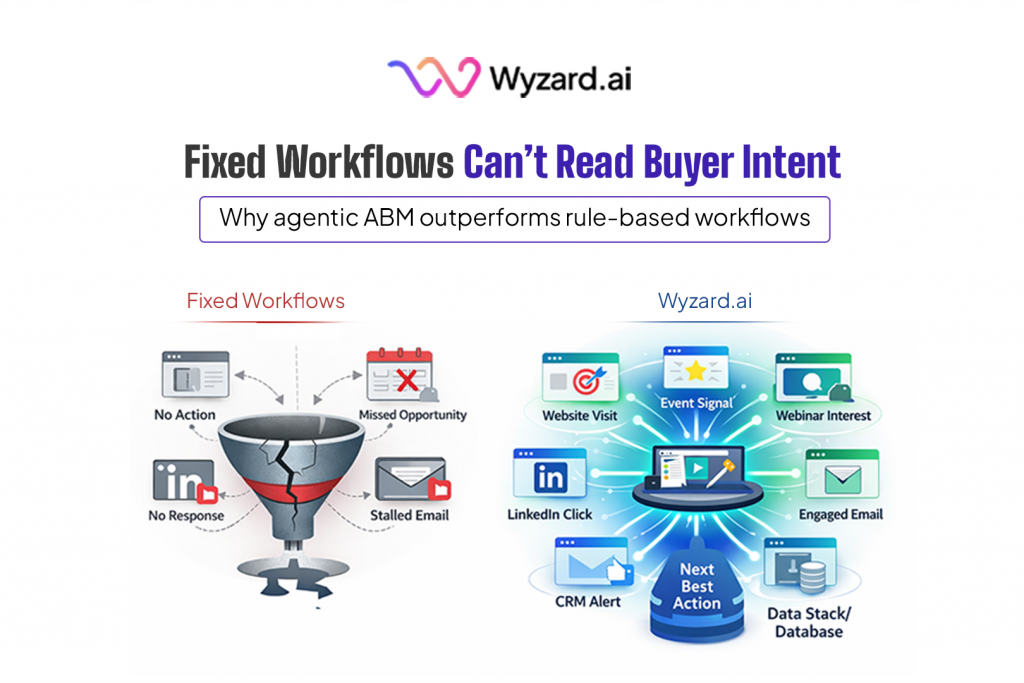
Automation Isn’t Intelligence: Why Agentic ABM Outperforms Rule-Based Workflows
A CMO reviews the weekly pipeline report and sees all the expected activity. A target account visited the website. ...

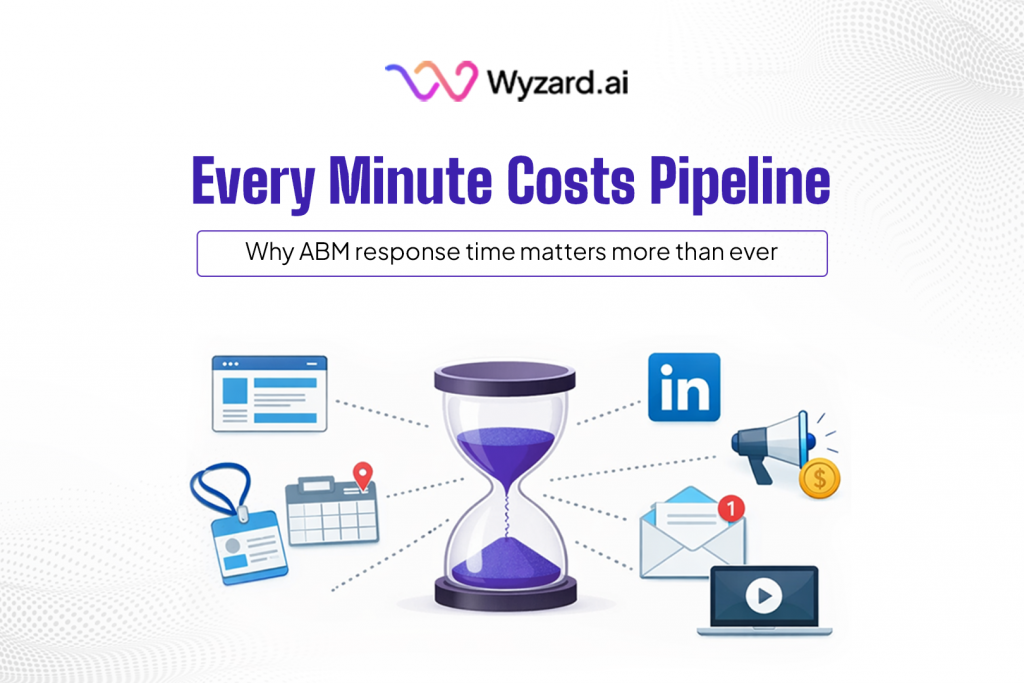
The 5-Minute Rule for ABM: How Fast Response Turns Buyer Intent Into Pipeline
If you are a CMO running enterprise growth, you have probably seen this in a pipeline review. A target ...
