The End of Channel Silos: Why Agentic ABM Must Be Omni-Channel
A CMO looks at the dashboard and something feels off.
Traffic is steady. Campaigns are active. Events bring in leads. Webinars attract the right audience. Sales activity is visible.
Yet conversion feels inconsistent. High-intent accounts are not progressing the way they should.
Now look at what is happening beneath the surface – A target account visits your pricing page. Another stakeholder clicks a LinkedIn ad later that day. Someone else from the same company attends your webinar. An event lead is added to your CRM. A prospect replies to a nurture email two days later.
All of these are strong signals. None of them are connected.
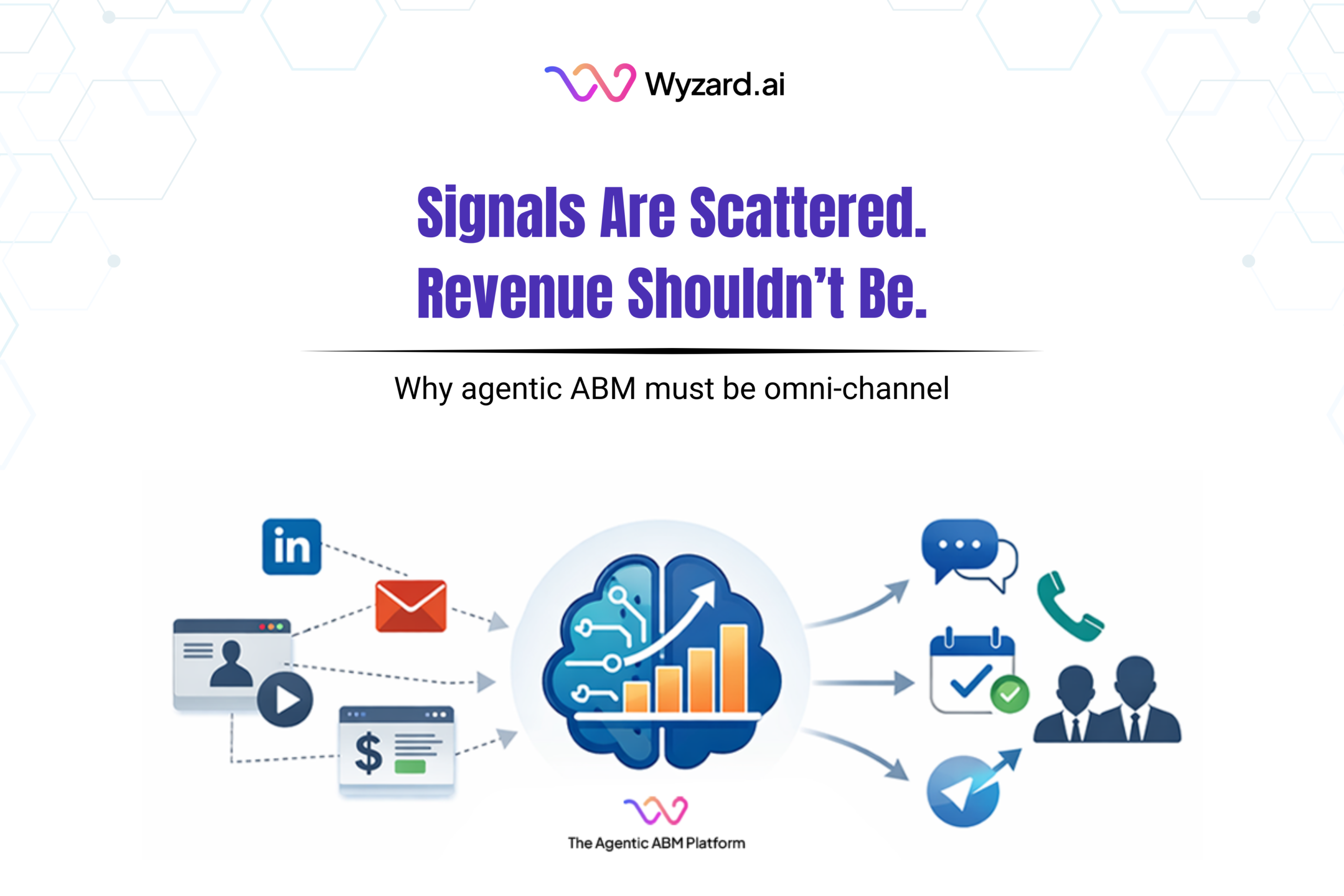
This is where agentic ABM changes the model. Wyzard.ai, the Signal-to-Revenue AI and an agentic ABM platform, captures these signals as they happen, connects them across your GTM stack, and triggers the right action across channels while intent is still fresh.
The issue is not demand. It is fragmentation.
Channel silos are a visibility problem
Most enterprise GTM teams already operate across multiple channels.
Marketing runs campaigns, webinars, and website engagement. Field teams handle events and event follow-up. Performance teams manage paid acquisition. Sales owns LinkedIn outreach and direct engagement. RevOps maintains CRM structure and routing.
Each function is active. Each channel produces results. What is missing is a shared view of the account. Without that:
- signals are reviewed in isolation
- follow-ups lack context
- teams act at different times
- intent is misread or ignored
This is why pipeline leakage happens even in strong organizations.
The problem is not effort. It is disconnected execution.
What omni-channel means in agentic ABM
Omni-channel is often treated as being present across many touchpoints. That creates activity. It does not guarantee results.
In agentic ABM, omni-channel means capturing intent wherever it appears, connecting those signals at the account level, and deciding what to do next based on the full picture.
This includes:
- website visits
- event participation
- LinkedIn engagement
- webinar attendance
- nurture email replies
These signals, when connected, show buying momentum.
That is where multichannel engagement becomes effective. It is driven by context instead of isolated actions.
Why website-focused ABM limits growth
Many ABM programs still rely heavily on website behavior. – page visits, form fills, and chat interactions provide useful insight. They do not tell the full story.
Enterprise buying often moves across different touchpoints:
- A conversation at an event.
- Engagement from webinar leads.
- Responses through LinkedIn outreach.
- Direct replies to emails.
These interactions can signal stronger intent than a single website session. If they remain disconnected, teams miss the bigger picture.
This is where agentic ABM creates an advantage. It connects these moments into a single account narrative.
What a connected account view looks like
Consider one account over a short period – A stakeholder clicks a LinkedIn ad. Another joins a webinar. A known contact revisits your website. An event lead is captured. A prospect replies to a nurture email.
Without a connected approach
Each team reacts separately:
- marketing runs standard workflows
- SDRs follow up with limited context
- outreach lacks timing and relevance
The account receives mixed communication. Progress slows.
With agentic ABM
These signals are connected in real time.
The response improves:
- outreach aligns with actual behavior
- messaging reflects context
- timing improves
- teams act in sync
This is coordinated execution.
Why CMOs are shifting to connected execution
CMOs are not asking for more tools. They want better outcomes.
Disconnected channels create hidden inefficiencies:
- delayed response to strong intent
- repeated or irrelevant outreach
- missed signals across buying groups
- weak alignment between marketing and sales
A connected agentic ABM model addresses these issues.
It helps teams:
- act faster on real signals
- reduce leakage
- improve conversion from existing demand
- align execution across functions
The System of Outcomes ties these actions to measurable results such as meetings, pipeline, and revenue.
How Wyzard.ai enables omni-channel execution
Wyzard.ai operates as the Signal-to-Revenue AI and as an agentic ABM platform.
It connects your existing systems.
- WyzSignals captures activity across website, events, LinkedIn, webinars, and email
- WyzEnrich adds account and contact context
- The GTM Intelligence Graph connects all signals into a unified view
- WyzPlaybook determines the next best sequence of action
- WyzChannels executes across email, LinkedIn, chat, and voice
AI GTM Engineers provide guidance and oversight, helping teams refine execution and align it with business goals.
This approach turns fragmented activity into coordinated revenue action.
The future of ABM is connected
Many organizations operate across multiple channels. Few operate with a connected system.
That difference defines the next phase of ABM. The goal is not to increase activity. It is to recognize when an account is ready and respond with precision.
That is what agentic ABM enables.
Revenue moments do not wait
Your buyers are already signaling intent.
Across your website. Through event follow-up conversations. Within LinkedIn outreach. Across webinar leads. Inside nurture email replies.
The opportunity already exists. The question is whether your team can connect these signals and act in time.
That is the shift from siloed execution to agentic ABM.
If you want to see how Wyzard.ai helps teams turn cross-channel signals into coordinated revenue action, book a demo today.