Why Your Website Should Be the Center of Your GTM Strategy Why Your Website Should Be the Center of Your GTM Strategy
| 82 | Why Your Website Should Be the Center of Your GTM Strategy | Why Your Website Should Be the Center of Your GTM Strategy |
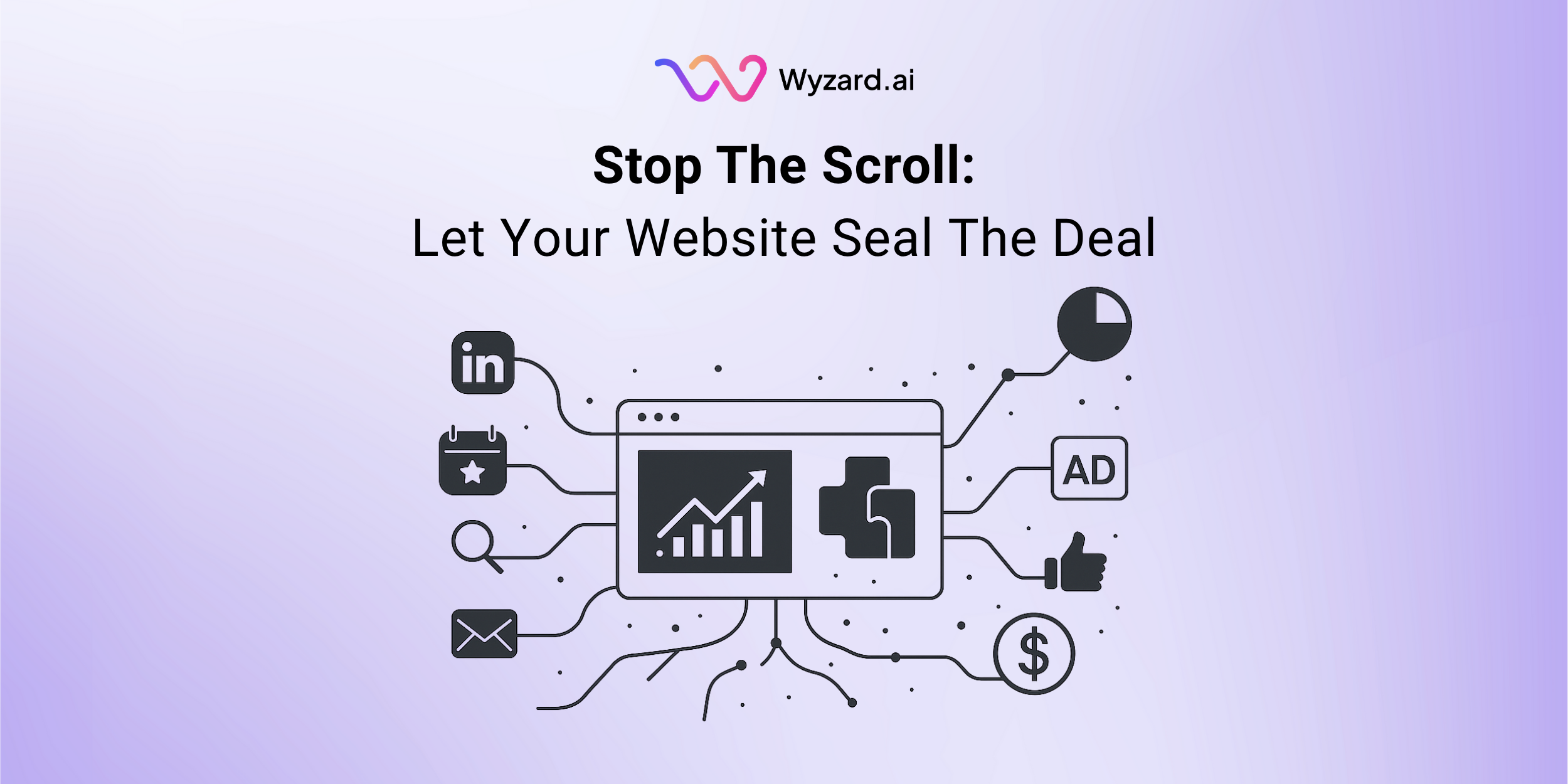
Your website isn’t just a digital business card—it’s your highest leverage asset to drive pipeline, revenue, and buyer trust in today’s B2B environment. At Wyzard, we’ve seen firsthand how high-growth B2B SaaS and services teams transform their websites into the backbone of their B2B GTM strategies, using them to capture, qualify, and convert inbound demand across channels: from webinar attendees to LinkedIn ad clickers, to event leads, to cold inbound form-fills.
But simply having a website isn’t enough. To truly centralize your GTM, you need to rethink your website as a demand engine, not just a destination.
Why Your Website Should Anchor Your GTM Motion
B2B buyers complete 70-80% of their research before ever talking to sales as per a research study, and your website is where this research happens. It’s your digital storefront optimization hub, your 24/7 explainer, and your best SDR if leveraged correctly. Yet many teams underutilize this asset, allowing lead leakage from slow or missed follow-ups, disconnected campaigns, and misaligned messaging across channels.
Centralizing your GTM motion around your website ensures:
- Consistent messaging across touchpoints: Paid ads, organic content, outbound, and events all converge here.
- Instant engagement: Whether a lead attends your webinar, engages with a LinkedIn ad, or submits a form, your website becomes the place to capture and qualify interest.
- Data-driven personalization: Behavioral data from your site can drive intent-based nurturing across channels.
In short, your website is the only place you fully control the experience, allowing you to convert demand into pipeline without relying on manual, fragmented follow-ups.
The Shift Toward Website-Led Growth
Website-led growth isn’t about replacing your other channels; it’s about connecting them. If a buyer scans their badge at your event booth, the next logical step isn’t a generic follow-up call days later—it’s a personalized experience on your website that continues the conversation instantly, nurturing them with relevant content and calls to action. The same applies to webinar registrants, PPC leads, and even cold inbound traffic.
Wyzard Marketing Copilot enables this shift by acting across channels to engage and qualify leads, orchestrating conversations wherever your prospects are, while using your website as the anchor point for deeper education and conversion.
What It Takes to Make Your Website Your GTM Hub
Turning your website into the center of your B2B GTM strategies requires:
1. Fast, Personalized Engagement
Buyers expect instant answers. With Wyzard Marketing Copilot, you can engage leads in real-time whether they come from a live chat, LinkedIn ad click, or an event scan, turning cold form fills into qualified conversations supporting your B2B GTM strategies naturally and effectively.
2. Intelligent Qualification and Routing
Centralizing GTM on your website allows you to qualify leads using behavioral triggers, CRM data, and firmographics. Instead of your SDRs spending time on unqualified leads, your site (powered by your Marketing Copilot) filters and routes only high-intent prospects, ensuring your sales team focuses where it matters most.
3. Content That Converts
Your website should be more than a blog or a product page. Think guides, interactive demos, ROI calculators, and comparison pages that align with your ICP’s buying journey. This makes your website as demand engine functionally effective, naturally supporting your B2B GTM strategies by nurturing leads toward sales conversations without requiring manual interventions.
4. Seamless Channel Integration
A true omni-channel Marketing Copilot doesn’t just engage chat visitors. It ties your PPC campaigns, event scans, webinar leads, and email nurtures into your website-led engagement strategy, allowing leads to seamlessly continue their journey regardless of the initial channel within your B2B GTM strategies.
Suggested Read: The Marketing Copilot Manifesto
Quick-Start Framework to Centralize Your GTM Strategy
Here’s a practical framework for quickly implementing a centralizing GTM strategy:
| Step | Action | Owner | Outcome |
| 1 | Audit current buyer journeys | Marketing Ops | Identify drop-off points and friction areas |
| 2 | Consolidate CTAs & analytics tracking | Web Team | Unified, actionable metrics |
| 3 | Implement AI-powered omnichannel engagement | RevOps | Real-time, personalized follow-ups |
| 4 | Sync CRM & engagement reporting | Ops | Single source of truth across channels |
| 5 | Continuously iterate | Growth Team | Ongoing improvements based on data insights |
Measuring Success
To measure your website-led GTM success:
- Track conversion rates across entry channels and on-page CTAs.
- Measure lead-to-meeting rates and the speed of handoff from MQL to SQL.
- Assess pipeline and revenue generated specifically from website-led interactions.
With Wyzard Marketing Copilot, you can reduce their lead leakage while accelerating sales cycles simply by rethinking how their website fits into their B2B GTM strategies.
Final Thoughts
Your website is your most underutilized GTM asset. It should be the place where demand is captured, qualified, and converted in real time, regardless of where it originates. With the right Marketing Copilot like Wyzard, your website can transform into your revenue engine, centralizing your B2B GTM strategies while ensuring your brand delivers a consistent, personalized, and instant buyer experience.
It’s time to move from viewing your website as a static storefront to seeing it as your GTM command center, ready to engage and convert at every step of the buyer journey.
Ready to transform your website into your GTM hub? Learn how Wyzard can help here.